Dye clothes with fungi
With adult help, use edible mushrooms and plant extracts to dye small fabric pieces, learning about natural colors, basic safety, and step-by-step dyeing techniques.


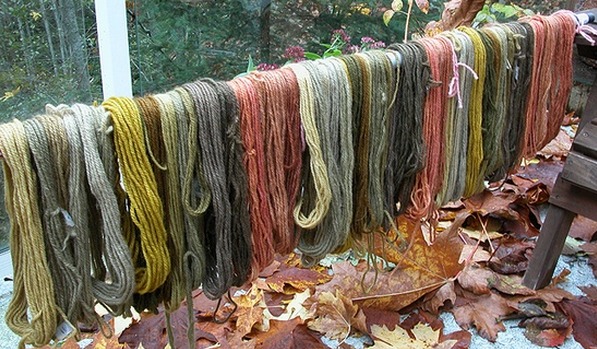
Step-by-step guide to dye clothes with fungi
Making Dyes From Natural Materials: Art and Science Experiment For Kids
Step 1
Lay paper towels on your work surface to protect it.
Step 2
Put on your protective apron or old clothes.
Step 3
Ask an adult to help and agree they will handle all hot pots and the stove.
Step 4
Choose one small fabric square made of silk or wool for this dye test.
Step 5
Rinse the fabric square under cool running water to remove dust.
Step 6
With your adult, place the fabric into a saucepan with 1 cup white vinegar and 4 cups water.
Step 7
With your adult, simmer the fabric gently in the vinegar bath for 30 minutes to mordant the fiber.
Step 8
With your adult, use tongs to lift the fabric from the saucepan.
Step 9
Place the hot fabric on a paper towel to cool slightly.
Step 10
Chop the edible mushrooms and plant colorants into small pieces.
Step 11
Put the chopped materials into a clean saucepan and cover them with 4 cups of water.
Step 12
With your adult, simmer the plant and mushroom mixture for 30 minutes to make the dye.
Step 13
Use a strainer to pour the hot dye liquid into a jar and discard the solids.
Step 14
Place the cooled mordanted fabric into the jar of dye and press it down so it is fully wet then cover the jar and let it sit for at least 1 hour.
Step 15
Remove the fabric rinse it under cool water until the water runs clear then lay it flat to dry and share your finished creation on DIY.org
Help!?
What can we use if we can't find silk or wool for the small fabric square?
If you can't find silk or wool, use a small cotton square that has been pre-mordanted with alum (follow the alum package directions) because plain cotton treated only with the vinegar mordant in the saucepan step won't hold the mushroom dyes as well.
Why is my fabric coming out very pale or unevenly colored, and how do I fix it?
If the color is pale or uneven, make a stronger dye by simmering more chopped mushrooms and plant colorants in 4 cups water for longer than 30 minutes, press the cooled mordanted fabric fully under the dye liquid in the jar, and let it sit overnight instead of just 1 hour.
How can we adapt this activity for younger kids or older kids to make it safe and interesting?
For younger kids let an adult handle every saucepan and stove step while the child rinses, presses the fabric into the jar, and lays the finished fabric flat to dry, and for older kids have them test different mordants (vinegar vs alum) and compare dye results on silk versus cotton.
How can we make more interesting patterns or personalize our dyed fabric?
Create patterns by folding, tying, or clamping the hot mordanted fabric before placing it into the jar of dye and tuck in leaves or threads so that after rinsing and drying the fabric shows unique prints and textures.
Watch videos on how to dye clothes with fungi
How to Dye Fabric (Immersion Dye Technique Tutorial)
4 Videos
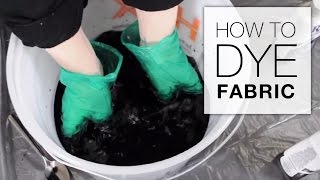
How to Dye Fabric (Immersion Dye Technique Tutorial)

Eco Bundling - How to Naturally Dye Your Own Clothes
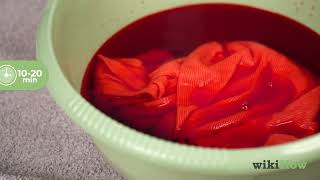
How to Dye Clothes with Food Coloring
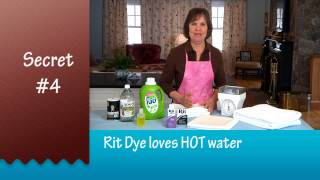
How to Dye Clothes: 6 Secrets to Successful Dyeing presented by the Rit Studio
Facts about natural dyeing for kids
🍄 Some mushrooms (like dyer’s polypore and Cortinarius species) can dye fabric in shades from yellow, brown, red, and even deep purple.
🎨 Natural dyes from plants and fungi have been used for thousands of years to color textiles around the world.
🧪 A mordant (often alum for safe home crafts) helps the dye bind to fabric and makes colors more colorfast.
🌿 Easy plant helpers for kid-friendly dyes include turmeric (bright yellow), onion skins (orange-brown), and avocado pits (soft pinks).
⚠️ Never taste wild mushrooms while dyeing — always have an adult prepare and identify fungi and follow safety rules.
How do I dye clothes with edible mushrooms and plant extracts with my child?
What materials do I need to dye fabric with mushrooms and plant extracts?
What ages is mushroom and plant dyeing suitable for?
What safety precautions should we take when dyeing with fungi and plants?
