Draw something from an ant's view
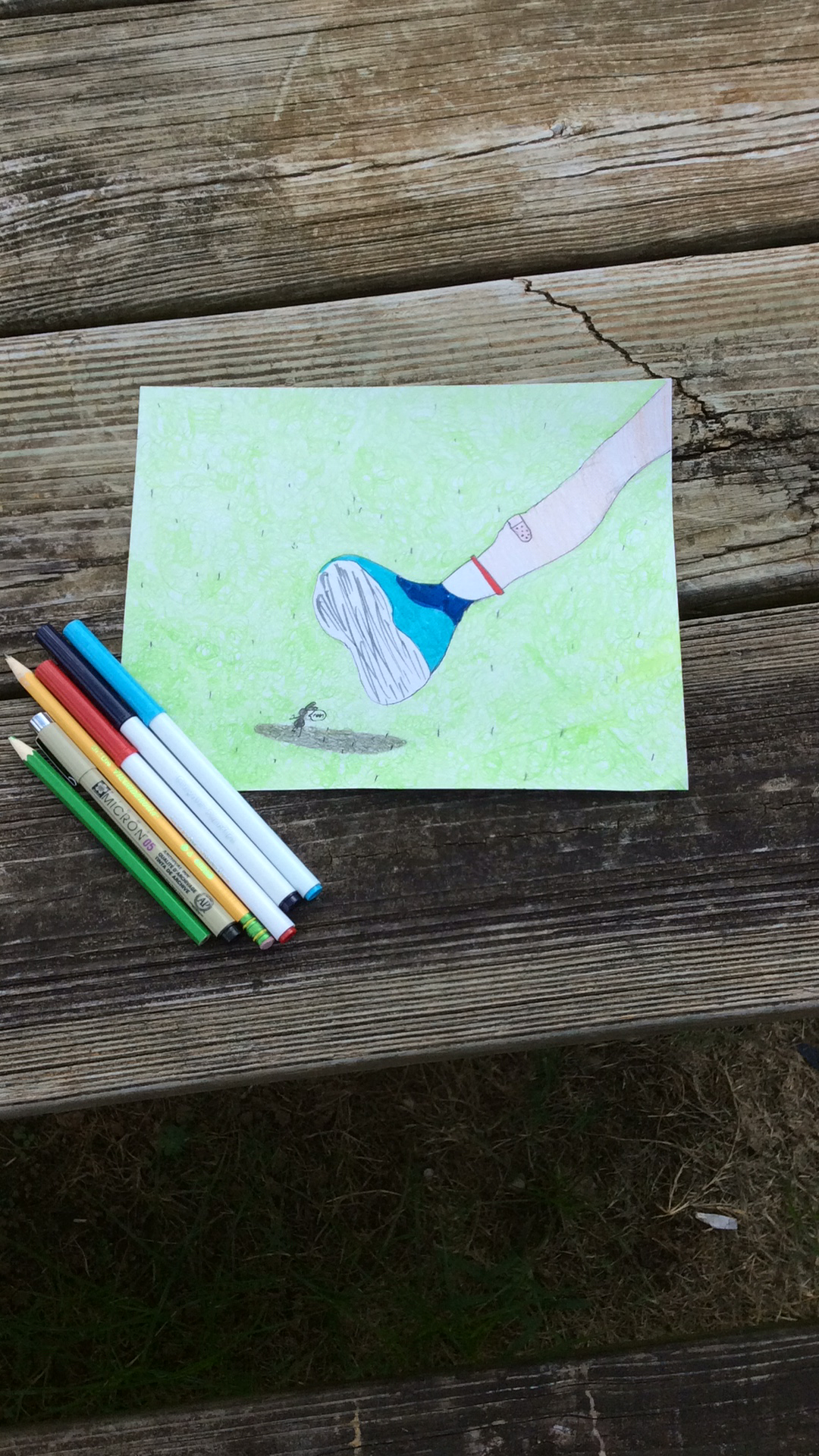
Observe the ground up close, imagine an ant's perspective, then draw a detailed low-angle scene showing grass, soil texture, and big familiar objects.


Drawing Apps
Step-by-step guide to draw something from an ant's view
Step 1
Gather your materials and bring them to a flat workspace.
Step 2
Imagine you are the size of an ant.
Step 3
Go outside to a patch of grass or soil you like.
Step 4
Crouch low so your eyes are very near the ground.
Step 5
Use the magnifying glass to study grass blades soil grains and tiny objects.
Step 6
Choose one big familiar object nearby to include in your picture.
Step 7
Place your paper flat in portrait orientation on the workspace.
Step 8
Lightly draw a low horizon line near the bottom third of the page.
Step 9
Sketch the main shapes by drawing tall grass blades and an uneven ground line with bumps roots and small rocks.
Step 10
Sketch the big familiar object towering above the grass to show how huge it looks from ant height.
Step 11
Add soil texture using tiny dots lines and small shapes for grains crumbs and pebbles.
Step 12
Add tiny scale clues like a small ant a crumb or little footprints to show size.
Step 13
Trace over your final lines with a darker pencil or marker to make them stand out.
Step 14
Colour and shade your drawing adding darker tones beneath objects to create shadows.
Step 15
Share your finished creation on DIY.org
Help!?
What can we use instead of a magnifying glass if we don't have one?
If you don't have a magnifying glass, use a smartphone camera zoom, a reading lens, or a clear plastic bottle to study grass blades, soil grains, and tiny objects as described in 'Use the magnifying glass...'.
My drawing doesn't look like it's from an ant's view — how can I fix the perspective?
If the ant's-eye perspective looks off, crouch lower to put your eyes near the ground (step 'Crouch low...'), redraw the horizon line low on the page (bottom third), and make the grass blades and the big familiar object taller and more dominant to emphasize scale.
How can I adapt this activity for younger or older kids?
For younger kids, place the paper on the ground, have them sketch big simple grass shapes and use thick crayons, while older kids can follow the steps to add tiny soil texture, detailed shading, and small scale clues like footprints or crumbs.
How can we extend or personalize the ant-view picture after finishing the drawing?
Enhance your ant-view by gluing a few real grass blades, pebbles, or crumbs onto the sketched uneven ground and scale clues before tracing final lines and coloring to create a mixed-media 3D piece to share on DIY.org.
Watch videos on how to draw something from an ant's view
How to draw an Ant | Step by step Drawing for kids🐜🤎
4 Videos
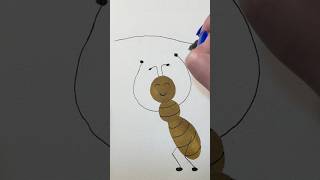
How to draw an Ant | Step by step Drawing for kids🐜🤎
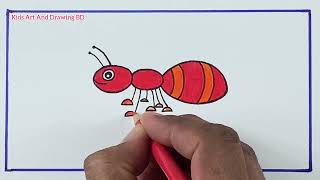
Easy Ant 🐜 🐜drawing for beginners | kids Art Lesson
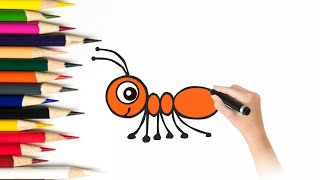
How to Draw an Ant - Easy Step-by-Step Tutorial for Kids #drawingtutorial
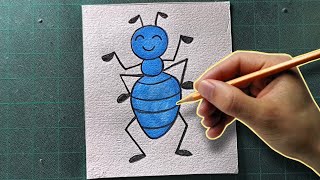
"Master the Art of Drawing Ants: Step-by-Step Guide for Beginners!"
Facts about observational drawing
🐜 Ants can lift 10–50 times their own body weight, so a tiny ant in your drawing would treat a leaf like a boulder.
👁️ Many insects have compound eyes that create a mosaic-like view—excellent for spotting motion but less for fine detail.
📐 A low-angle (ground-up) perspective makes nearby things look enormous: a pebble can read like a mountain in your scene.
🌾 A single blade of grass can be dozens to hundreds of times taller than an ant, so its edges and veins become giant landmarks.
🧪 A teaspoon of healthy soil can contain billions of microorganisms and lots of tiny critters—your ant’s world is bustling!
How do you draw something from an ant's view?
What materials do I need to draw from an ant's perspective?
What ages is this ant's-view drawing activity suitable for?
What are the benefits of drawing from an ant's perspective?
