Draw A Jumping Cartoon
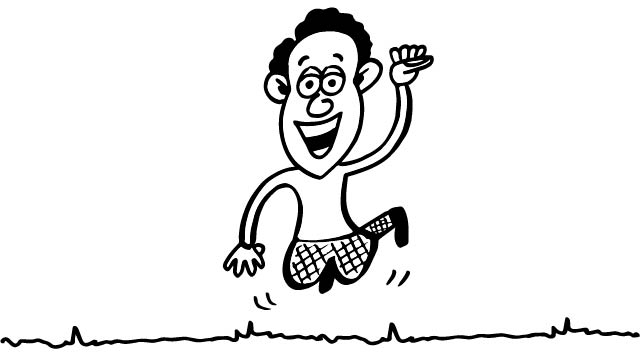
Draw a jumping cartoon character using simple shapes, practice motion lines and proportions, add color, and experiment with different poses to show movement.
About this activity
Draw a jumping cartoon character using simple shapes, practice motion lines and proportions, add color, and experiment with different poses to show movement.
What you need
Step by step
- 1
Step 1
Gather all your materials and find a comfy spot to draw.
- 2
Step 2
On the scrap paper draw three tiny quick gesture sketches of different jumping poses using simple shapes.
- 3
Step 3
Pick your favorite thumbnail pose to turn into a big drawing on the blank paper.
- 4
Step 4
Lightly draw a curved motion arc on the blank paper to show the path of the jump.
- 5
Step 5
Sketch the character on the blank paper using simple shapes following the motion arc.
- 6
Step 6
Adjust the sizes of the head torso and limbs so the character looks balanced and proportional.
- 7
Step 7
Add motion lines near the arms legs and behind the body to show speed and direction.
- 8
Step 8
Draw the face and small details like hair clothing or accessories to give your character personality.
- 9
Step 9
Trace over your final lines with the black marker to ink your drawing.
- 10
Step 10
Let the ink dry completely before you touch the paper.
- 11
Step 11
Gently erase the pencil lines to clean up the drawing.
- 12
Step 12
Color your jumping character with your colouring materials and add color streaks to emphasize movement.
- 13
Step 13
Share your finished jumping cartoon on DIY.org
Fun facts
How do you draw a jumping cartoon character step by step?
To draw a jumping cartoon character, start with simple shapes: a circle for the head, ovals for the body and limbs. Sketch the action line showing the jump arc and position the body on that curve. Add motion lines near limbs and hair to suggest movement. Keep proportions simple, erase guide shapes, then ink outlines and add color and shadows. Try different leg and arm poses to emphasize height and energy.
What materials do I need to draw a jumping cartoon with my child?
You'll need sketch paper or a sketchbook, pencils (HB and a softer one like 2B), eraser, fine-tip black pen or marker for outlines, and colored pencils, markers, or watercolors for color. Optional tools: a ruler, tracing paper or lightbox for refining poses, reference photos, and a smock to protect clothes. Choose non-toxic, washable materials for young children.
What ages is drawing jumping cartoons suitable for?
This activity suits ages 4–14 with simple adaptation. Ages 4–6: focus on big basic shapes, bold lines and motion marks; provide tracing or guided shapes. Ages 7–10: practice proportions, varied poses and simple shading. Ages 11–14+: refine anatomy, dynamic foreshortening and color techniques. Always supervise younger children, and encourage practice rather than perfection.
What are the benefits, safety tips, or variations for the jumping cartoon activity?
Drawing jumping cartoons builds fine motor skills, understanding of motion, storytelling and spatial reasoning. It's low-risk—use non-toxic, washable supplies and supervise small children. Variations: make a series of sequential poses to create a flipbook or GIF, change characters’ emotions, try collage or watercolor textures, or challenge older kids with foreshortening and perspective. Praise effort and experiment to build confidence.
Watch & Learn
Need help?
What can we use if we don't have a black marker, scrap paper, or special colouring materials?
If you don't have the black marker called for in step 10, trace final lines with a fine-tipped permanent pen or dark gel pen, use any clean printer paper or the back of a cereal-box cardstock in place of the blank paper, and substitute crayons or colored pencils for other colouring materials in step 13.
My drawing keeps looking off-balance—what should I do during the proportion step?
When adjusting head, torso, and limbs in step 6, lightly compare sizes to your chosen thumbnail from step 3, redraw the body parts as simple geometric shapes, and align the torso so the character's center of mass follows the motion arc from step 4 to restore balance.
How can I adapt this activity for different ages or skill levels?
For younger kids simplify steps 2–6 by sketching only two big shapes (head and body) along the motion arc and using chunky crayons for step 13, while older kids can add foreshortening, extra motion lines in step 6, and detailed inking and shading during steps 10–12.
What are some ways to enhance or personalize the jumping cartoon once it's finished?
Extend the activity by creating a short flipbook with repeated versions of steps 2–13 along the motion arc to animate the jump, or add a background, props, and unique clothing details in steps 7 and 13 before inking in step 10 and sharing on DIY.org.