Do a floor routine
Plan and practice a safe beginner floor routine with warm-up, basic tumbling, balance and dance moves, then perform and record your routine.
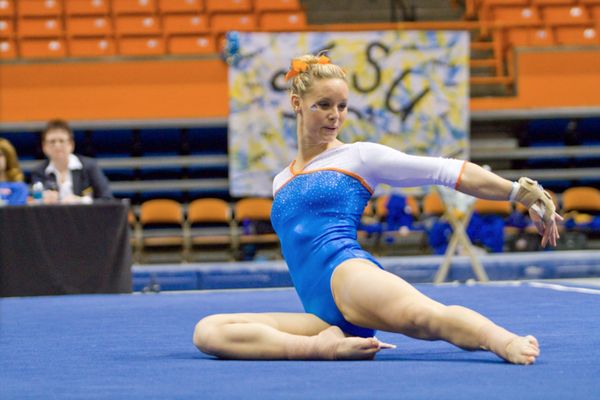
About this activity
Plan and practice a safe beginner floor routine with warm-up, basic tumbling, balance and dance moves, then perform and record your routine.
What you need
Step by step
- 1
Step 1
Put on comfortable clothes so you can move freely.
- 2
Step 2
Remove shoes and any jewelry to stay safe while you tumble.
- 3
Step 3
Clear a safe open floor space and lay your soft mat or use carpet.
- 4
Step 4
Use tape to mark a starting line and an ending line about 6 feet apart.
- 5
Step 5
Fill your water bottle and place it within reach for quick sips.
- 6
Step 6
Warm up by marching in place for two minutes to get your muscles ready.
- 7
Step 7
Do a 30-second hamstring stretch by reaching toward your toes while standing or sitting.
- 8
Step 8
Practice a forward roll on the mat three times, tucking your chin and rolling slowly and safely.
- 9
Step 9
Practice balance by standing on one foot for 20 seconds on each side and then switch.
- 10
Step 10
Choose one warm-up move one tumble one balance move and two dance moves and decide the order to make your routine.
- 11
Step 11
Count beats for each move and write or say the order out loud so you remember it.
- 12
Step 12
Rehearse your routine slowly three times with your chosen music while an adult watches for safety.
- 13
Step 13
Ask an adult to record you and then perform your full routine at performance speed while they record.
- 14
Step 14
Share your finished routine video on DIY.org.
Fun facts
How do I plan and practice a safe beginner floor routine for my child?
Start with a 5–10 minute warm-up (jogging, gentle stretches) then plan a short routine of 30–60 seconds. Include a simple tumbling element (forward roll or cartwheel), a balance move (one-leg balance or arabesque), and 2–3 dance transitions. Teach each skill step-by-step, practice slowly, add music, and run the full routine several times. Supervise closely, take breaks, and record only when the child is comfortable and using safe technique.
What materials do I need to create and record a beginner floor routine at home?
You’ll need a clear, soft practice space such as a carpeted area or a gymnastics mat, comfortable clothing, and water. Use a phone or camera on a stable surface or tripod to record. Optional items: a speaker for music, cones or tape to mark start/end points, a small first-aid kit, and an adult or trained spotter. Remove furniture and hazards to keep the area safe for tumbling and balance work.
What ages is a floor routine activity suitable for?
Beginner floor routines work well for children roughly aged 4–12, with activities scaled to ability. Ages 4–6 can focus on playful balance, rolls, and dance steps with close adult supervision. Ages 7–9 can learn more structured tumbling like cartwheels and handstands with spotting. Older children (10–12) can combine skills into longer routines. Always tailor difficulty to the child’s coordination, strength, and attention span; never push progress beyond safe readiness.
What safety tips should I follow when my child practices a floor routine?
Prioritize warm-up and cool-down, practice on a soft surface, and clear the area of hard or sharp objects. Use a trained spotter for new tumbling moves and avoid advanced flips without professional coaching. Keep sessions short and positive to prevent fatigue, encourage proper technique, and stop if the child feels pain. Have water available and a basic first-aid kit. Consider taking a few lessons from a qualified gymnastics coach for progression and injury prevention.
Watch & Learn
Need help?
What can we use if we don't have a soft mat, tape, or a water bottle?
Use a thick folded blanket or couch cushions on carpet as your soft mat, mark the start and end lines with painter's or masking tape or a row of small pillows instead of tape, and use a filled kitchen water bottle kept within reach as the instructions advise.
My child can't tuck their chin for the forward roll and feels dizzy—how can we fix that?
For the forward roll step (practice three times), have them first practice chin tucks while sitting, place a rolled towel under the shoulders for support, do one guided slow roll instead of three, and keep an adult standing close for safety.
How can we adapt this routine for different ages?
For younger kids shorten the two-minute march and 30-second stretch, swap the forward roll for a simple log roll and reduce balance holds to 5–10 seconds with an adult nearby, while older kids can extend warm-ups, add extra tumbles or dance moves, and rehearse more than the three slow runs before the performance-speed recording.
How can we enhance or personalize the routine after we've learned it?
Extend the activity by adding props or a costume, increasing the tape-marked distance between start and end lines, writing counts into each chosen move as the instructions say, rehearsing multiple takes while an adult records, and then sharing your best video on DIY.org.