Design a spacesuit
Build a wearable model spacesuit using cardboard, foil, fabric, and tape. Test movement, insulation ideas, and learn about astronaut life.


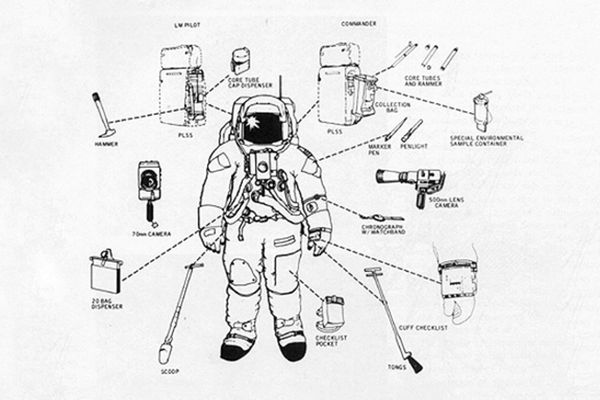

Step-by-step guide to design a spacesuit
Space Suit Explained : How It Keeps Astronauts Alive | What Is a Space Suit ?
Step 1
Gather all the materials on a clear table so you can reach everything easily.
Step 2
Measure the child’s chest width and torso length with the ruler and say the numbers out loud.
Step 3
Draw front and back torso outlines on cardboard using the marker and the measurements.
Step 4
Cut out the cardboard front and back panels along your drawn lines.
Step 5
Cover the inside of each cardboard panel with aluminum foil to add an insulation layer.
Step 6
Tape the front and back panels together at the shoulders leaving the side seams open for arms.
Step 7
Cut two fabric tubes to match the child’s arm length to make sleeves.
Step 8
Tape each fabric sleeve into the arm openings on the cardboard torso.
Step 9
Make a helmet by cutting a cardboard circle and shaping it into a dome that fits the head.
Step 10
Wrap the helmet dome in aluminum foil and secure the edges with tape.
Step 11
Attach elastic bands or Velcro strips to the sides of the torso so the suit can be fastened on and off.
Step 12
Tape small padding pieces into the elbows knees and back for comfort and extra insulation.
Step 13
Put the spacesuit on with an adult’s help so everything fits securely.
Step 14
Walk five steps while wearing the suit to test movement and notice any tight or loose spots.
Step 15
Share your finished spacesuit creation on DIY.org
Help!?
What can we use if we don't have aluminum foil or the right fabric for the sleeves?
If aluminum foil isn't available to cover the cardboard panels for insulation, substitute a reflective emergency blanket, bubble wrap, or foam sheets, and if you don't have fabric for the arm tubes use old t-shirts, pillowcases, or cut-up sweatpants to make the sleeves.
The shoulder seams or taped sides keep coming apart when the child walks—how can we fix that?
If taped shoulder seams or side openings tear during the five-step movement test, reinforce them by gluing an extra small cardboard patch inside each seam and wrapping strong duct tape around the exterior joints for added strength.
How can we adapt the activity for different ages so it stays safe and fun?
For preschoolers have an adult do the measuring, pre-cut the cardboard front/back panels and helmet dome, and use soft foam or pre-made sleeves, while older kids can measure aloud, draw and cut their own outlines, and attach Velcro and lights themselves.
How can we make the spacesuit more realistic or personalized after it's assembled?
To enhance the suit, paint or add stickers to the cardboard panels, glue battery-powered LED lights around the helmet dome, tape a painted plastic bottle as a faux oxygen tank to the back using the Velcro strips, and add extra padding at elbows, knees, and back for comfort and style.
Watch videos on how to design a spacesuit
How Does A Space Suit Work? - Physics Frontier
4 Videos

How Does A Space Suit Work? - Physics Frontier
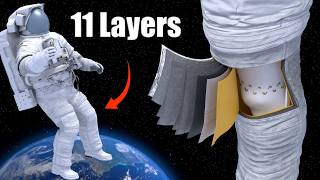
How does a Spacesuit work? (NASA)

Why Do Astronauts Wear Space Suits? Explained!

The Science Behind NASA's Astronaut Spacesuits Explained | WION Podcast
Facts about space science and engineering for kids
🧑🚀 Modern NASA spacesuits (like the EMU) can have about 14 layers to protect against micrometeoroids, temperature, and vacuum.
🌞 In low Earth orbit, surfaces in sunlight can exceed +120°C while shaded areas can drop below −150°C, so insulation matters a lot.
✨ Shiny materials such as Mylar and aluminum foil reflect radiant heat, which is why emergency blankets and suit layers look metallic.
📦 Cardboard is awesome for prototyping wearable parts—it's light, easy to cut and bend, and great for testing movement and fit.
🌊 Astronauts practice spacewalks underwater in giant pools to simulate weightlessness and test how suits affect mobility.
How do you build a wearable cardboard and foil spacesuit model?
What materials do I need to make a wearable spacesuit for kids?
What ages is the spacesuit design activity suitable for?
What are safety tips and learning benefits of designing a model spacesuit?
