Create Simple Jumps in Your Obby
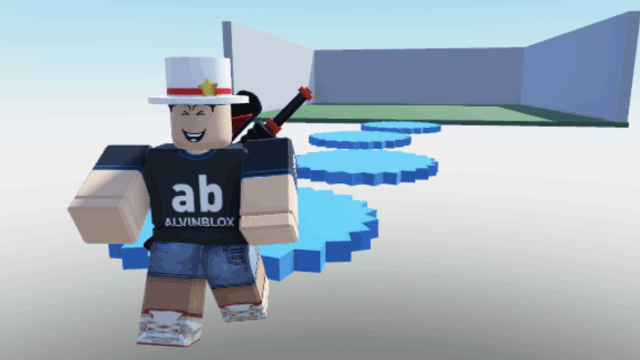
Design and build simple jump platforms for your obby using blocks, test jump distances, and adjust spacing so jumps are fair and fun.
About this tutorial
Design and build simple jump platforms for your obby using blocks, test jump distances, and adjust spacing so jumps are fair and fun.
What you need
Step by step
- 1
Step 1
Collect all the materials from the list.
- 2
Step 2
Pick a flat safe area with plenty of room and no breakable things nearby.
- 3
Step 3
Use masking tape to mark a clear start line on the floor.
- 4
Step 4
Stack blocks to build a low starting platform about one block high.
- 5
Step 5
Stack blocks to build a low landing platform facing the starting platform.
- 6
Step 6
Place a cushion on the floor where a jumper will land for safety.
- 7
Step 7
Measure the gap between the edge of the starting platform and the edge of the landing platform with your measuring tape.
- 8
Step 8
Write the measured distance on your paper.
- 9
Step 9
Do one careful test jump from the starting platform toward the landing cushion while an adult watches.
- 10
Step 10
Do five jump trials and count how many times you land on the landing platform.
- 11
Step 11
Move the landing platform a little closer if most jumps miss or a little farther if it feels too easy.
- 12
Step 12
Measure the new gap and write the new distance on your paper.
- 13
Step 13
Share a photo or description of your finished jumps and how you adjusted them on DIY.org.
Fun facts
How do I create simple jumps in my obby so they're fair and fun?
To create simple jumps in your obby, sketch a layout, place block platforms with consistent sizes, and set spacing based on average player jump distance. Use your editor’s grid or snap tools to measure gaps, then enter play-test mode and try jumps from different speeds and angles. Adjust spacing, add small ledges or lower platforms for easier retries, and use visual cues like color or arrows so kids know where to jump.
What materials and tools do I need to build jump platforms for an obby?
You'll need a computer or tablet with your game editor (Roblox Studio or similar), an account to test and publish, block assets or basic building pieces, and the editor’s grid/snap tools to measure spacing. Keep a test avatar and use play-test mode to try jumps. A notebook or digital notes help record successful distances, and simple textures or colors make platforms clearer for kids.
What ages is designing and building obby jumps suitable for?
This activity suits children aged about 7–14. Younger kids (5–7) can participate with adult help for tool use and measurements; older kids (10–14) can design spacing, test jumps, and tweak difficulty independently. It encourages spatial reasoning, patience, and basic game design thinking. Always supervise account use, teach simple editor basics, and adapt complexity to the child’s comfort and motor skills.
What are the benefits, safety tips, and variations for simple obby jumps?
Designing simple obby jumps builds problem-solving, spatial awareness, and basic game-design skills, and encourages testing and iteration. For safety, supervise online accounts, avoid sharing personal info, and set screen-time limits. Variation ideas: add timed jumps, moving platforms, or multiple routes for different skill levels. For younger players, include wider platforms and checkpoints; for a challenge, add small gaps requiring running starts or different block heights.
Watch & Learn
Need help?
What can we use if we don't have masking tape, the listed blocks, a cushion, or a measuring tape?
Use painter's tape or a length of string to mark the start line, stack cardboard boxes or phone books instead of blocks, fold a bath towel or blanket as the landing cushion, and use a ruler or a smartphone measuring app to measure the gap.
If the blocks keep toppling or the jumper consistently misses the landing platform, what should we do?
Stabilize platforms by widening the base or using heavier books, tape the cushion to the floor so it doesn't slide, have an adult spot the child during the one careful test jump, and move the landing platform closer as instructed if most of the five trials miss.
How can I adapt the activity for younger or older children?
For younger kids make both platforms only one block high, shorten the measured gap and use a thicker cushion with simpler counting, while older kids can raise platform height, increase the gap, add multiple landing platforms, and record each new measured distance on the paper.
How can we extend or personalize the obby once the basic jumps are working?
Decorate and label the start line with masking or painter's tape, paint or color the blocks, add themed obstacles between platforms, create a difficulty chart on your paper using the measured distances, and share progress photos and descriptions on DIY.org as the instructions suggest.