Create a game of paper fishing
Make a paper fishing game with handmade fish, paperclips, and a magnet rod; design rules, score points, and practice counting and fine motor skills.
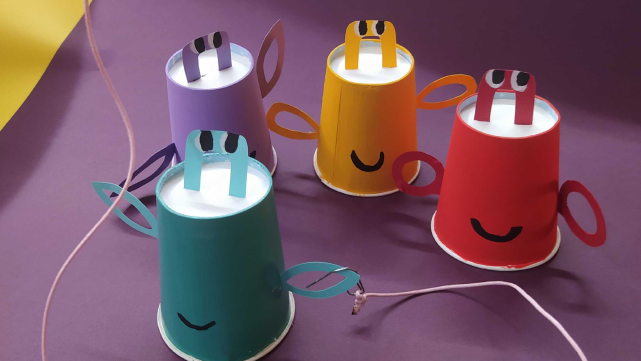
About this tutorial
Make a paper fishing game with handmade fish, paperclips, and a magnet rod; design rules, score points, and practice counting and fine motor skills.
What you need
Step by step
- 1
Step 1
Gather all materials and put them on a clear table or the floor so you can reach everything.
- 2
Step 2
Fold a sheet of paper in half and draw fish shapes on the folded paper so the fish are the same size.
- 3
Step 3
Cut out the fish shapes from the paper carefully using scissors.
- 4
Step 4
Decorate each paper fish with colours patterns and funny faces using your colouring materials.
- 5
Step 5
Write a point value clearly on each fish using a number like 1 2 or 5.
- 6
Step 6
Attach one paperclip to the mouth or belly edge of each fish using tape or by clipping it on so the magnet can catch it.
- 7
Step 7
Place all the finished fish flat into your container to make a fish pond.
- 8
Step 8
Tie one end of the string securely to the stick or pencil to make your fishing rod.
- 9
Step 9
Fasten the small magnet to the other end of the string with tape so it hangs like a hook.
- 10
Step 10
Test your rod by lowering the magnet into the pond and catching one fish to check the paperclip sticks.
- 11
Step 11
Decide and write down your scoring rules for each fish and how many points are needed to win.
- 12
Step 12
Decide and write down game rules like turn order time limits and how to count points.
- 13
Step 13
Play a practice round to catch fish count your points and practice your fine motor skills.
- 14
Step 14
Share a photo and description of your finished paper fishing game on DIY.org
Fun facts
How do you make and play a paper fishing game with handmade fish, paperclips, and a magnet rod?
Cut fish shapes from cardstock or heavy paper, decorate and write point values or numbers on them, then attach a paperclip to each fish. Make a magnet rod by tying a string to a stick and fastening a small magnet at the end. Scatter fish in a shallow tub or on the floor. Players take turns “fishing” by attracting a paperclip with the magnet, tallying points, following a time limit, and practicing counting and fine motor control.
What materials do I need for a paper fishing game?
You’ll need sturdy paper or cardstock, scissors, markers or crayons, paperclips, a stick or dowel, string, and a small magnet to create the rod. Optional items: laminating film or clear tape to make fish durable, a shallow tub or tray as the pond, stickers or number labels for scoring, a timer, and small prizes. Supervision is required for magnets and scissors to keep the game safe for young children.
What ages is this paper fishing game suitable for?
This game suits preschoolers through early elementary (about 3–8 years) with adult supervision for small parts and magnets. For younger children, use larger fish, big paperclips, and softer magnets; guide their hand for the first tries. Older kids (6–9+) can handle more complex scoring, math challenges, or timed rounds. Always monitor play because magnets and paperclips present choking risks for toddlers.
What are some fun variations and scoring ideas for the paper fishing game?
Color-code fish for points, label them with numbers for simple addition, or attach letters for spelling challenges. Try timed rounds, cooperative team play, or “catch a question” fish with tasks written on the back. Increase difficulty with smaller paperclips or moving targets. For sensory play, use foam fish in water. Adjust scoring to focus on counting, subtraction, or fine motor improvement depending on your child’s learning goals.
Watch & Learn
Need help?
What can I use if I don't have a small magnet or paperclips for the fishing hook and fish hooks?
If you don't have a small magnet, tie a metal washer or a strong refrigerator magnet to the string in step 8, and if you don't have paperclips attach a small folded foil tab or a binder clip to the fish edge in step 6 so the magnet or washer can catch them.
My rod can't pick up the fish — what should I check and fix?
Check that each paperclip is attached at the mouth or belly edge as instructed in step 6, replace or upgrade to a stronger magnet and retest using step 11, or add a second paperclip to stubborn fish to improve pickup.
How can I adapt the activity for toddlers or older kids?
For toddlers, have an adult pre-cut the fish (step 3), use bigger fish and a thicker stick or marker with a large magnet (steps 7–9), and for older kids make smaller fish, add lower point values, timed rounds, or written scoring challenges in steps 11–12.
What are some ways to extend or personalize the paper fishing game after it's assembled?
Decorate special bonus fish with unique point values in step 5, write power-up rules on your scoring sheet in step 11, laminate fish for durability before placing them in the container in step 6, and photograph the finished game to share on DIY.org as suggested in step 13.