Construct a pressure sensor
Build a simple pressure sensor using aluminum foil, sponge, tape, wires, and a battery to light an LED when pressed, learning about conductivity.


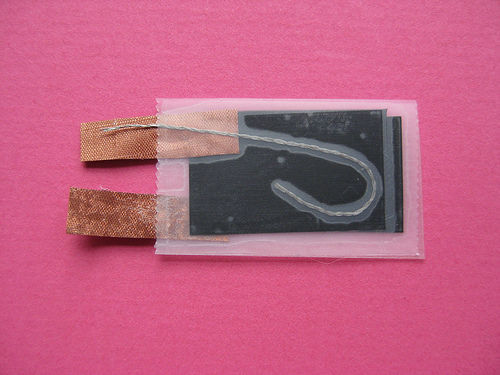

Step-by-step guide to construct a simple pressure sensor
BMP180 pressure sensor Arduino tutorial | Step by step instructions [Code & Circuit diagram]
Step 1
Clear a flat workspace and lay out all your materials where you can reach them.
Step 2
Cut two squares of aluminum foil about 4 cm by 4 cm using scissors.
Step 3
Cut a piece of sponge about 3 cm by 3 cm using scissors.
Step 4
Tape the stripped end of one wire firmly onto the center of the first foil square.
Step 5
Tape the stripped end of the second wire firmly onto the center of the second foil square.
Step 6
Put the sponge flat on the table.
Step 7
Place the first foil (with its wire taped on) on top of the sponge with the foil facing the sponge.
Step 8
Place the second foil (with its wire taped on) under the sponge with the foil facing the other foil and make sure the foil surfaces do not touch when the sponge is unpressed.
Step 9
Tape around the edges of the sponge to hold the two foil pieces in place while leaving the center able to compress.
Step 10
Tape the long leg (anode) of the LED to the flat side (positive) of the coin cell battery.
Step 11
Tape the wire from the bottom foil to the negative side of the coin cell battery.
Step 12
Tape the short leg (cathode) of the LED to the free wire coming from the top foil.
Step 13
Press the center of your foil-sponge sensor and see if the LED lights when the foil layers touch.
Step 14
Share a photo or description of your finished pressure sensor on DIY.org
Help!?
What can we use if we don't have aluminum foil, a coin cell, or a sponge?
If you don't have aluminum foil use flattened, taped soda-can metal or copper tape, replace the coin cell with a 3 V battery pack (two AA/AAA in series with a holder), and swap the sponge for a small piece of foam or folded cloth while keeping the tape and wires as in the instructions.
My LED won't light — what should I check?
Confirm you taped each stripped wire securely to the center of its foil (steps 4–5), make sure the foil faces don't touch when the sponge is unpressed (step 7), verify the LED's long leg is taped to the battery positive and the bottom foil wire is taped to the battery negative (steps 9–10), and press the sensor center to close the circuit (step 12).
How can we adapt this activity for younger or older kids?
For younger kids, have an adult pre-cut the foil and sponge and supervise the battery and taping steps while using larger foil and thicker foam, and for older kids, challenge them to measure how sponge thickness changes sensitivity or to connect the sensor to a microcontroller or buzzer instead of just the LED.
How can we make the pressure sensor more fun or useful?
Personalize and improve the project by decorating the taped edges, building multiple foil-sponge pads into a button board, varying sponge thickness to tune sensitivity, or wiring the LED output to a buzzer or Arduino to record or sound when the foil layers touch.
Watch videos on how to construct a simple pressure sensor
Build Your Own Pressure Sensor / Velostat / Scamp3
4 Videos
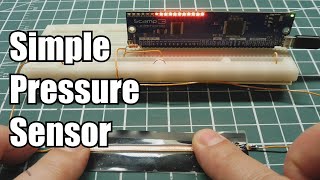
Build Your Own Pressure Sensor / Velostat / Scamp3
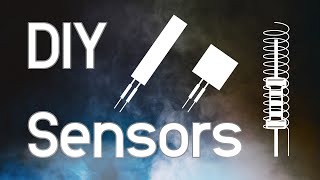
DIY Sensors - Build your own Flex sensor, Pressure sensor and Vibration sensor
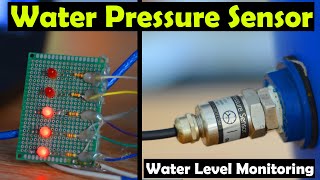
Arduino Water Pressure Sensor Project, Water Level Pressure Sensor, Water pressure monitoring
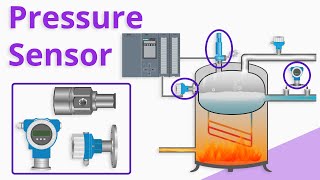
What is a Pressure Sensor?
Facts about electrical conductivity and simple circuits
🔌 Aluminium foil conducts electricity and is often used in DIY circuits as a cheap flexible conductor.
🧽 When you squeeze a sponge the foil layers can touch each other and close the circuit — that’s how a simple pressure switch works.
💡 Many LEDs will light with just a couple of volts and only a few milliamps of current, making them safe for small battery projects.
🔋 A common AA or AAA battery supplies about 1.5 volts; putting two in series gives ~3V for brighter LEDs.
📱 Pressure sensors and switches are used everywhere — from game controllers and scales to some touch-sensitive gadgets.
How do you build a simple pressure sensor that lights an LED?
What materials do I need to make a foil-and-sponge pressure sensor?
What ages is this pressure sensor activity suitable for?
What are the safety tips and learning benefits of this pressure sensor project?
