Attend space camp
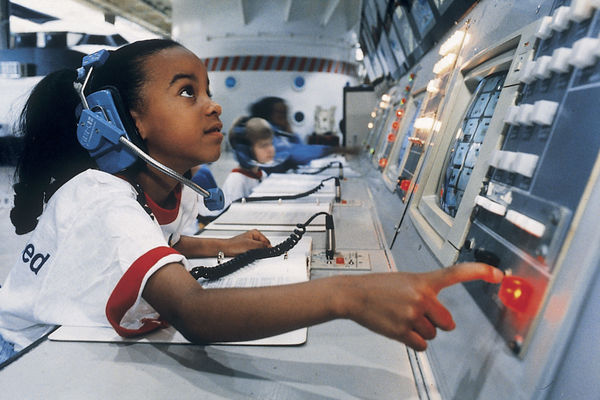
Attend a hands on space camp to build a model rocket, simulate astronaut exercises, and learn about planets, rockets, and teamwork.
About this activity
Attend a hands on space camp to build a model rocket, simulate astronaut exercises, and learn about planets, rockets, and teamwork.
What you need
Step by step
- 1
Step 1
Gather all the materials and put them on a clear table so your space camp is ready.
- 2
Step 2
Ask a friend or family member to be your teammate for space camp.
- 3
Step 3
Use markers to decorate the paper tube so it looks like a rocket body.
- 4
Step 4
Cut a circle from paper and fold it into a cone to make the rocket nose.
- 5
Step 5
Tape the cone to the top of your decorated rocket tube.
- 6
Step 6
Cut out three fins from paper and attach them to the bottom of the rocket with tape.
- 7
Step 7
Tie a long piece of string tightly between two chairs across the room to make a launch line.
- 8
Step 8
Thread a straw onto the string so the straw can slide freely along the line.
- 9
Step 9
Inflate a balloon partway and pinch the end closed without tying it.
- 10
Step 10
Tape the inflated balloon to the straw so the balloon will push the straw when released.
- 11
Step 11
Tape your paper rocket to the straw next to the balloon so it will travel with the straw.
- 12
Step 12
Let go of the balloon and watch your rocket zoom along the string during launch.
- 13
Step 13
Create a short astronaut training course with pillows blankets and cushions for crawling balancing and jumping.
- 14
Step 14
Complete the astronaut training course with your teammate as a relay to practice teamwork.
- 15
Step 15
Pick three planets and say one fun fact about each then share a photo or short video of your rocket and teamwork on DIY.org.
Fun facts
How does my child participate in a hands-on space camp that builds rockets and simulates astronaut exercises?
To attend a hands-on space camp, first research local or residential programs and register online, noting ages and session dates. During camp kids follow daily schedules: safety briefing, model-rocket building, launch prep, astronaut-skill simulations, planet lessons, and team challenges. Encourage your child to participate in workshops, ask questions, and work with peers on mission tasks. Most camps end with a launch or presentation; pick a camp with experienced instructors and clear supervisio
What materials and gear should I bring to a hands-on space camp?
Many space camps supply communal materials like rocket kits, simulators, and lab equipment. Parents should check the camp packing list and bring closed-toe shoes, comfortable clothing, sunscreen, a refillable water bottle, a notebook and pen, and safety glasses if requested. If the program offers optional take-home rocket kits, budget for kit fees. Label personal items and include any necessary medications and allergy information for staff.
What ages are hands-on space camps for model rockets and astronaut simulations suitable for?
Hands-on space camps typically serve ages 7–18, with programs tailored by skill level. Elementary campers (7–10) enjoy guided rocket builds and basic astronomy. Middle-school groups (11–14) handle more complex model rockets, simulator missions, and team challenges. Teen sessions (15–18) focus on advanced engineering, coding, and STEM careers. Review the camp's age recommendations, instructor qualifications, and whether younger children require adult supervision or separate beginner tracks.
What are the benefits of sending my child to a hands-on space camp?
Space camp boosts STEM skills, critical thinking, and teamwork while making science fun. Building model rockets teaches engineering basics and measurement; simulations develop problem-solving, communication, and leadership. Camps also inspire curiosity about astronomy and careers in science, improve fine motor skills and persistence, and provide confidence through public presentations or launches. Choose programs that balance hands-on activities with safety instruction to maximize learning and e
Watch & Learn
Need help?
What can we use instead of a paper tube, straw, or long string if those materials are hard to find?
Use a rolled sheet of paper or an empty paper towel tube in place of the paper tube, a sturdy drinking straw or thin wooden dowel instead of the straw, and ribbon or a shoelace tied between two chairs instead of the long string so the rocket can still slide.
Why won't my rocket slide smoothly or stay on the straw and how do I fix it?
Make sure the string is tied tightly and level between the two chairs, thread a smooth straight straw so it can move freely, and reinforce the tape where the inflated balloon and paper rocket attach so they don't come loose during the launch.
How can I adapt the activity for younger or older kids?
For younger kids, pre-cut the cone and fins, shorten the launch line and have an adult handle inflating and taping the balloon, while older kids can design different fin shapes, test balloon inflation levels, and time or measure launch distances as a mini experiment.
How can we make the launch more exciting or educational after finishing the basic rocket?
Decorate the paper tube with markers and stickers, experiment by changing fin shapes or adding small weights to test stability, record launch distances and a short video to upload to DIY.org with your three planet facts, and turn the astronaut training course into a scored relay to practice teamwork.