Add Emotions to Your One Line Portraits!
Draw one-line portraits using a single continuous pen stroke, then add expressive eyes, mouths, and color to show different emotions and storytelling.
About this tutorial
Draw one-line portraits using a single continuous pen stroke, then add expressive eyes, mouths, and color to show different emotions and storytelling.
What you need
Instructions
- 1
Step 1
Gather your materials and lay them out on a flat workspace.
- 2
Step 2
Warm up by drawing quick one-line doodles on scrap paper without lifting your pencil.
- 3
Step 3
Lightly draw a small guideline on your final paper to mark where the face will go.
- 4
Step 4
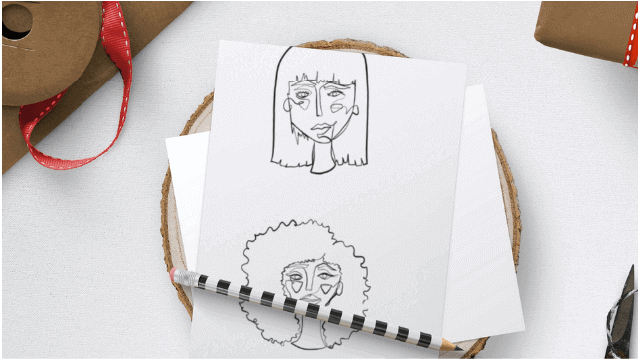
Draw your one-line portrait on the final paper using a single continuous pen stroke without lifting the pen.
- 5
Step 5
Wait a minute for the ink to dry completely.
- 6
Step 6
Erase any pencil guidelines carefully so only your inked line remains.
- 7
Step 7
Add expressive eyes to the face using simple shapes like circles lines or dots.
- 8
Step 8
Draw an expressive mouth and eyebrows to show the emotion clearly.
- 9
Step 9
Add one storytelling detail such as a hat a teardrop a speech bubble or a tiny background object.
- 10
Step 10
Color your portrait to match the emotion using your coloring materials.
- 11
Step 11
Make at least two more one-line portraits showing different emotions by repeating the same steps.
- 12
Step 12
Share your finished one-line portraits on DIY.org.
Fun facts
How do you draw one-line portraits and add emotions and storytelling?
To make one-line portraits, start by placing your pen on the paper and draw a continuous line to shape the head and facial landmarks without lifting the pen. Focus on simple contours—chin, cheeks, hairline—and loop back to suggest a nose or jaw. After the continuous outline, add expressive eyes, eyebrows and mouths with separate strokes, then use color to emphasize mood (cool tones for sad, warm for happy). Encourage exaggeration and short captions to build small stories.
What materials do I need to make one-line portraits with expressive eyes and color?
You'll need paper or a sketchbook, a fine-tip permanent marker or felt-tip pen for the single continuous stroke, and a pencil and eraser for warm-ups. For adding expression and color use colored pencils, markers or crayons; water-based paints or watercolor pencils also work. Optional items: stencils, stickers, a thick black fineliner for bold lines, and scrap paper for practice. Choose non-toxic, washable materials for younger children and easy clean-up.
What ages is the one-line portrait emotion activity suitable for?
This activity suits toddlers to teens with adjustments: ages 3–5 enjoy continuous scribbles and simple facial features with adult help; ages 6–9 can control one-line portraits, practice different expressions and start adding color; ages 10–14 can experiment with stylized lines, storytelling and mixed media. Supervise 3–5 year-olds, choose washable markers, and set simple prompts (happy, surprised) to scaffold learning. It's flexible for family groups and mixed ages.
What are the benefits of drawing one-line portraits with expressive features?
Drawing one-line portraits helps emotional literacy, fine motor control and observational skills. Adding expressive eyes, mouths, and color teaches children to recognize and label feelings, improving communication and empathy. It boosts creativity, storytelling, and confidence through low-pressure experimentation. The single-stroke constraint encourages problem-solving and relaxed mark-making, reducing perfectionism. Use group sharing to build vocabulary and social skills. This activity is low-c
Watch & Learn
Need help?
What can I use if I don't have the recommended pen or final paper for the one-line portrait?
If you don't have a fine-tip pen or the final paper, use a felt-tip marker, gel pen, or sharpened colored pencil on any smooth paper and allow marker ink to dry or set the pencil gently before erasing the pencil guideline.
My pen keeps lifting or the ink smudges when I try the continuous line—what should I do?
Practice the single continuous pen stroke on scrap paper, draw your guideline lightly on the final paper, work slowly to avoid lifting, and wait a full minute for the ink to dry completely before erasing to prevent smudges.
How can I adapt this activity for different age groups?
For younger children simplify by using sticker eyes and washable markers for the expressive features, provide thicker paper and pre-drawn guidelines, while older kids can use thin pens, experiment with more detailed eyebrows and mouths, and add complex storytelling details.
What are some ways to extend or personalize the finished one-line portraits?
Extend the project by making at least one portrait series showing emotion changes, adding mixed-media storytelling details like a tiny hat or watercolor background, or compiling and sharing your set on DIY.org.