Wood Warbler Facts For Kids
The Wood Warbler is a small, vibrant songbird found in northern and temperate Europe, known for its energetic behavior, bright yellow underbelly, and beautiful singing abilities.
Select reading age
Wood Warbler Facts For Kids
Videos & Quizzesincluded
About this topic
The Wood Warbler is a small, colorful bird that belongs to the leaf warbler family. 🐦It’s commonly found in northern and temperate Europe, including countries like Norway, Sweden, and Germany. Wood Warblers love to sing beautiful tunes, which makes them easy to identify! They usually breed in forests and woodlands where there are lots of trees and leaves. These delightful birds travel to warmer places for the winter, such as Africa, to escape the cold! 🗺️ The Wood Warbler has a cheerful personality, making it one of the most loved birds among bird watchers!
Explore with ChatDinoKey Points
The Wood Warbler is part of the Phylloscopidae family, which includes many other leaf warblers!
Wood Warblers are insect enthusiasts!
Did you know that the Wood Warbler can migrate over 3,500 kilometers?
The Wood Warbler is generally common and widespread, but some habitats have been affected by deforestation.
Wood Warblers usually start breeding in late spring.
In many cultures, the Wood Warbler is celebrated for its enchanting song and beauty.
Wood Warblers mostly live in forests and woodlands across northern and temperate Europe.
Wood Warblers are small birds measuring about 11-12 centimeters long!
Amazingly, Wood Warblers are known for their singing skills!
The Wood Warbler's scientific name is Phylloscopus sibilatrix.
Photos of Wood Warbler

Eggs, Collection Museum Wiesbaden
🌿 Related Species
The Wood Warbler is part of the Phylloscopidae family, which includes many other leaf warblers! 🌿One of its closest relatives is the Common Chiffchaff (Phylloscopus collybita), known for its distinct “chiff-chaff” call. Another similar bird is the Willow Warbler (Phylloscopus trochilus), which is often found in similar habitats. 🌍All these birds share similar characteristics, such as small size and love for leafy forests. Each species has unique songs and colors, making them fun to discover while birdwatching! Together, they contribute to the wonderful sounds of nature in our world.
Go deeper🐜 Diet And Foraging
Wood Warblers are insect enthusiasts! 🐜Their main diet includes small insects such as caterpillars, beetles, and aphids. They also love to eat spider eggs and other tasty critters they find on leaves. Wood Warblers have special hunting skills; they flutter from branch to branch, using their sharp eyes to spot tasty treats. 🌱With their thin bills, they skillfully pick insects right off of the leaves. During the warmer months, they need to eat a lot to build energy for their long migrations. That’s why you’ll see them hopping around, searching for food everywhere!
Go deeper🌍 Interesting Facts
Did you know that the Wood Warbler can migrate over 3,500 kilometers? 🌍That’s like flying from New York City to Africa! Also, these little birds can eat up to 100 insects in just one day! 🐜Their sweet song is not only beautiful but also important—it helps them find
Go deeper🌳 Conservation Status
The Wood Warbler is generally common and widespread, but some habitats have been affected by deforestation. 🌳The International Union for Conservation of Nature (IUCN) considers the Wood Warbler to be of "Least Concern.” This means their population is stable right now. However, it’s still important to protect their forest homes! Many organizations work hard to keep forests healthy so birds like the Wood Warbler can continue to thrive. 🌍Respecting nature and planting trees will help ensure these beautiful birds are around for many generations to come!
Go deeper🐣 Breeding And Nesting
Wood Warblers usually start breeding in late spring. 🐣The male sings to show off and attract a female. Once they find a partner, they build a cozy nest. The nest is often hidden close to the ground, usually in tall grass or among shrubs. 🏡They use leaves, moss, and grass to make it soft and warm. The female lays about 4 to 7 eggs, which are speckled and pale. Both parents help take care of the chicks by feeding them insects. The baby wood warblers hatch after about 12 days and leave the nest after 12 to 15 days, ready for their adventure!
Go deeper🎵 Cultural Significance
In many cultures, the Wood Warbler is celebrated for its enchanting song and beauty. 🎵Some poets and writers have written about this bird in tales, symbolizing happiness and the arrival of spring. In parts of Europe, people enjoy birdwatching and love spotting Wood Warblers in their natural habitats. 🐦Also, their presence signals that warmer weather is on its way! Folk tales sometimes depict the Wood Warbler as a messenger of change, reminding people to appreciate the beauty of nature and the changing seasons. 🌺
Go deeper🌲 Habitat And Distribution
Wood Warblers mostly live in forests and woodlands across northern and temperate Europe. 🌲They prefer warm places with lots of trees, especially oak and birch. These birds are also found in the extreme west of Asian Russia, near the southern Ural Mountains. During the winter, Wood Warblers migrate to Africa, mostly settling in places like Cameroon and the Democratic Republic of the Congo. 🌍Some brave Wood Warblers travel very far, sometimes flying over 3,500 kilometers to find warm weather! This migration helps them find food and a safe place to live during the cold months.
Go deeper🐦 Physical Characteristics
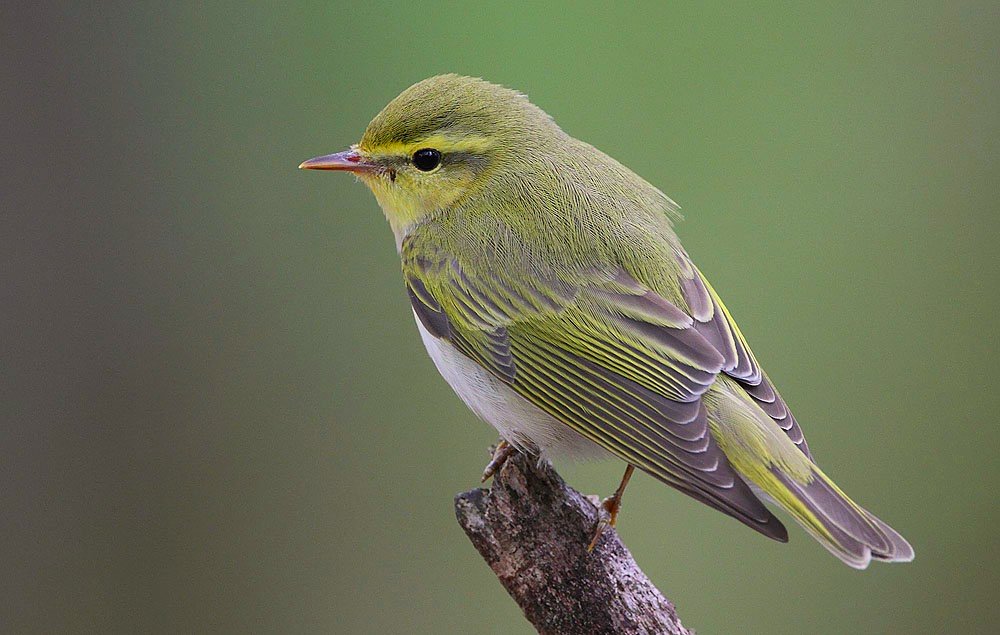
Wood Warblers are small birds measuring about 11-12 centimeters long! 🐦They are known for their slim bodies and beautiful colors. Their upper bodies are bright green or yellow, while their bellies are a lovely pale yellow. They have striking white eye stripes, making them look extra special! Their wings are short but strong, helping them flap quickly from tree to tree. Wood Warblers have a tiny, thin bill that helps them pick insects and small bugs from leaves. With their vibrant colors, they are hard to miss in the lush green of spring and summer! 🌿
Go deeper🎶 Behavior And Communication
Amazingly, Wood Warblers are known for their singing skills! 🎶They use their sweet melodies to communicate with each other. Males sing to attract female mates and declare their territory. Their song sounds like a series of cheerful notes, often described as “sweet and soft.” When they are not singing, they can be seen flitting about in trees, catching insects. Wood Warblers are very social birds and often join mixed flocks with other species in the autumn. They are also shy, so they prefer staying hidden among the leaves, just waiting for the right moment to show off!
Go deeper🦜 Taxonomy And Classification
The Wood Warbler's scientific name is Phylloscopus sibilatrix. 🦜It belongs to the family Phylloscopidae, which is made up of many different types of warblers. This family includes 30 different species! The Wood Warbler was first described by a scientist named Carl Linnaeus in 1758. 🌍It is classified in the order Passeriformes, which means it is a perching bird that has strong feet for grasping branches. This bird is a true “leaf warbler,” known for staying among the leaves in trees while singing its sweet melody!
Go deeper