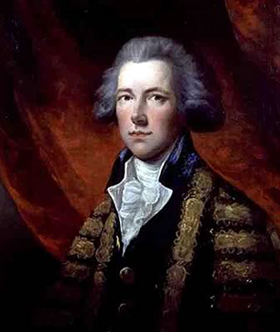
William Pitt the Younger was a significant British statesman who served as Prime Minister during crucial times in British history, notably from 1783 to 1801.

Set reading age
View for Kids
Easy to read and understand
View for Students
Clear, detailed explanations
View for Scholars
Deep dives and big ideas
William Pitt the Younger was a famous British leader from 1759 to 1806. He is known for being the youngest Prime Minister of Great Britain at just 24 years old! 🇬🇧 He helped his country during tough times, like the American Revolutionary War and the French Revolutionary Wars. People looked up to him because he was smart and made important decisions. Pitt worked hard to improve the economy and manage finances for Britain. He is remembered as one of the most important figures in British history, and many people still talk about his contributions today! 📜
Pitt's political journey started when he was elected to the House of Commons in 1780. Only 21 years old, he quickly earned respect for his quick thinking and strong speeches. 🗣️ In 1783, he became Prime Minister, making history as the youngest person ever to hold the position. He faced many challenges, like fighting against enemies of Britain, including France and America. He worked hard to unite his country and make everyone feel secure. His leadership style was different; he valued teamwork and listened to his advisors. Pitt's efforts helped him rise to a very powerful position in British politics! 🔼
William Pitt the Younger was born on May 28, 1759, in Hayes, England. He came from a political family; his father, William Pitt the Elder, was a famous politician too! 🎓Young William studied at the prestigious Pembroke College, Cambridge. He was very clever and loved reading about history and politics. By age 14, he started attending college! When he was older, he joined the House of Commons in 1780, where leaders make laws. This is where he began his journey to becoming Prime Minister. His intelligence and dedication paved the way for his remarkable career! 📚
William Pitt was known for his strong character and dedication to service. He was kind, caring, and often put others first. 🥰Pitt loved to read books and enjoyed philosophy. He wasn’t just a serious politician; he had a great sense of humor! His friends and colleagues respected him, and he was considered very trustworthy. Pitt was also a family man; he married in 1792 and had one son. Although he worked hard, he dealt with personal challenges, including health problems that affected him later in life. His resilience and love for his country made him a beloved figure! ❤️
William Pitt believed that having good relationships with other countries was essential. 🌍He worked hard to build strong alliances with nations like Austria and Russia to stand against France. Pitt also focused on trade and wanted to ensure that British merchants could sell their goods worldwide. 🤝During his time, he was able to host diplomatic meetings and create peace treaties that helped stabilize Europe. His efforts in foreign policy not only protected Britain but also helped him be seen as a respected leader on the world stage! His diplomacy made a difference for many nations! 🌏
The French Revolutionary Wars were conflicts between France and other European countries from 1792 to 1802. 🗡️ When he became Prime Minister, Pitt noticed that France was getting more powerful after its revolution. He wanted to protect Britain from potential threats. Pitt built up the British navy so they could defend the country and its colonies. 🚢He raised money to support British soldiers and helped form alliances with other nations. Although the wars were challenging, Pitt's leadership was crucial for keeping Britain safe during these turbulent times and fostering long-term security for the nation! 🛡️
As Prime Minister from 1783 to 1801, Pitt introduced several important policies. ⭐One of the most significant was the attempt to reduce national debt. He believed that a strong economy meant a strong country. Pitt also wanted to improve trade and make sure people had jobs! He created the Board of Trade, which helped manage commerce. His policies led to better finances for the British government. Pitt also focused on education, wanting more kids to go to school! 📚Through his strong leadership, he changed British politics for the better and laid down ideas that continue to influence the country!
William Pitt the Younger died on January 23, 1806, at the age of 46. 😢His death was a great loss for Britain. People mourned for him, remembering his contributions and the impact he had on the country. Even after he passed away, his legacy lived on. In 1807, a statue was built in his honor in Parliament, showing how much people cared about him. 📏Historians still study his life, and he is seen as one of Britain's greatest leaders. Schools often teach about his achievements, inspiring young people to become leaders in their own communities! 🌟
William Pitt's legacy is still felt today! He changed Britain's political landscape and made many important reforms. 🇬🇧 Many people remember him as a brilliant leader who fought for good governance. Pitt introduced policies that improved trade, education, and the economy, making life better for everyday people. His work to reduce national debt established a strong foundation for future governments. Many politicians look up to him as an example of determination and skill. Historians and students study his life, ensuring that his ideas continue to inspire generations! 📖
William Pitt realized that after the wars and battles, Britain had a lot of debt. 💵He wanted to make the economy stronger, so he introduced important reforms. One of his ideas was to create taxes that were fairer. Pitt also set up the Sinking Fund to pay off the national debt over time. This was a clever plan! 🏦His focus on financial stability helped Britain recover economically. Because of his smart decisions, people began to trust the government more. Pitt's contributions made a positive impact, and issues of money and debt became easier to understand for everyone! 💰
During the American Revolutionary War (1775-1783), Britain faced many challenges. Pitt was not Prime Minister at that time, but he played a significant role in British politics. He argued against some taxes, like the Stamp Act, that upset the American colonists. 💰He believed in finding solutions and wanted to avoid conflict. When he became Prime Minister in 1783, the war was over, and he faced the consequences. Many people were unhappy about how Britain lost the colonies. Pitt's ideas about change were important for helping Britain heal and find new paths for the future. 🌍


DIY is a creative community where kids draw, build, explore ideas, and share.
No credit card required