Wild Turkey Facts For Kids
Wild turkeys are large, ground-dwelling birds native to North America, known for their distinctive gobbling calls and fan-shaped tails.
Select reading age
Wild Turkey Facts For Kids
Videos & Quizzesincluded
About this topic
The wild turkey (Meleagris gallopavo) is a large bird native to North America. These birds can be found in forests, grasslands, and wetlands. Wild turkeys are known for their iridescent feathers that shimmer in the sunlight. They have strong legs and a distinctive long tail that helps them show off their colors. Did you know that Benjamin Franklin wanted the wild turkey to be the national bird of the United States? 🦃In 1620, pilgrims saw wild turkeys roaming around in Massachusetts. Today, these birds are known for their loud gobbles and are a popular symbol during Thanksgiving!
Explore with ChatDinoKey Points
Did you know that wild turkeys can fly?
Wild turkeys were once endangered due to habitat loss and hunting.
Wild turkeys have great cultural importance in the United States.
Wild turkeys are omnivores, which means they eat both plants and animals!
Wild turkeys are found across North America, from southern Canada to northern Mexico.
Wild turkeys can be quite big!
Wild turkeys usually mate in the spring.
Wild turkeys are social birds that often live in flocks.
Photos of Wild Turkey

Wild Turkey — photo 1

Close-up of head features

Closeup of wild turkey tom


Wild turkey agile in flight

Wild turkey, fast flier

Hen with poults

Wild turkeys foraging in the Appalachian Foothills of Pennsylvania

Nest found in Nelson County, Virginia
🌳 Fun Facts
Did you know that wild turkeys can fly? They prefer to roost in trees to stay safe from predators! 🌳Wild turkeys are also very loud—one turkey can produce different sounds, including gobbles, clucks, and yelps. The heaviest wild turkey on record weighed an astonishing 37 pounds (16.8 kg)! 🏆Also, their eyes are positioned in a way that gives them nearly 360-degree vision! That's why they're so hard to sneak up on! Wild turkeys are fascinating creatures that continue to capture our imagination! 🦃✨
Go deeper😢 Conservation Status
Wild turkeys were once endangered due to habitat loss and hunting. 😢In the early 20th century, there were very few left in the wild. However, thanks to conservation efforts and wise management of wildlife, their numbers have dramatically increased! Today, wild turkeys are classified as a species of "Least Concern" by the International Union for Conservation of Nature (IUCN). 👏It's essential to protect their natural habitats, as they play an important role in maintaining healthy ecosystems!
Go deeper🦃 Cultural Significance
Wild turkeys have great cultural importance in the United States. 🦃They are a symbol of Thanksgiving and are often featured in holiday meals. Native American tribes held wild turkeys in high regard for their feathers, which were used in clothing and decorations for ceremonies. Today, many people enjoy turkey hunting as a sport, celebrating the great outdoors. This bird represents the spirit of American wildlife and brings families together to celebrate during festive seasons! 🎉
Go deeper🌾 Diet And Feeding Habits
Wild turkeys are omnivores, which means they eat both plants and animals! 🌾🍔 They love to munch on seeds, nuts, berries, and insects. In the fall, they often search for acorns, which give them energy for the winter. Turkeys feed mostly by scratching the ground with their feet to find food. They can eat up to 20% of their body weight daily! In the morning and late afternoon, you can spot them foraging in fields, gardens, and forests. Wild turkeys have excellent eyesight, which helps them find food and avoid danger!
Go deeper🌎 Habitat And Distribution
Wild turkeys are found across North America, from southern Canada to northern Mexico. 🌎They love to live in a variety of habitats such as forests, fields, and wetlands. These birds need plenty of trees for roosting at night and open spaces to find food during the day. In the United States, they are especially common in the East, Midwest, and South. Wild turkeys prefer areas that are rich with shrubs and small plants to hide from predators. Their adaptable nature allows them to thrive in many environments!
Go deeper🦚 Physical Characteristics
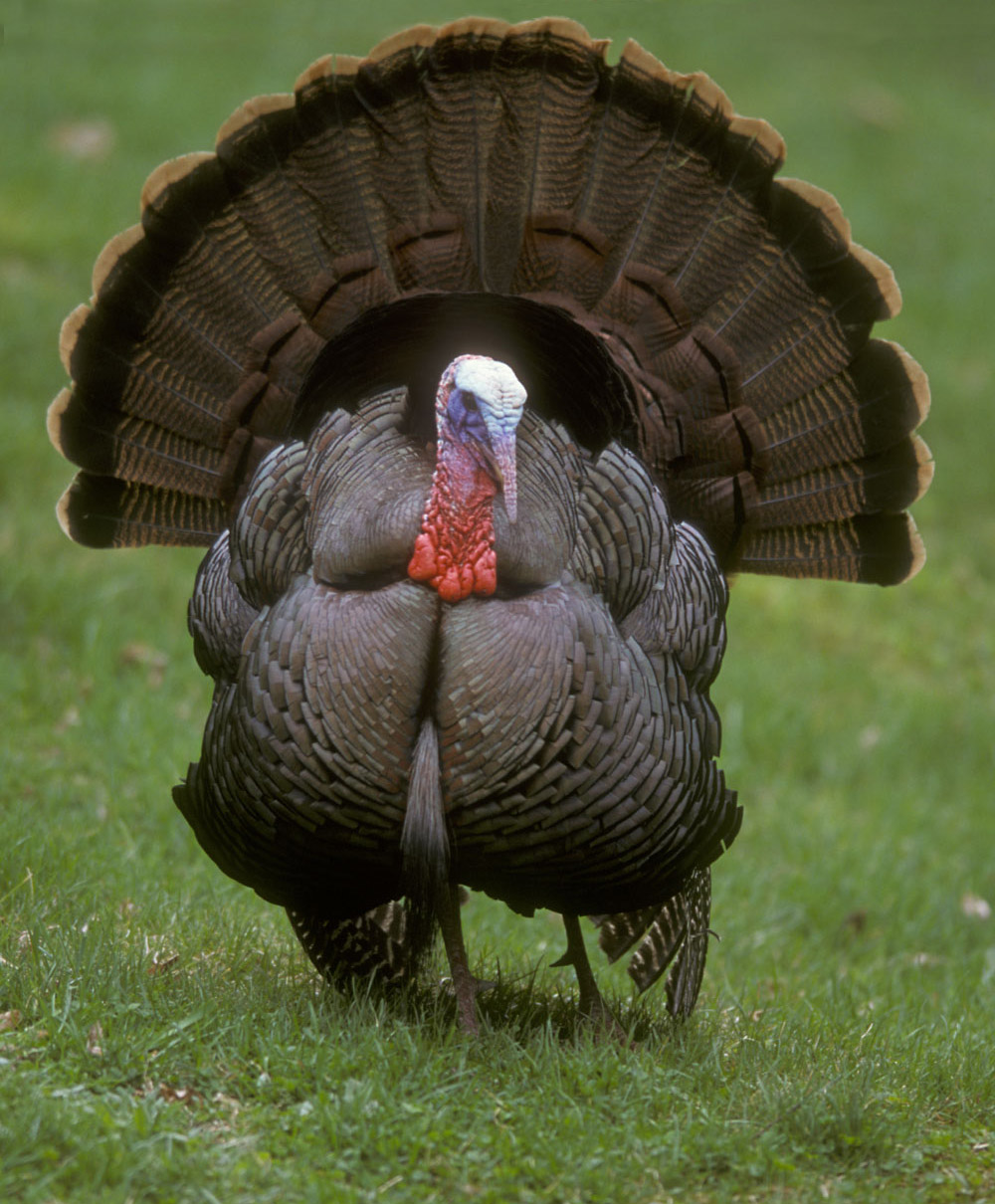
Wild turkeys can be quite big! Adult males can weigh between 11 to 24 pounds (5 to 11 kg), while females weigh about 8 to 12 pounds (3.5 to 5.5 kg). Males are called toms and have colorful feathers in shades of brown, green, and black. 🦚They also have a distinctive fleshy wattle that hangs from their neck, which turns bright red when excited! Wild turkeys have long legs and can run fast, reaching speeds of up to 20-25 miles per hour. They can also fly short distances up to 200 feet (61 meters) high! Isn’t that amazing?
Go deeper🐣 Breeding And Reproduction
Wild turkeys usually mate in the spring. 🐣Male turkeys perform elaborate dances and gobbles to attract females. After mating, the female lays 10 to 14 eggs in a nest built on the ground. The eggs are brown and blend well with their surroundings. Hens incubate the eggs for about 28 days, keeping them warm and safe. The baby turkeys, called poults, are born with feathers and can walk almost immediately! 👣They follow their mother and learn to find food within hours after hatching, which is very important for their survival.
Go deeper👫 Behavior And Social Structure
Wild turkeys are social birds that often live in flocks. 👫A flock can consist of many individuals, especially in the warmer months. Males, or toms, are known to strut and gobble to attract females. During mating season, you might see them puffing up their feathers and fanning out their tails to impress the ladies! 🦃🔥 Females, called hens, form close bonds with their young chics. They make a variety of sounds like clucks and purrs to communicate with each other. Although they can be friendly, wild turkeys can also protect their territory if they feel threatened!
Go deeper