White Holes Facts For Kids
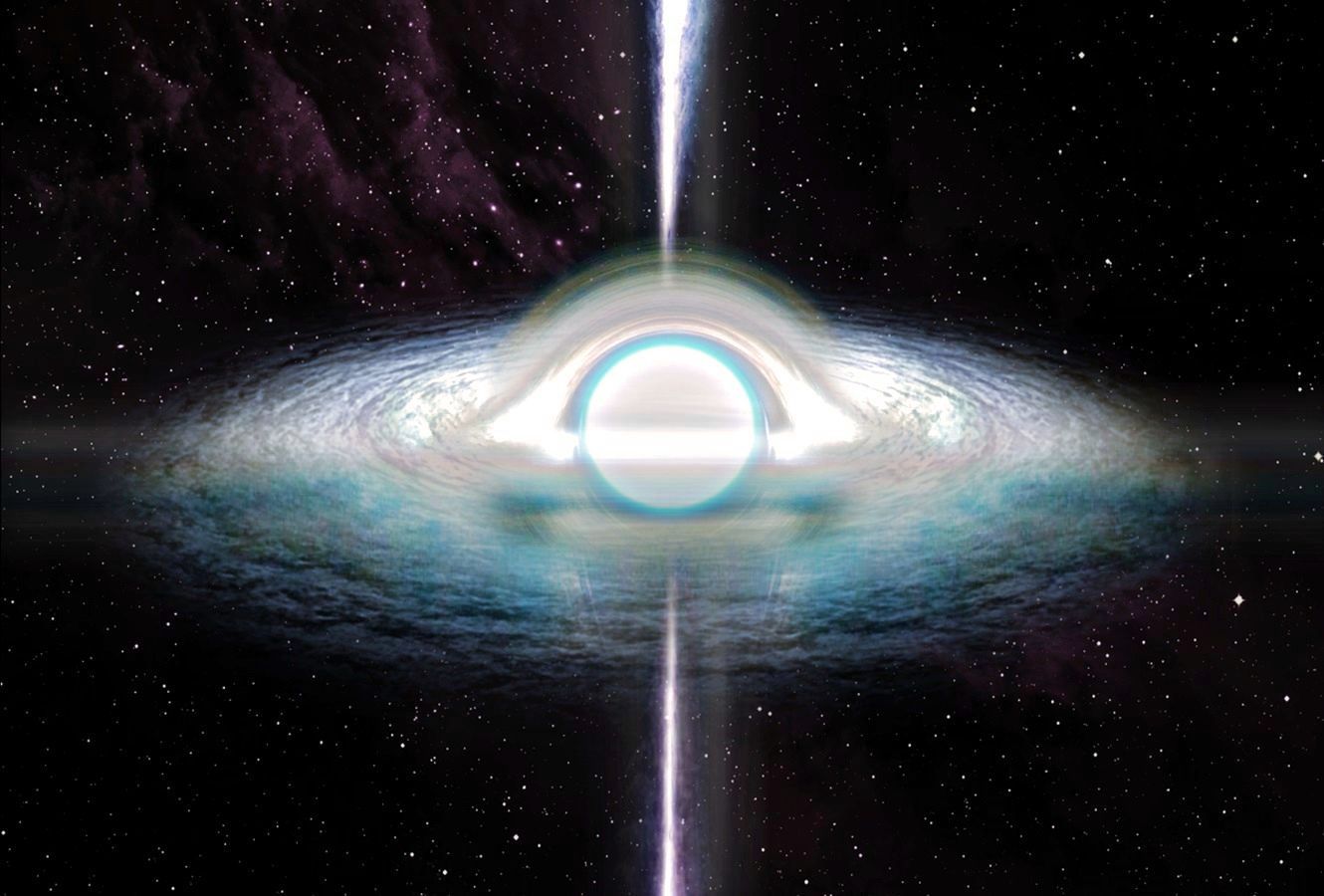
White holes are theoretical objects in physics that are the time-reverse of black holes, expelling matter and energy rather than absorbing them.
Select reading age
White Holes Facts For Kids
Videos & Quizzesincluded
About this topic
Have you ever heard of black holes? 🕳️ They are mysterious places in space where gravity is so strong that nothing can escape! But there's another strange idea called a white hole! 🌌A white hole is like the opposite of a black hole. While black holes suck everything in, white holes are thought to spit things out! Imagine a giant cosmic vacuum where, instead of cleaning, it makes things fly out! Whoa! You're probably wondering if white holes are real. Well, scientists love to study them, but they are still just a theory for now. Let's explore more about them!
Explore with ChatDinoKey Points
White holes are super fascinating and mysterious!
A white hole is a fascinating concept in science!
Scientists are always curious!
White holes might be a mystery in science, but they also pop up in stories and movies!
The idea of white holes comes from a smart scientist named Albert Einstein!
In Einstein's theory of general relativity, the universe can be very strange!
Getting evidence for white holes is super tricky!
What if white holes did exist?
Black holes and white holes are like opposites!
Photos of White Holes

A diagram of the structure of the maximally extended black hole spacetime. The horizontal direction is space and the vertical direction is time.
🌌 Conclusion
White holes are super fascinating and mysterious! 🌌They stand as the opposite of black holes, showing us how strange the universe can actually be! With so much we still don’t know, it’s exciting to think about what the future will hold for research into white holes! 🧠From Einstein's theories to adventures in books and movies, white holes spark imaginations and push our understanding of space. Every day, scientists work hard to unlock cosmic secrets, and maybe one day, we'll find evidence of white holes. 🌟Remember, the universe is full of wonders waiting to be discovered! Keep dreaming big! 🌠✨
Go deeper🌟 What Is A White Hole?
A white hole is a fascinating concept in science! 🌟It is considered a part of black hole theory. While black holes can pull in matter (like stars and gas), white holes are the opposite—they can push matter away! Think of it as a huge bright light existing in space, only letting things come out but nothing can get in! White holes are predicted by scientists, and they haven't been spotted yet, but they are believed to exist because of the strange rules of physics. So, if black holes suck things up, where do they spit them out? That's a question scientists are eager to answer! 🤔
Go deeper🔍 Future Research Directions
Scientists are always curious! 🔍They plan to continue researching white holes because there are so many mysteries to uncover. New telescopes and technology can help us look deeper into space than ever before! 🌌By studying the behaviors of black holes, scientists may gather clues about white holes. They want to use computer simulations to create models and see how these strange objects could fit into our universe. 🔭Future missions could also explore cosmic phenomena that could suggest the presence of white holes. The mystery is ongoing! Who knows what exciting discoveries lie ahead in the cosmos? 🌟✈️
Go deeper🎬 White Holes In Popular Culture
White holes might be a mystery in science, but they also pop up in stories and movies! 🎬You may find them mentioned in science fiction books and films! Some people enjoy imagining how white holes could work, and they may even appear as portals or gateways to other worlds! 🌍✨ This creativity helps us think of the universe as an exciting and magical place! In cartoons, you might see characters traveling through cosmic tunnels or discovering bright white holes! 🚀💫 These fun ideas inspire kids and grown-ups to dream about space and all its mysteries. Who knows what we might discover next?
Go deeper🧑🔬 Theoretical Basis Of White Holes
The idea of white holes comes from a smart scientist named Albert Einstein! 🧑🔬 In 1915, Einstein created the theory of general relativity. This theory explains how gravity works in our universe. According to this theory, if black holes exist, then white holes might also exist! They are linked to black holes through something called wormholes—imagine a tunnel connecting two different parts of space! 🕳️ 🌌 Scientists use math to show how white holes could work, even though we haven't seen one yet. The math makes sense, and that makes white holes quite interesting to study!
Go deeper🪐 White Holes In General Relativity
In Einstein's theory of general relativity, the universe can be very strange! 🪐White holes are a solution to the equations that help describe black holes. This means that, in the language of science, when we talk about black holes, white holes can also enter the conversation! 🤓These equations suggest that a white hole can't exist without a black hole. It’s like having two sides of a coin! This idea raises exciting questions about space and time, and how everything is connected. Scientists are still exploring these ideas, trying to find out how these mysterious objects fit into our understanding of the universe. 🌌
Go deeper🔍 Observational Evidence And Challenges
Getting evidence for white holes is super tricky! 🔍Because we haven't spotted a white hole, scientists have to use a lot of imagination! 🧠They look for things happening around black holes, like stars flying away quickly, which might hint that a white hole is connected. But proving something exists when you can't see it is like solving a mystery without any clues! 🕵️♂️ The universe is so vast, and there are many things happening that we don’t understand completely yet. Scientists keep searching the stars, hoping to find evidence of white holes among galaxies far away! 🌌
Go deeper😮 Potential Implications For The Universe
What if white holes did exist? 😮They could change how we understand the universe! For one, they might help scientists learn about how matter and energy move in space! 🌌Some theories suggest that white holes could release energy in fantastic ways, possibly helping to explain supernovae (big explosions of stars) or gamma-ray bursts (very powerful explosions in space). Understanding white holes might even unlock secrets to the Big Bang, which started our universe! 🔭So, who knows? The study of white holes could help science answer big questions, like "How did everything begin?" and "What lies beyond the edges of our universe?" 🌠
Go deeper🤯 Differences Between Black Holes And White Holes
Black holes and white holes are like opposites! 🤯So, what are the main differences? Black holes trap everything near them because of their incredible gravity. ❌Once something goes in, it can't come out! But a white hole does the opposite! 🌟It spits matter out instead of pulling it in. Also, black holes can be formed when massive stars collapse. White holes, on the other hand, can't form in the same way! They are theoretical, meaning that, so far, no one has seen one. Think of black holes as cosmic vacuums and white holes as big fountains shooting out stars! 🌠✨
Go deeper