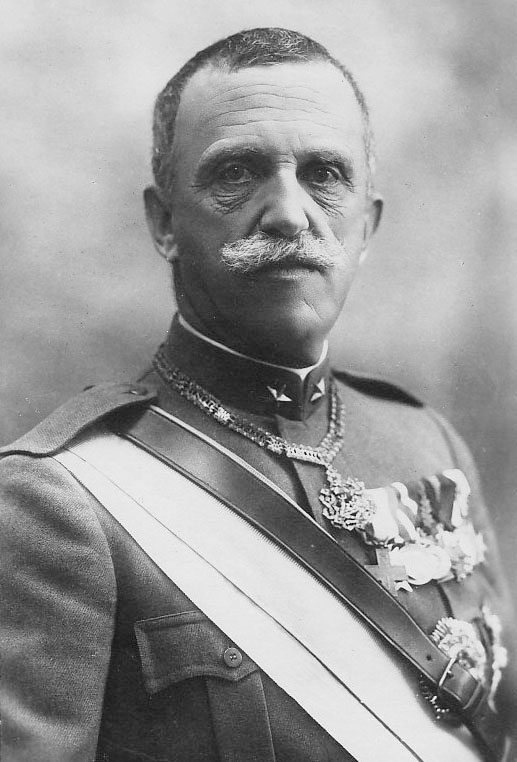
Victor Emmanuel III was a significant King of Italy who reigned from 1900 until 1946, navigating through both progress and turmoil during his rule.
Set reading age
View for Kids
Easy to read and understand
View for Students
Clear, detailed explanations
View for Scholars
Deep dives and big ideas
Victor Emmanuel III was a king of Italy from July 29, 1900, until May 9, 1946. 👑Born on November 11, 1869, he belonged to the House of Savoy. This famous royal family was from Italy and played a big part in making Italy a country in the 19th century. Victor Emmanuel ruled during important times like World War I and World War II. He had to make tough choices that affected many people in Italy. 🌍After World War II, Italy changed from a monarchy to a republic, and he decided to leave the throne.
King Umberto I, Victor Emmanuel's father, was assassinated in 1900. This sad event made Victor the king at only 30 years old! 👶👑 With help from his advisors, he started to become a good leader. His first big challenge was to unite the different regions of Italy and make people feel like one country. His reign included modernization efforts and addressing problems faced by farmers and workers. Victor hoped to improve life in Italy, but it wasn't easy. He faced many challenges and had to make important decisions for his people.
Victor Emmanuel III’s reign left a mark on Italian culture. 🇮🇹 He hosted many important events and supported artists and writers, helping to foster the arts in Italy. His era also saw the creation of public works, which enhanced cities and infrastructure. However, many people remember his association with Mussolini and the Fascists. The changes he faced and the subsequent shift from monarchy to republic meant that Italian society evolved. Today, kids can learn about this fascinating period in Italy’s history, where art, politics, and culture intertwined. 🎭
Victor Emmanuel III was born in a palace in Naples, Italy. 🏰His parents were King Umberto I and Queen Margherita, who was famous for her delicious pizza namesake! 🍕As a young prince, he learned many things like history, geography, and military tactics. He traveled around Italy and Europe to understand the world better. He was educated in both private lessons and military schools, preparing him for his future as a king. He was known to be shy but also a good student, showing early signs of leadership.
Victor Emmanuel III married Princess Helena of Montenegro in 1896, and they had five children together. 👶👦👧 He loved art and history, often visiting museums and taking part in cultural events. He also enjoyed hiking in the Italian Alps, where he felt close to nature. He became passionate about preserving Italy’s history and heritage. Even though his reign was challenged, he cared for his people and had a genuine interest in understanding their lives. Many royal families today still carry on these same interests, connecting them to their history and culture. 🎨
Victor Emmanuel III’s reign is filled with controversies. ⚖️ Some say he didn’t act strongly enough against Mussolini or support democracy when Italy needed it most. Many Italians were unhappy with his decisions during World War II, believing he put the monarchy before the needs of the country. When he abdicated in 1946, it marked a significant turning point in Italy’s history. Discussions about his leadership continue, with people debating his legacy—was he a good king or a king who failed to protect democracy? 🏛️ Kids today can think about these questions and learn to form their own opinions.
In the 1920s, a man named Benito Mussolini became powerful in Italy. He started a group called the Fascists. ⚡Victor Emmanuel III was unsure about Mussolini at first. Eventually, he appointed him as Prime Minister in 1922, hoping it would bring stability. However, Mussolini became a dictator and restricted people’s freedoms. Many Italians were unhappy, but the king didn’t stop him. Some people believe Victor didn’t do enough to protect democracy in Italy, making his time as king very controversial. 🕊️
World War I started in 1914, and Italy joined the fight in 1915. ⚔️ Victor Emmanuel III wanted to show Italy's strength. He encouraged brave soldiers to protect their homeland. Italy faced many hardships during the war, but they won in 1918. After the war, the country faced tough times, including a lack of food and economic problems. Many people were unhappy with the king for not taking stronger action. This time affected their feelings about the monarchy as they looked for leaders who could bring change in the country.
After World War II, Italy faced many changes. The people were ready for a fresh start and wanted a republic, rather than a monarchy. 🌟In 1946, the country held a vote, and most people chose to create a republic. Victor Emmanuel III decided to abdicate, meaning he gave up the throne. He left Italy for exile in Egypt. The change marked the end of the royal family’s long history in Italy. It was a new beginning for the Italian people, as they looked forward to building a better future and democracy.
Victor Emmanuel III is remembered for his long reign, from 1900 to 1946. 📜He faced many challenges during significant events like two world wars. Some say he made mistakes, especially with Mussolini and the rise of Fascism, while others believe he did what he could in a tough situation. His legacy is complicated, as Italy transformed from a monarchy into a republic, shaping the country's future. Today, kids learn about his life to understand how leaders impact history and what democracy means for people across the world. 🌎
World War II started in 1939, and Italy joined with Germany as part of the Axis Powers. 🇮🇹🇩🇪 King Victor Emmanuel III tried to keep peace, but Italy was soon in the war. The country faced many military defeats, and the people struggled. In 1943, Mussolini was removed from power, and Victor Emmanuel took more control. However, by the time the Allies (like America and Britain) invaded Italy in 1943, Italy was the battleground. The king’s actions were debated, as many felt he didn’t protect Italy’s interests adequately during this tough time.


DIY is a creative community where kids draw, build, explore ideas, and share.
No credit card required