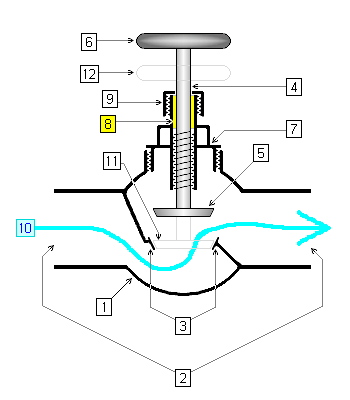
A valve is a device that regulates, directs, or controls the flow of a fluid by opening, closing, or partially obstructing passageways.
Set reading age
View for Kids
Easy to read and understand
View for Students
Clear, detailed explanations
View for Scholars
Deep dives and big ideas
Valves are special devices that help control the flow of liquids and gases 🌊💨. Imagine you're drinking juice from a box; the straw acts like a valve! When you suck, the juice flows in, but if you stop, it doesn't. Valves are everywhere! They can be found in our homes, cars, and even our bodies! They help with things like water in our taps and air in our tires. So, next time you see water flow or a balloon that can get big, remember that somewhere, a valve is doing all the work! 🎈
Valves are like traffic lights for liquids and gases 🚦! When a valve opens, it lets the liquid or gas move through. Think of it like opening a door to let your friends enter your room! 🚪Just like you can close the door to keep them out, a valve can close to stop the flow. Some valves can also partially open, like when you crack your door to hear outside. The way a valve opens, closes, or stays slightly open controls how much fluid can move. It's all about keeping things moving smoothly! 🌀
There are many types of valves, each with a special job! 🔧Some common types include the following:
- Ball Valves: They have a round ball inside that opens and closes to let liquid through.
- Gate Valves: These look like doors, opening and closing to allow flow.
- Check Valves: They only let liquid go one way, preventing backflow!
- Butterfly Valves: Shaped like a butterfly, they use a disc to stop or start flow.
Each type is essential for different jobs, just like different tools help us fix things! ⚙️
Valves are super useful and found in many places! 🌍We use them in homes for taps and toilets. In cars, valves control the engine's air and fuel, helping cars run smoothly. 🏎️ They are also important in industries like factories, where they manage the flow of materials. In healthcare, valves help in machines that give us oxygen or check our blood flow. Without valves, many of our everyday things wouldn’t work! They help keep everything in order, making sure things flow just right. 👍
Choosing the right valve is like picking the right shoe for a game! 🏃You need to think about what you want the valve to do. Some important criteria include:
- Size: Is it big enough for the amount of liquid or gas?
- Material: Does it need to resist heat or chemicals?
- Pressure: Can it handle the pressure of the fluids? 🛡️
- Flow Rate: How fast does it need to open or close?
By asking these questions, you can find the best valve for any task, just like finding the perfect gear for your adventures! 🎒
Multiple industries rely on valves for various purposes! 🏗️ In the water supply industry, valves manage the flow of drinking water into homes. In agriculture, valves help control irrigation systems that water crops. 🌱The oil and gas industry uses heavy-duty valves to manage the flow of fuel. Lastly, in hospitals, valves regulate oxygen in life-support machines. 🚑With so many uses across different fields, valves play a crucial role in keeping our world functioning well! 🌍
Valve technology is always improving, just like video games! 🎮New innovations include smart valves that use sensors to monitor flow and pressure. These can be controlled through smartphones! 📱There's also research on environmentally friendly valves that reduce leaks and save water. 🌍Additionally, 3D printing is being used to create unique valve shapes quickly. With these advancements, valves are becoming smarter and more efficient every day, helping us solve problems faster and protect our planet! 🌱✨
Just like we take care of our toys and bikes 🚲, valves need some upkeep too! Regular checks can help ensure they work correctly. If a valve is leaking, it may need a new seal or repairs. You might notice if a valve is stuck, just like a door that won’t open. 😲To fix it, sometimes you just need to clean it or check if it’s installed correctly. If you're unsure, ask an adult for help! Keeping valves in good shape helps our water and air flow smoothly. 🌊💨
Valves dates back thousands of years! 🕰️ The earliest valves were made by the ancient Egyptians, who used simple devices to control water flow. In the 1700s, engineers in England invented more advanced valves for steam engines. 🚂Over the years, valves have evolved with new materials and designs. Today, we have high-tech valves that can even be controlled remotely with computers! 💻This journey shows how important valves are, helping us improve technology while keeping things flowing smoothly. Isn’t that cool? 🌟
Valves are made from different materials to suit their jobs! 🛠️ Here are some common materials:
- Metal: Strong and durable, metals like brass and stainless steel are often used in industrial valves.
- Plastic: Lightweight and easy to mold, plastic is popular in home valves.
- Rubber: Soft and stretchy, rubber seals are used to prevent leaks. 💧
- Ceramics: These are used for special valves that need to handle high temperatures.
Each material has unique properties, making it the right choice for the valve's job! 🌈


DIY is a creative community where kids draw, build, explore ideas, and share.
No credit card required