Uruguay River Facts For Kids
The Uruguay River is a major river in South America, serving as a natural border between Uruguay and Argentina, and is crucial for navigation, biodiversity, and power generation.
Select reading age

Uruguay River Facts For Kids
Videos & Quizzesincluded
About this topic
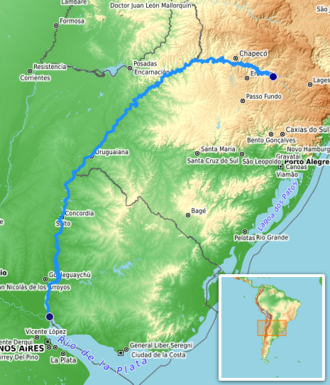
The Uruguay River is a very important river in South America! 🌎It flows for about 1,770 kilometers (1,099 miles) and forms part of the border between two countries: Argentina 🇦🇷 and Uruguay 🇺🇾. The river starts in Brazil, at a place called the Alto Uruguai region. It flows south and meets with the Paraná River, finally emptying into the Río de la Plata estuary🌊. Many people, animals, and plants rely on this river for staying alive, making it a vital waterway for nature and people alike.
Explore with ChatDinoKey Points
The Uruguay River plays a big role in the economies of Argentina and Uruguay!
The Uruguay River influences culture in both Argentina and Uruguay!
Many groups are working hard to protect the Uruguay River!
The Uruguay River is home to a variety of wildlife!
The Uruguay River is located in the southeastern part of South America.
The Uruguay River is a fun place for tourists and people living nearby!
The Uruguay River has a rich history that goes back thousands of years!
The Uruguay River faces several environmental challenges!
Several key cities are located along the Uruguay River!
Photos of Uruguay River
Uruguay River — photo 1

The Moconá Falls (also known as the Yucumã Falls), where the river passes between Argentina and Brazil, are up to 3 km wide

Map of the Rio de la Plata Basin, showing the Uruguay River joining the Paraná near Buenos Aires
🌾 Economic Uses
The Uruguay River plays a big role in the economies of Argentina and Uruguay! 🌾It is a major route for transporting goods, especially grain and livestock, helping farmers sell their products. Many industries, like fishing and tourism, also rely on the river for jobs and income. The river is valuable for hydroelectric power, providing electricity to thousands of people. With its vast resources, the Uruguay River greatly supports the livelihoods of people living nearby! ⚓
Go deeper🎶 Cultural Impact
The Uruguay River influences culture in both Argentina and Uruguay! 🎶People celebrate music, dance, and food traditions that revolve around the river. For example, the famous Carnaval celebration in Montevideo features colorful parades and music that reflect the river's cultural significance. Additionally, fishermen and farmers depend on the river for their livelihoods, passing down traditions and stories through generations. The river connects communities and highlights the shared heritage of the people living alongside it.
Go deeper🌱 Conservation Efforts
Many groups are working hard to protect the Uruguay River! 🌱Governments, NGOs, and local communities are taking action to reduce pollution and promote sustainable practices. Initiatives are being developed to raise awareness about preserving the river's ecosystem and wildlife. Reforestation projects aim to restore forests along the riverbanks to improve habitats. By working together, people hope to ensure a clean, healthy river for future generations to enjoy! 🌊
Go deeper🦜 Ecological Importance
The Uruguay River is home to a variety of wildlife! 🦜Many species of fish, such as the dorado and surubí, thrive in its waters, providing important food for local communities. Other animals, like capybaras, caimans, and otters, enjoy living in and around the river. 🌿The river also supports various plants, including beautiful trees and aquatic vegetation. This rich biodiversity makes the river an essential habitat, and it helps keep the ecosystem balanced and healthy!
Go deeper🗺️ Geography And Location
The Uruguay River is located in the southeastern part of South America. It begins near the city of São Borja in Brazil and travels through several provinces in Argentina, like Misiones and Entre Ríos🗺️. This river also forms a natural boundary between Uruguay and Argentina for much of its journey. One of the river's unique features is its width, which can reach up to 3 kilometers (about 1.9 miles) in some sections! Plus, it’s surrounded by beautiful locations, like the lush green hills of the region. 🍃
Go deeper🌞 Tourism And Recreation
The Uruguay River is a fun place for tourists and people living nearby! 🌞Many activities attract visitors, such as fishing, boating, and swimming in its cool waters. One popular spot is the town of Colón in Argentina, where families enjoy camping and picnicking by the river. Also, beautiful beaches near the river, like those in Paysandú, attract sunbathers and beach lovers! 🏖️ Nature lovers can explore parks and wildlife refuges surrounding the river, making it a fantastic destination for adventure and relaxation!
Go deeper🚢 Historical Significance
The Uruguay River has a rich history that goes back thousands of years! Indigenous peoples, like the Guaraní, lived along its banks. In the 17th and 18th centuries, Spanish explorers used the river to travel and trade. 🚢In the 19th century, battles took place along the river during struggles for independence. Famous leaders like José Artigas fought for freedom in the region. The river has always been crucial for communication, trade, and connecting different cultures, making it an important historical landmark in South America! 🏞️
Go deeper🌍 Environmental Challenges
The Uruguay River faces several environmental challenges! 🌍Pollution from farming, industries, and urban areas harms the river's clean water and wildlife. Deforestation along the riverbanks affects the habitats of many animals and plants. Climate change leads to unpredictable weather, which can cause floods and droughts in the area, making it harder to maintain the river's health. Protecting the river is essential for the environment and the people who rely on it.
Go deeper🌳 Key Cities And Landmarks
Several key cities are located along the Uruguay River! The largest city is Montevideo 🇺🇾, the capital of Uruguay, where people celebrate their culture along the riverbanks. In Argentina, the city of Gualeguaychú is famous for its Carnival celebrations, held near the river. Other notable cities include Concordia and Salto, both known for their picturesque landscapes. 🌳Landmarks like the Salto Grande Dam, an amazing engineering feat, can also be found along the river, showcasing its importance to the region!
Go deeper