Urea Facts For Kids
Urea, also called carbamide, is an organic compound with the chemical formula CO(NH2)2, known for its role in biological processes and wide industrial applications.
Select reading age

Urea Facts For Kids
Videos & Quizzesincluded
About this topic
Urea, also known as carbamide, is a special chemical compound made up of nitrogen, carbon, oxygen, and hydrogen. Its chemical formula is CO(NH₂)₂. 🌍Urea was first discovered by a scientist named William Cruickshank in 1798! It comes from living things, including humans, animals, and plants. Urea is produced in our bodies when we break down proteins. 🌱It helps get rid of waste. You can find urea in urine, which is why it's important for our bodies to stay healthy. Urea is simple yet plays a huge role in our lives!
Explore with ChatDinoKey Points
Urea is made through a process called synthesis.
Urea is generally safe for most people!
Urea has some cool physical properties!
Urea is a superstar in agriculture!
Urea can affect the environment, both positively and negatively.
Urea plays an important role in our body!
Urea is used in many industries!
The chemical structure of urea is interesting!
Urea has some fascinating derivatives, which are other chemicals made from urea!
Photos of Urea

Urea — photo 1
![Structure of [Fe(urea)6]2+ showing intramolecular hydrogen bonds.[12] Color code: blue = N, red = O.](https://upload.wikimedia.org/wikipedia/commons/thumb/8/82/CSD_CIF_WITQEV.jpg/960px-CSD_CIF_WITQEV.jpg)
Structure of [Fe(urea)6]2+ showing intramolecular hydrogen bonds.[12] Color code: blue = N, red = O.

A plant in Bangladesh that produces urea fertilizer.
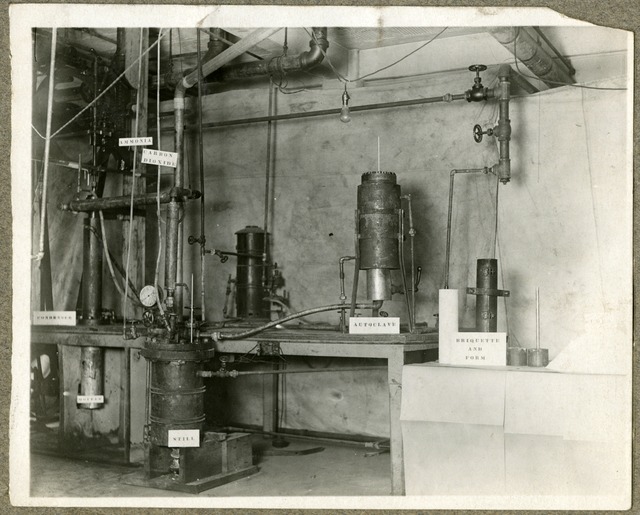
Urea plant using ammonium carbamate briquettes, Fixed Nitrogen Research Laboratory, ca. 1930
🏭 Synthesis Of Urea
Urea is made through a process called synthesis. Scientists can create urea artificially using a method called the "Haber-Bosch process." 🏭 It combines nitrogen from the air and hydrogen to make ammonia (NH₃). Then, the ammonia reacts with carbon dioxide (CO₂) under high pressure and temperature to form urea. ⚗️ This process is important because it provides a way to create urea for various uses. The first large-scale production of urea began in the early 1900s, which helped the fertilizer industry grow and supports food production worldwide! 🌾
Go deeper👍 Health Implications
Urea is generally safe for most people! 👍However, high levels of urea in the body can signal kidney problems. The kidneys filter urea out of the bloodstream, and if they don't work properly, it can build up. This is why doctors often test urea levels through blood tests. 📊People with kidney diseases may need special diets to control their urea levels. While urea itself isn't harmful, keeping an eye on our health helps us stay strong and active! 🚴♀️ Always consult a healthcare provider for advice!
Go deeper😄 Physical Properties
Urea has some cool physical properties! 😄It is a white, crystalline solid that looks like little tiny crystals. When we dissolve urea in water, it creates a solution that is colorless and has no smell. 🌊Urea has a melting point of about 132 degrees Celsius (270 degrees Fahrenheit) and a boiling point of 150 degrees Celsius (302 degrees Fahrenheit). It easily dissolves in water, making it great for irrigation and fertilizer. Urea is also known as a hygroscopic substance, which means it can attract water from the air! 💧
Go deeper🌟 Urea In Agriculture
Urea is a superstar in agriculture! 🌟It’s one of the most common fertilizers used worldwide because it has a high nitrogen content (46% nitrogen). Farmers use urea to grow crops like corn, rice, and wheat, providing plants the food they need to thrive. 🍅It can be spread into fields as granules or mixed with water to create liquid fertilizers. Farmers like urea because it dissolves easily in soil, making it accessible to plants quickly! 🌱Using urea wisely helps ensure a good harvest and supports feeding the growing population.
Go deeper🌿 Environmental Impact
Urea can affect the environment, both positively and negatively. 🌿When used as fertilizer, it helps crops grow, which is great for food production! However, if too much urea is used, it can cause problems. Excess urea can seep into water bodies, leading to water pollution and harming aquatic life. 🐠This is called "eutrophication," where too many nutrients in the water create algal blooms that suffocate fish. 🦈To minimize environmental impact, farmers should use urea responsibly, balancing crop needs and protecting our beautiful ecosystems! 🌊
Go deeper🧬 Biological Role Of Urea
Urea plays an important role in our body! 🧬When we eat proteins, our body breaks them down into small pieces called amino acids. After using these amino acids, our body creates waste products. Urea is formed in the liver and helps dispose of extra nitrogen. ✋This waste is carried in the bloodstream to the kidneys, where it gets filtered out and mixed with water to become urine. ☔️ This process keeps our body's balance—and that's super important because too much nitrogen can be harmful! Urea helps keep us healthy by fighting off the bad stuff!
Go deeper🏭 Industrial Uses Of Urea
Urea is used in many industries! 🏭One of its main uses is as a fertilizer for crops. It helps plants grow strong and healthy by providing nitrogen, which is essential for their growth. 🌾Urea is also used in the production of plastics, resins, and even some medicines. 🚑You can find it in animal feed, helping livestock grow better. Urea also helps create solutions for cleaning products and adhesives. Since it is safe and works well, many industries rely on urea to create better products! 🌍
Go deeper🎨 Chemical Structure Of Urea
The chemical structure of urea is interesting! 🎨It has one carbon (C) atom, one oxygen (O) atom, and two amine (NH₂) groups. The structure looks like a molecule with a "C" in the center, attached to an "O" and two "NH₂" groups on either side. 🧬This arrangement helps urea dissolve easily in water, which makes it useful for different applications. Urea is non-toxic to humans and is also colorless and odorless. It’s important because this simple structure allows urea to be a part of many biological processes, helping our bodies and nature!
Go deeper🌈 Urea Derivatives And Their Applications
Urea has some fascinating derivatives, which are other chemicals made from urea! 🌈One well-known derivative is melamine, used in making plastics and resins. 🧴Another is urea-formaldehyde, primarily used in adhesives and finishes in the furniture industry. 🪑These derivatives take advantage of urea’s properties but have specific roles that help create various products. Urea derivatives can also be used in pharmaceuticals, leading to newer and safer medicines! 💊Urea is truly a remarkable compound, supporting many industries and improving our everyday lives!
Go deeper