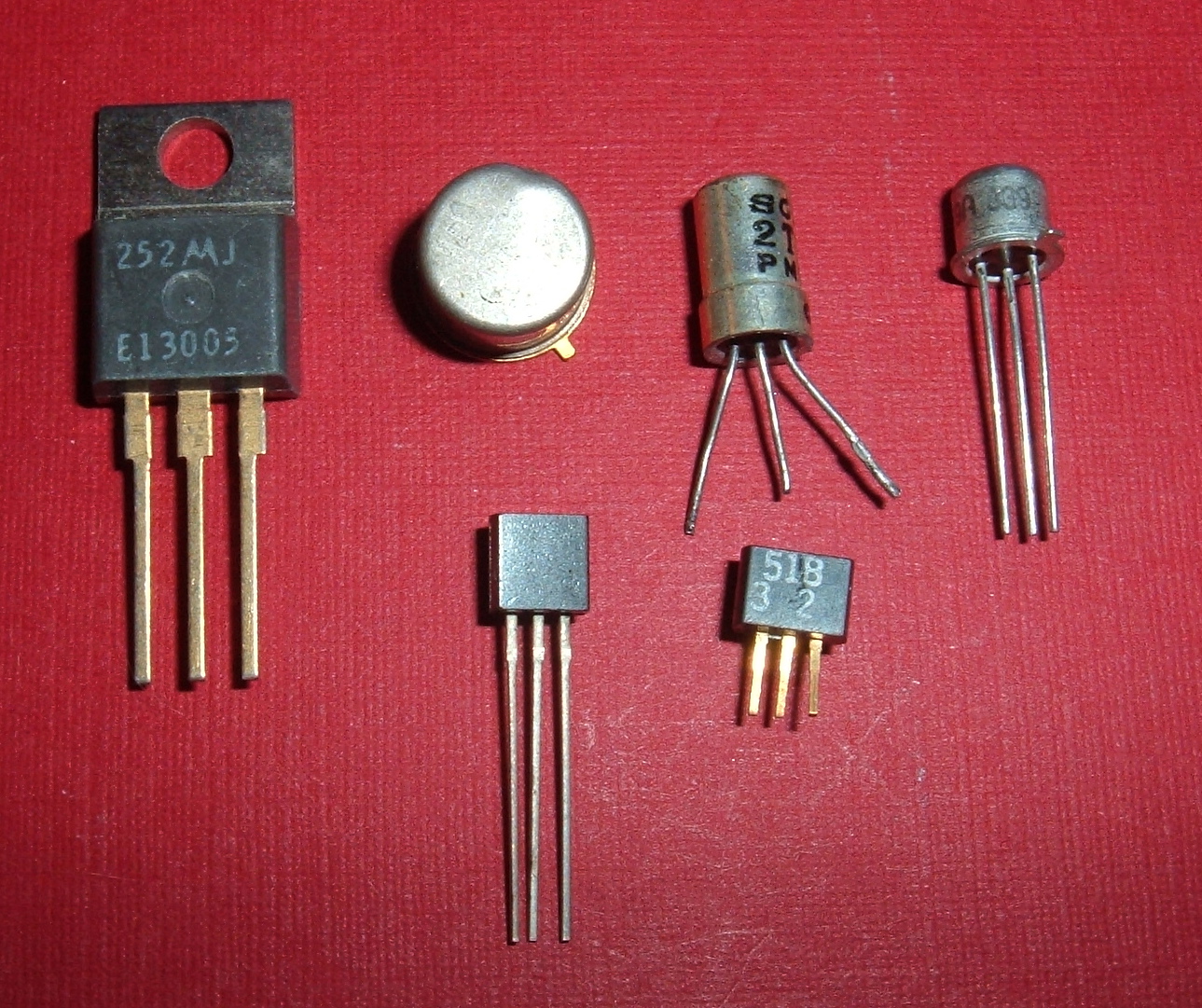
A transistor is a small electronic component that can amplify electrical signals or switch them on and off.
Set reading age
View for Kids
Easy to read and understand
View for Students
Clear, detailed explanations
View for Scholars
Deep dives and big ideas
Transistors are tiny electronic devices that play a big role in our daily lives! ⚡They can control and amplify electrical signals. Imagine them as smart little switches that let electricity flow or stop it. Transistors are made from special materials called semiconductors, like silicon, and are found in all sorts of things like computers, radios, and even toys! 🎮Because transistors are small and efficient, millions can fit on a tiny computer chip. Thanks to transistors, we can enjoy fun technology while making our lives easier! Isn’t it cool how such small things can make a huge difference? 😊
Transistors work like a traffic light for electricity. 🚦They regulate the flow – turning it on or off! To understand how they work, let’s look at a BJT: there are three parts called the emitter, base, and collector. The base is like a tiny switch. When a small current flows into the base, it allows a larger current to flow from the emitter to the collector. 🤓FETs, on the other hand, use voltage to control the current flow. By doing this, transistors can help amplify signals and control power in devices like phones and computers! 💻
There are two main types of transistors: bipolar junction transistors (BJTs) and field-effect transistors (FETs). 🎉BJTs are made of three layers of semiconductor material, and they can either be NPN (negative-positive-negative) or PNP (positive-negative-positive). FETs, on the other hand, control the flow of electricity using an electric field, which makes them very efficient! ⚙️ There are also special types of FETs, like Metal-Oxide-Semiconductor FETs (MOSFETs). These types of transistors help computers and smartphones work better and faster! Mobile devices use both types to communicate and process information. 📱
A transistor is like a superhero for electricity! 🦸♂️ It helps control how much electricity flows through a circuit. Transistors can amplify signals, which means they can make weak signals stronger, just like a microphone helps your voice be louder! 🎤There are two main types of transistors: bipolar junction transistors (BJTs) and field-effect transistors (FETs). They are made from unique materials called semiconductors that can be conductors or insulators depending on their properties. By controlling electrical signals, transistors help power all the amazing gadgets we use every day!
The story of transistors began in the 1940s! 🌟Three brilliant engineers, John Bardeen, Walter Brattain, and William Shockley, invented the first transistor at Bell Labs in New Jersey, USA. The year was 1947, and this invention changed technology forever! 🎉The original transistor was made from germanium, a shiny, grey material. Soon after, transistors replaced bulky vacuum tubes, allowing devices to become smaller and more efficient. In 1956, Bardeen, Brattain, and Shockley received the Nobel Prize for their work! 🏆Thank them for the amazing devices we enjoy today!
Transistors are like magical amplifiers for sound and signals! 🔊When they receive a small electrical signal at the base, they can make it much bigger in the collector-emitter path. This process is called amplification. There are two main configurations: common emitter and common collector. The common emitter configuration is widely used in audio devices, while the common collector is often used for impedance matching. 📈Thanks to amplifying transistors, we can hear our favorite songs loudly and clearly from speakers, making our listening experience enjoyably powerful! 🎵
Transistors have special characteristics that make them amazing! 🤩One important characteristic is gain – this is how much they can amplify a signal. Gain is often represented by the letter "β." Another characteristic is the switching speed, which is how quickly they can turn on and off. 🏎️ Fast transistors are essential in computers, where speed matters! Additionally, the input impedance shows how much the transistor resists changes in voltage or current. All these characteristics make transistors super versatile components in electronics! 🔧
Transistors are everywhere! 🌍They are used in many devices, from smartphones and televisions to robots and computers. 🦾For example, your favorite video games may use over a billion transistors! 🎮In fact, transistors help amplify sound in speakers, turning weak electrical signals from your phone into loud music. 🎶Hospitals also use transistors in medical equipment like ultrasound machines, helping doctors see inside our bodies. With so many uses, transistors make our lives easier, safer, and a lot more fun! 🎉
The future of transistors looks bright! 🌟Scientists and engineers are always working on ways to make them smaller and more powerful. Today, researchers are developing new types of transistors, like quantum dot transistors and organic transistors, that could be faster and more efficient. 🚀These advancements can make our devices even smaller and help save energy! As technology advances, we may soon see new inventions that will change the way we live and interact with the world around us! The sky is the limit for transistors! 🌈✨
Transistors are the heart of modern electronics! ❤️ They help us create such cool devices. Thanks to transistors, computers can perform millions of calculations every second! ⌨️ They are also essential for communication, letting us send messages and information instantly through devices like cell phones and Wi-Fi routers. 📶Without transistors, we wouldn’t have modern technology, from video games to televisions! The work of transistors keeps our world connected and entertained. Isn't that amazing? 🤗


DIY is a creative community where kids draw, build, explore ideas, and share.
No credit card required