Torvosaurus Facts For Kids
Torvosaurus was a large carnivorous dinosaur known for its impressive size and predatory adaptations, living during the late Jurassic period.
Select reading age
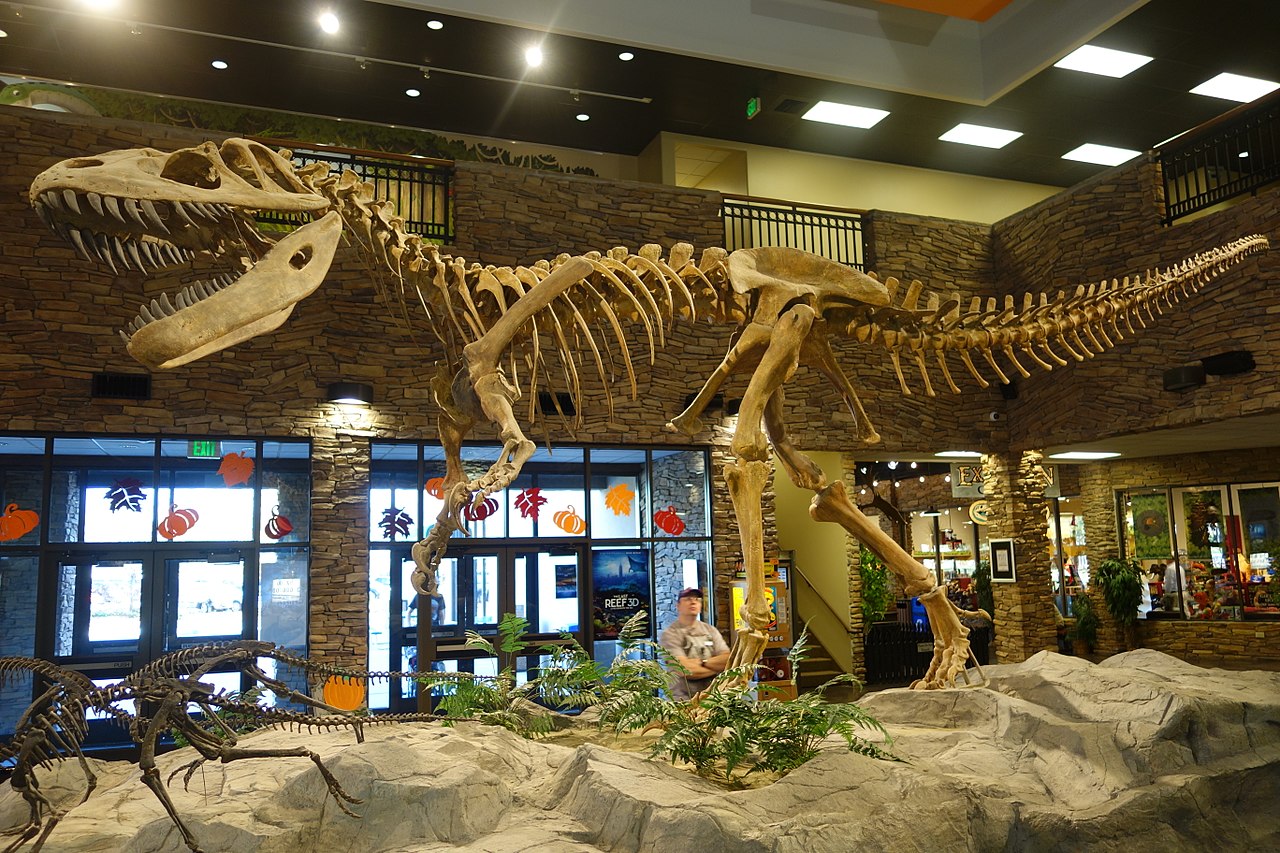
Torvosaurus Facts For Kids
Videos & Quizzesincluded
About this topic
Torvosaurus was a fascinating dinosaur that lived around 150 million years ago during the late Jurassic period 🌍. Its name means "big lizard," as it was one of the largest predatory dinosaurs of its time! This giant was about 33 feet long and weighed around 4 tons. Torvosaurus was found in North America, especially in places like Colorado and Portugal. Imagine running into a massive creature like this while roaming the ancient landscapes filled with other dinosaurs! 🦖
Explore with ChatDinoKey Points
Dinosaurs like Torvosaurus have made a significant impact on movies, books, and games!
Fossils of Torvosaurus have provided vital information about this ancient predator!
Torvosaurus had powerful legs and a long tail that helped it balance while running.
Torvosaurus roamed the lush, green land during the late Jurassic period 🌳.
As a carnivore, Torvosaurus mainly fed on other dinosaurs 🌟.
Torvosaurus belonged to a group called theropods, which includes modern birds 🐦!
Torvosaurus was similar to other dinosaurs like Allosaurus and T. rex, both of which were also big predators 🦖.
Conservation is important because fossils tell us about ancient life, and we must protect them!
Photos of Torvosaurus

Reconstructed T. tanneri skull, Museo Capellini of Bologna, Italy

Maxillae of T. gurneyi and T. tanneri compared

Restoration of T. tanneri

Size comparison of the two species of Torvosaurus compared with a human

Skeletal restoration showing the size of T. gurneyi, known remains highlighted

Skull reconstruction of T. tanneri, with known remains in white

Torvosaurus sp. in Japan

Caudal vertebra of T. gurneyi

🎬 Cultural Impact
Dinosaurs like Torvosaurus have made a significant impact on movies, books, and games! 🎬You may have seen similar dinosaurs in films like "Jurassic Park" or in cartoons, where they are often portrayed as fierce and mighty creatures. People love to learn about dinosaurs, and that interest has inspired many books, documentaries, and even toys. This fascination with dinosaurs, including Torvosaurus, helps children like you stay curious about ancient life and the Earth's history! 📚
Go deeper🦴 Fossil Discoveries
Fossils of Torvosaurus have provided vital information about this ancient predator! 🦴In Colorado, some teeth and bones were found, showing just how enormous it was. In Portugal, scientists discovered even more complete fossils, helping them understand its size and features better. These exciting discoveries allow paleontologists to piece together details about how Torvosaurus lived and interacted with other dinosaurs millions of years ago! Excavations continue to provide valuable insights into the life of this remarkable dinosaur.
Go deeper🦕 Physical Description
Torvosaurus had powerful legs and a long tail that helped it balance while running. Its strong jaws were filled with serrated teeth, perfect for tearing into the flesh of its prey 🦕. It had a sturdy body and sharp claws on its hands. Its skull was large and featured two deep eye sockets. Scientists believe its eyesight was excellent, helping it spot prey from a distance! Torvosaurus could probably run fast enough to catch smaller dinosaurs, making it a fearsome predator in the Jurassic world. ⚡️
Go deeper🌳 Habitat And Distribution
Torvosaurus roamed the lush, green land during the late Jurassic period 🌳. It lived in areas that had plenty of trees, rivers, and lakes, which helped provide food and water. Fossils of Torvosaurus have been discovered in places like Colorado in the USA and Portugal in Europe 🇵🇹. During its time, North America was covered in tropical forests where many other dinosaurs lived, making it a bustling hub of prehistoric life! These environments supported a variety of dinosaurs and other creatures.
Go deeper🌟 Diet And Feeding Behavior
As a carnivore, Torvosaurus mainly fed on other dinosaurs 🌟. Its strong jaws and sharp teeth allowed it to munch on the meat of large herbivores like sauropods (the long-necked dinosaurs!). Torvosaurus had to be sneaky and clever while hunting because many dinosaurs lived in its territory. By using surprise and speed, it could chase down its dinner. Scientists think Torvosaurus might have scavenged on dead animals, too! 🔍
Go deeper🐦 Evolutionary Significance
Torvosaurus belonged to a group called theropods, which includes modern birds 🐦! Studying Torvosaurus helps scientists understand how dinosaurs evolved over millions of years. Its unique features show a connection between early predatory dinosaurs and today’s birds. By learning about Torvosaurus's traits, we can better comprehend how dinosaurs adapted to their environment and developed different survival strategies. This evolutionary journey helps explain how life on Earth has changed over time! 🌱
Go deeper🦖 Comparison With Other Dinosaurs
Torvosaurus was similar to other dinosaurs like Allosaurus and T. rex, both of which were also big predators 🦖. However, Torvosaurus was longer and had a different skull shape. While T. rex lived millions of years later, Torvosaurus shows how predatory dinosaurs evolved through time. It had powerful limbs for running, unlike some other larger dinosaurs that relied more on size than speed. Comparing these dinosaurs helps us understand how they adapted to their environments and what made each unique! 🤔
Go deeper🛡️ Conservation And Tampering With Fossils
Conservation is important because fossils tell us about ancient life, and we must protect them! 🛡️ Sometimes, people accidentally damage fossils while digging or exploring. It’s essential to treat these treasures with care so that future generations can learn from them! Paleontologists work to responsibly excavate fossils and study them without causing harm. By teaching everyone to respect fossils, we can preserve the history of dinosaurs like Torvosaurus for all to enjoy! 🌱
Go deeper