The Tyger Facts For Kids
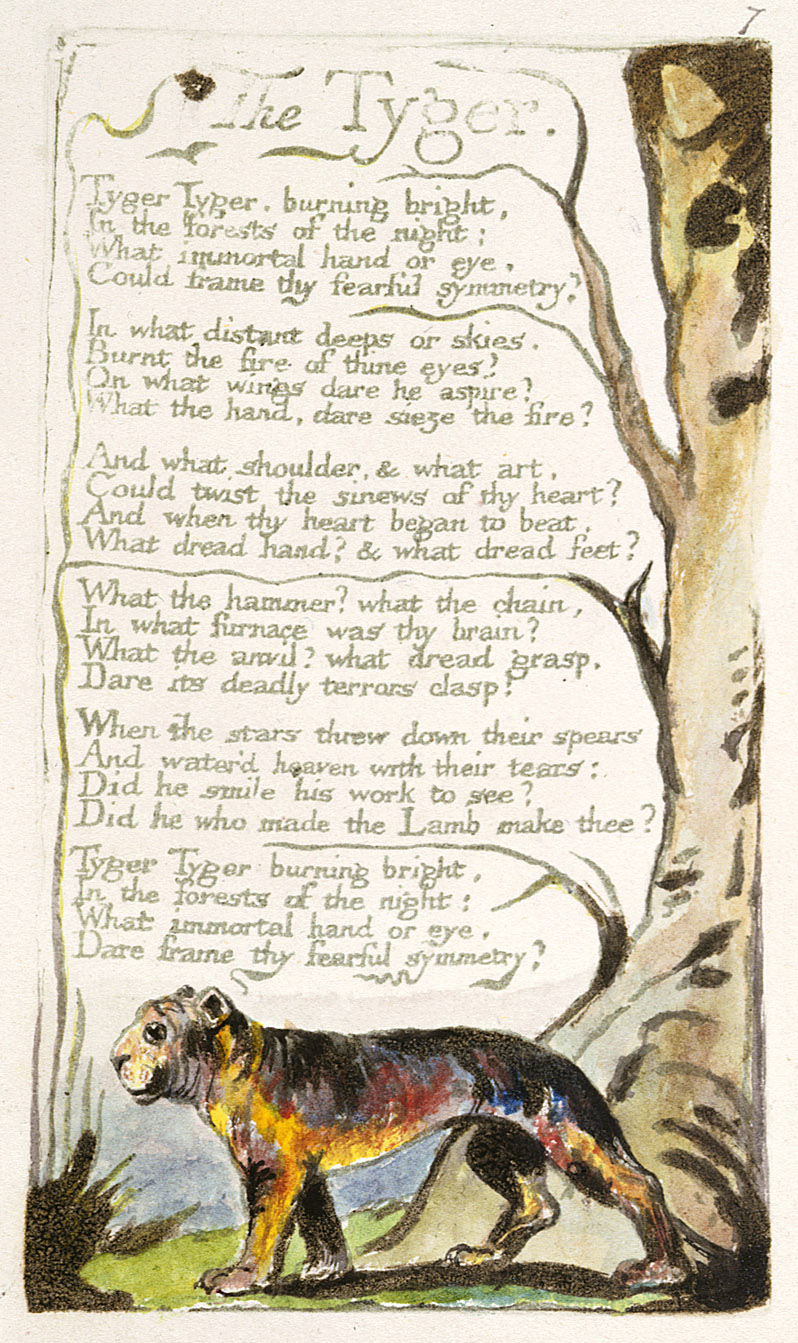
The Tyger is a poem by William Blake that contemplates the nature of creation and the dichotomy of ferocity and beauty within the universe.
Select reading age
The Tyger Facts For Kids
Videos & Quizzesincluded
About this topic
"The Tyger" is a famous poem written by William Blake in 1794. 🐅It's part of his collection called "Songs of Experience." In this poem, Blake wonders about a tiger's strength and beauty while asking deep questions about creation. Isn't it interesting how a poem can make us think about such big ideas? The poem uses vivid imagery to describe the tiger's fiery eyes and powerful body. 🌌It challenges readers to consider how something so fierce can exist in the world. The poem's rhythm and rhyme make it fun to read out loud, too! 🎶
Explore with ChatDinoKey Points
In "The Tyger," Blake uses strong imagery and repetition to create an exciting feeling.
Tigers are endangered, with less than 4,000 left in the wild!
"The Tyger" uses powerful symbols to show important themes.
William Blake was born in London, England, in 1757.
Many artists have been inspired by "The Tyger."
Different cultures have seen tigers as powerful symbols.
"The Tyger" has influenced movies, songs, and art in popular culture!
Tigers are fascinating animals!
📝 Literary Analysis
In "The Tyger," Blake uses strong imagery and repetition to create an exciting feeling. 📝For example, he asks, "What immortal hand or eye, could frame thy fearful symmetry?" This question makes readers think about who made the tiger and why. The poem contains a lot of sound devices, like rhythm and rhyme, making it highly musical. 🎵Blake often contrasts light and dark, which adds depth to the poem's meaning. The tiger's fiery eyes can be seen as both beautiful and dangerous! Through his clever writing, Blake encourages readers to explore their own ideas about creation and nature. 🌲
Go deeper🌍 Conservation Efforts
Tigers are endangered, with less than 4,000 left in the wild! 🌍Conservationists work hard to protect these magnificent creatures. Organizations like the World Wildlife Fund (WWF) focus on saving tiger habitats and reducing poaching. 🌱In many countries, laws help protect tigers by creating safe areas for them to live, like reserves and national parks. Education programs teach communities about the importance of tigers in ecosystems! By saving tigers, we also protect other plants and animals in their habitats. Every effort counts to ensure that future generations can marvel at these creatures, just like Blake did! 👏
Go deeper🌌 Symbolism And Themes
"The Tyger" uses powerful symbols to show important themes. 🌌The tiger represents both creation and destruction. It symbolizes the force of nature, which can be both beautiful and terrifying. The poem raises the question: is the tiger a creature of good or evil? The contrasting images of fire and night represent this duality. 🔥🌓 Blake's most important theme is "wonder." He wants readers to marvel at the complexity of life and the world around them! By exploring these ideas, he encourages us to think about what it means to create and exist. 🧠🌟
Go deeper🏙️ Historical Significance
William Blake was born in London, England, in 1757. 🏙️ At that time, many artists and writers were exploring new ideas about nature and existence. Blake's work reflects the changes in society during the Industrial Revolution, which shifted people's views on nature and creation. "The Tyger" is important because it shows how Blake questioned the balance of beauty and terror in the world. 🤔The poem invites readers to think about conflicting feelings. It was published alongside another famous poem, "The Lamb," to explore opposites in nature. This makes "The Tyger" a key part of English literature! 📚
Go deeper🎨 Artistic Representations
Many artists have been inspired by "The Tyger." 🎨 Illustrators have created stunning images of tigers that capture their power and grace. One famous artist, John Flaxman, made illustrations for Blake's poetry. His drawings emphasize the tiger's fierce beauty with dramatic shadows and bright colors. 🌈Also, some modern artists use technology, like digital art, to express the spirit of Blake's poem. The striking images often reflect the poem's themes of creation, nature, and wonder. These artworks bring Blake’s words to life and help us understand the power of the tiger! 🐯
Go deeper🐯 Cultural Interpretations
Different cultures have seen tigers as powerful symbols. In many Asian cultures, the tiger represents strength, bravery, and protection. 🐯For example, in Chinese astrology, the tiger is one of the twelve zodiac animals. People born in the Year of the Tiger are thought to be adventurous and confident! 🌟In contrast, in Western cultures, tigers often symbolize wildness and ferocity. 🐅"The Tyger" reflects these cultural views, mixing fear and fascination with a creature that both captivates and terrifies us. This duality shows how cultures interpret animals in different ways based on feelings and beliefs!
Go deeper🎥 Impact On Popular Culture
"The Tyger" has influenced movies, songs, and art in popular culture! 🎥Many filmmakers incorporate tigers to symbolize strength and bravery, often inspired by Blake's poetic description. The poem has been referenced in songs across various genres, capturing the mysterious tiger’s spirit. 🎶Additionally, children’s literature includes stories featuring witty and wise tigers, characterizing them similarly to Blake's striking image. These references show how Blake’s words continue to inspire creativity and wonder about nature. 🐯"The Tyger" truly remains a powerful influence, connecting poetry to modern stories and art! 🌟
Go deeper🐅 Scientific Study Of Tigers
Tigers are fascinating animals! 🐅There are six species of tigers, including the Bengal tiger and the Siberian tiger. They are native to Asia, mostly found in India, China, and Indonesia. 🗺️ Tigers are the largest wild cats, measuring up to 10 feet long, including their tail! They are also strong swimmers and can leap over 30 feet in one jump! 🚀Researchers study tigers to learn about their behavior, habitats, and conservation needs, which helps protect their populations. Understanding tigers scientifically helps us appreciate the real-life beauty and power that Blake described in his poem! 🌍
Go deeper