The Road To Wigan Pier Facts For Kids
'The Road to Wigan Pier' is a significant work by George Orwell that explores the conditions of the working class in Northern England during the 1930s and discusses broader themes of socialism and capitalism.
Select reading age
The Road To Wigan Pier Facts For Kids
Videos & Quizzesincluded
About this topic
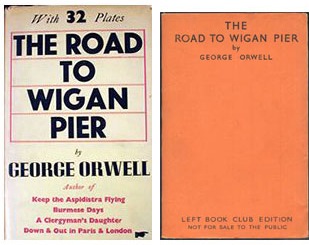
"The Road to Wigan Pier" is a book written by George Orwell. 📚It was published in 1937 and describes the tough lives of coal miners in Wigan, a town in England. 🌍The book talks about what it was like during a time when many people were poor and struggling to find jobs. George Orwell wanted to show how difficult life was for workers. He visited factories and homes to gather information and share their stories. People learned a lot from this book about social justice and the importance of treating everyone fairly. ⚖️
Explore with ChatDinoKey Points
In the 1930s, the world was facing big problems like the Great Depression, which began in 1929.
Wigan is a small town in Greater Manchester, England.
In "The Road to Wigan Pier," George Orwell uses strong imagery and facts to tell the stories of miners and their lives.
In the 1930s, a class struggle emerged between the rich and the poor in Britain.
George Orwell was born as Eric Arthur Blair on June 25, 1903, in India 🌏, where his father worked for the British government.
In the 1930s, life was tough for many people in Britain.
George Orwell's "The Road to Wigan Pier" greatly influenced political thought even today.
The Industrial Revolution was a period from the late 1700s to the early 1800s that changed how goods were made.
💰 Historical Context
In the 1930s, the world was facing big problems like the Great Depression, which began in 1929. 💰This caused many people to lose their jobs and have little money to buy food. In Britain, towns like Wigan were filled with coal mines. ⛏️ The miners worked hard but earned very little. This was a time when people began to talk about workers' rights and how to improve living conditions. George Orwell's work, especially "The Road to Wigan Pier," helped raise awareness of these issues. 🗣️ His aim was to make society better by discussing the struggles of everyday people.
Go deeper🗺️ Wigan's Economic Landscape
Wigan is a small town in Greater Manchester, England. 🗺️ In the 1930s, it relied heavily on coal mining for jobs. There were many coal mines in the area, providing energy for homes and factories. However, when the economy struggled, many mines closed, leaving workers without jobs. This created poverty and hardship for families. 🍞Instead of riches, the town faced many challenges, such as housing shortages and bad living conditions. Orwell wrote about these struggles in "The Road to Wigan Pier," capturing the tough times and calling for change in society to help those in need. 💔
Go deeper🎨 Literary Analysis And Themes
In "The Road to Wigan Pier," George Orwell uses strong imagery and facts to tell the stories of miners and their lives. 🎨He often describes the dark, dreary conditions in the coal mines and the struggles families faced. The main themes are social injustice, the struggle against poverty, and the importance of workers’ rights. 🌟Orwell encourages readers to feel empathy for the workers and understand their struggles. His writing is straightforward, making it easy for everyone to connect with his message and learn about the importance of fairness and justice in society. 📖
Go deeper💼 Class Struggle And Workers' Rights
In the 1930s, a class struggle emerged between the rich and the poor in Britain. 💼The wealthy owned factories and mines, while workers struggled to make a living wage. Many people began to demand better pay, safer jobs, and better living conditions. George Orwell supported these ideas and wanted to show the workers' perspective. He believed everyone deserved equal rights, no matter how much money they had. ✊"The Road to Wigan Pier" talked about these struggles and encouraged readers to think about how society could improve for everyone's sake. This helped spark discussions about workers' rights and equality! 👩🏫
Go deeper🌏 George Orwell's Life And Influence
George Orwell was born as Eric Arthur Blair on June 25, 1903, in India 🌏, where his father worked for the British government. He moved to England when he was an infant and later attended prestigious schools. George became a writer, thinker, and critic of society. He faced many challenges during his life, including poverty. 🥺His experiences deeply influenced his writings. Orwell wrote other famous books like "Animal Farm" and "1984," where he explored politics and human nature. Many people still read his work today because of his important messages about fairness, truth, and freedom. ✊
Go deeper🌧️ Social Conditions In 1930s Britain
In the 1930s, life was tough for many people in Britain. 🌧️ Most families didn't have much money, and the number of unemployed people was very high. In towns like Wigan, men often worked in coal mines, but jobs were hard to find. Work was dangerous, and miners faced many health risks. Families had to make do with little, sometimes living in one room. 🏠Many children could not attend school and had to help their families instead. The poor living conditions caused people to come together to fight for better rights, leading to social changes. ✊
Go deeper⚡ Legacy And Impact On Political Thought
George Orwell's "The Road to Wigan Pier" greatly influenced political thought even today. ⚡He raised awareness about poverty and the living conditions of workers, reminding readers that everyone matters. Because of his work, many people started to think differently about society and started to advocate for workers' rights. 👐This book inspired future leaders and activists who wanted to create changes to improve lives. Discussions about social justice and equality are still extremely important, influenced by Orwell's ideas. 📅His literary legacy continues to spark conversations about fairness in society around the world! 🌍
Go deeper🏭 The Industrial Revolution And Its Impact
The Industrial Revolution was a period from the late 1700s to the early 1800s that changed how goods were made. 🏭Factories replaced small workshops, and many people moved from farms to cities to work. This caused a big shift in society. In Wigan and other towns, coal mining became very important because it powered factories and homes. ⚡However, not all was good! Many workers faced harsh conditions, long hours, and low pay. Children also worked in factories! 🌫️ The Industrial Revolution shaped modern life, and Orwell wanted to show how it affected workers' lives in his book.
Go deeper