Théodore Géricault Facts For Kids
Théodore Géricault was a passionate French painter known for his emotional works, particularly 'The Raft of the Medusa,' which made him a key figure in the Romantic art movement.
Select reading age

Théodore Géricault Facts For Kids
Videos & Quizzesincluded
About this topic
Théodore Géricault was a famous French artist born on September 26, 1791, in Rouen, France. 🎨He was well-known for his amazing paintings, especially one called "The Raft of the Medusa." This painting shows a shipwreck and is packed with emotion! Géricault loved to paint about real-life events and express deep feelings. He played an important role in a style called Romanticism, which made art all about intense emotions and nature. 🌊Géricault passed away on January 26, 1824, but his art still inspires many people today!
Explore with ChatDinoKey Points
Géricault created many remarkable paintings, but his most famous one is "The Raft of the Medusa."
Sadly, Géricault died at only 32 years old due to health problems.
Théodore Géricault had a huge influence on the Romanticism movement, which celebrated emotions and nature.
After Géricault’s death, his impressive artwork gained even more recognition.
"The Raft of the Medusa" is a monumental painting that Géricault created in 1818-1819.
Géricault had a unique way of creating art, combining different techniques to enhance his paintings.
Géricault grew up in a middle-class family.
Géricault's exciting style inspired many artists who came after him!
Besides painting, Géricault also explored sculpture and lithography, a kind of printing technique.
Géricault was influenced by Romanticism, a popular art movement in the 19th century.
Photos of Théodore Géricault

Self-portrait, c. 1808–1812

The Charging Chasseur, 1812

Study of the Head of a Youth, c. 1821–1824

The Raft of the Medusa, 1819

Monument at Géricault's tomb, by sculptor Antoine Étex

Théodore Géricault — photo 6
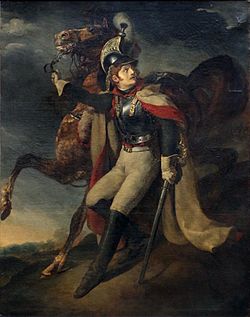
Théodore Géricault — photo 7

Théodore Géricault — photo 8

Théodore Géricault — photo 9
🌊 Notable Works
Géricault created many remarkable paintings, but his most famous one is "The Raft of the Medusa." 🌊 This painting tells a very serious story about a shipwreck that happened in 1816. He also painted works like "The Charging Chasseur," which shows a brave soldier, and portraits of insane asylum patients, focusing on human struggles. His artwork often featured strong characters facing challenges and deep emotions. 🌟Géricault’s paintings are still admired in museums today, and they tell important stories about bravery, sadness, and the human experience!
Go deeper😢 Death And Legacy
Sadly, Géricault died at only 32 years old due to health problems. 😢He passed away on January 26, 1824, in Paris, leaving behind a remarkable collection of art. Even though his life was short, his paintings have made a lasting impact! Géricault is remembered as a pioneer of Romanticism, and many artists look up to him. His iconic works continue to be studied in art schools and displayed in famous museums. 🌍By using strong emotions and real-life stories, Géricault created art that resonates with people, proving that art can speak volumes!
Go deeper🌌 Impact On Romanticism
Théodore Géricault had a huge influence on the Romanticism movement, which celebrated emotions and nature. 🌌Artists during this time were inspired by his powerful storytelling through art. Géricault's focus on real-life events, such as tragic moments and human experiences, made him a leading figure in the movement. His impactful work encouraged other artists to explore themes of heroism, sorrow, and individuality. 🌟He showed that art could be more than just pretty pictures; it could tell important stories and raise awareness about social issues. Géricault's legacy continues to inspire artists worldwide!
Go deeper🎉 Posthumous Recognition
After Géricault’s death, his impressive artwork gained even more recognition. 🎉Museum exhibitions started displaying his pieces, especially "The Raft of the Medusa." Critics and art lovers began to realize how important his work was. Over time, Géricault's influence was seen in many art movements. His paintings inspired future generations of artists, and today, schools and museums celebrate his achievements. Géricault is now considered one of France's greatest painters, reminding us how powerful art can be in telling human stories. 🌈His legacy lives on in every brushstroke!
Go deeper🚢 The Raft Of The Medusa
"The Raft of the Medusa" is a monumental painting that Géricault created in 1818-1819. It shows survivors of a shipwreck on a makeshift raft trying to be rescued. 🚢The painting is huge, about 16 feet wide and 23 feet tall! Géricault spent years researching the true story of the event, talking to survivors and reading reports. His artwork is full of drama and emotion, making viewers feel the despair and hope of the people on the raft. 🌅This incredible piece of art is considered one of the masterpieces of Romanticism and remains famous today!
Go deeper🎨 Géricault's Techniques
Géricault had a unique way of creating art, combining different techniques to enhance his paintings. 🎨He often used dramatic lighting, strong colors, and precise details to make his work look alive. Géricault painted with oil on canvas, layering colors to create depth and emotion. He also studied anatomy closely so his figures would appear realistic. Géricault created preparatory sketches and models to plan his compositions, showing how important practice was to him. ✍️ His innovative techniques inspired other artists to express emotions and stories through their work, leaving an everlasting mark on art history.
Go deeper🌟 Early Life And Education
Géricault grew up in a middle-class family. His father was a wealthy businessman, and his mother was very supportive of his art. 🌟He began painting at a young age and studied at the Royal Academy of Fine Arts in Paris. There, he learned from skilled artists and discovered his love for painting dramatic scenes. Géricault faced many challenges, especially after his father's death, but he never gave up on his dream! He studied anatomy and even visited hospitals to sketch injured soldiers. 📚These experiences helped him create powerful and realistic art!
Go deeper🎉 Influence On Later Artists
Géricault's exciting style inspired many artists who came after him! 🎉His emotional storytelling and vivid imagery influenced famous painters like Eugène Delacroix and even later movements like Impressionism. Artists admired how Géricault expressed true human experiences, which encouraged them to explore deeper feelings in their work. Many continue to study his techniques to learn how to convey strong emotions through colors and brushstrokes. 🌈Géricault’s legacy remains alive in the art world today, showing that his influence will be cherished for generations of artists to come!
Go deeper🎭 Sculptural Works And Mediums
Besides painting, Géricault also explored sculpture and lithography, a kind of printing technique. 🎭He was interested in how different materials could create art. He made some sculptures but is mostly remembered for his paintings. Géricault liked to use oil paints on canvas, which helped him achieve rich colors and lifelike details. His unique way of mixing colors made his art come alive! 🌈Although he focused on paintings, his exploration of different mediums showed his creativity and passion for art. Géricault's works are admired for their detail, emotion, and beautiful artistry.
Go deeper🌌 Artistic Style And Influences
Géricault was influenced by Romanticism, a popular art movement in the 19th century. This style focused on expressing strong emotions, nature, and human experiences. 🌌He admired artists like Caravaggio, who painted with light and shadow, and Rubens, known for his rich colors and dramatic scenes. Géricault wanted to show real-life stories in his art, often bringing attention to social issues and human suffering. His powerful style, full of movement and emotion, made his artwork stand out from others. 🌈Géricault’s passion for life and art truly inspired everyone around him!
Go deeper