Steven Weinberg Facts For Kids
Steven Weinberg was an American theoretical physicist and Nobel laureate known for his groundbreaking work on the unification of the weak force and electromagnetic interaction between elementary particles.
Select reading age
Steven Weinberg Facts For Kids
Videos & Quizzesincluded
About this topic
Steven Weinberg was a clever physicist from the United States who was born on May 3, 1933, in New York City 🗽. He made big discoveries in science, especially in understanding tiny particles that make up everything around us! He worked with two other scientists, Abdus Salam and Sheldon Glashow, to figure out how two forces in nature, the weak force and electromagnetic force, work together. This work helped scientists understand how the universe operates! 🌌Steven was not just smart; he was also very kind, sharing his knowledge with kids and other scientists everywhere!
Explore with ChatDinoKey Points
Besides being a fantastic physicist, Steven Weinberg had a warm and loving personal life.
In addition to the Nobel Prize, Steven Weinberg received many other awards during his lifetime 🏆.
Steven Weinberg's legacy continues through the many scientists and students he inspired 🌱.
Throughout his life, Steven Weinberg shared his knowledge by writing exciting books and papers 📖.
Steven Weinberg won the Nobel Prize in Physics in 1979 🎖️ along with Abdus Salam and Sheldon Glashow.
As a child, Steven loved learning and exploring!
Steven Weinberg made important contributions to physics, especially in understanding how forces work in nature.
Steven Weinberg was not just a scientist; he also had strong opinions about the world 🌍.
Steven Weinberg greatly influenced modern physics and our understanding of particle physics!
Steven Weinberg passed away on July 23, 2021, but his contributions to science will never be forgotten 💔.
Photos of Steven Weinberg

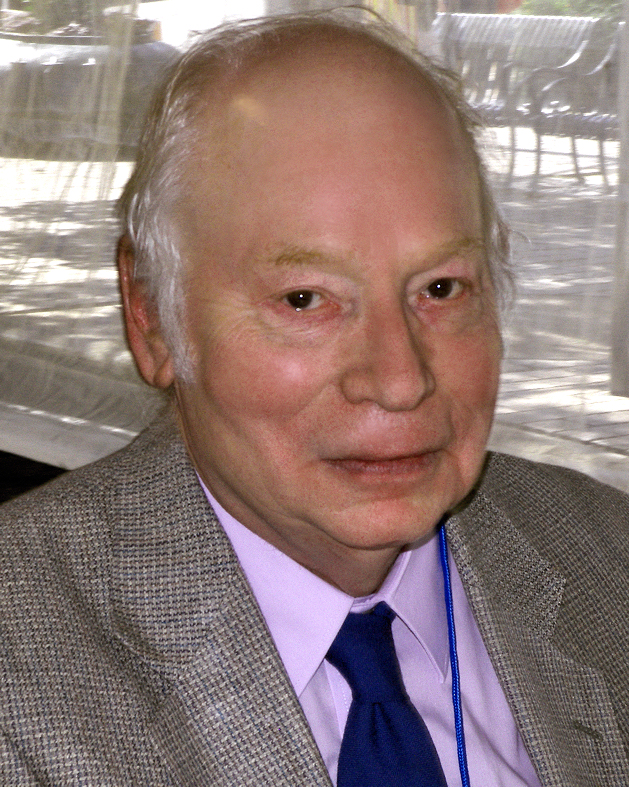
Steven Weinberg in December 2014

Queen Beatrix meets Nobel laureates in 1983. Weinberg is third from left.
🏡 Personal Life
Besides being a fantastic physicist, Steven Weinberg had a warm and loving personal life. 🏡He married his wife, Louise, in 1954, and they had three children together. Steven enjoyed sharing stories and learning new things with his family. He also had a passion for classical music and would often attend concerts. His love for both science and the arts made him a well-rounded person!
Go deeper🏆 Awards And Honors
In addition to the Nobel Prize, Steven Weinberg received many other awards during his lifetime 🏆. He was honored with the National Medal of Science in the USA and became a member of various prestigious organizations like the American Academy of Arts and Sciences. Steven’s achievements showcased how much he influenced physics and encouraged future generations of scientists. These honors remind us all of the importance of hard work and dedication to science and discovery!
Go deeper🌱 Legacy And Impact
Steven Weinberg's legacy continues through the many scientists and students he inspired 🌱. He showed that understanding the universe requires curiosity and hard work, and his work laid the groundwork for future discoveries in particle physics. Many scientists today are still building on his ideas, which shows how much impact he had on the world of science. Schools teach his discoveries, and children are encouraged to explore and understand science like he did!
Go deeper📖 Books And Publications
Throughout his life, Steven Weinberg shared his knowledge by writing exciting books and papers 📖. Some of his popular books include "The First Three Minutes," which explains how the universe began, and "A Universe in a Grain of Sand," where he discusses big ideas in science. He wrote many scientific papers too, sharing his discoveries with other scientists around the world. Steven's writings inspired countless kids and adults to love science and explore the mysteries of the universe!
Go deeper🎖️ Nobel Prize In Physics
Steven Weinberg won the Nobel Prize in Physics in 1979 🎖️ along with Abdus Salam and Sheldon Glashow. They received this prestigious award for their groundbreaking work on the electroweak force, which helped scientists see how two important forces in nature work together. The prize is named after Alfred Nobel, a Swedish inventor, and it is given to those who have made remarkable contributions to science! Steven was proud of this achievement, as it recognized his hard work and dedication to understanding the universe.
Go deeper📚 Early Life And Education
As a child, Steven loved learning and exploring! 📚He grew up in a Jewish family and attended schools in New York. Steven was a great student, interested in math and science from an early age. He went to college at Columbia University and earned his bachelor’s degree in 1954. After that, he continued studying at Princeton University for his Ph.D. 🎓His experiences in school shaped him into the brilliant scientist he would become. He always encouraged others to learn and explore their curiosity just like he did!
Go deeper🌠 Scientific Contributions
Steven Weinberg made important contributions to physics, especially in understanding how forces work in nature. 🌠Along with his friends, he created the electroweak theory, which describes how two forces, the weak force and electromagnetic force, are related. This was a huge step in explaining the behavior of tiny particles called bosons. One famous particle, the Higgs boson, is essential for understanding what gives particles mass! His ideas helped scientists make better predictions about the universe and inspired many future physicists to explore more!
Go deeper🌍 Political And Social Views
Steven Weinberg was not just a scientist; he also had strong opinions about the world 🌍. He believed in the importance of using science to improve society and often spoke out against nuclear weapons and wars. He thought scientists should share their knowledge for the good of humanity. Additionally, he supported education and believed everyone should have the opportunity to learn about science. By sharing his ideas, he encouraged others to think critically and care for the world around them!
Go deeper⭐ Influence On Modern Physics
Steven Weinberg greatly influenced modern physics and our understanding of particle physics! ⭐His electroweak theory helped shape the Standard Model, a set of rules that explain how all the known particles and forces interact in the universe. Other scientists looked up to Steven because he made complex concepts easier to understand. His theories helped physicists discover new particles and answer some of the universe's biggest questions. Many students and researchers today continue to study his work, showing just how important his ideas are for science!
Go deeper💔 Death And Posthumous Recognition
Steven Weinberg passed away on July 23, 2021, but his contributions to science will never be forgotten 💔. After he passed, many people worldwide remembered him for his important ideas and kindness. Scientists and educators continue to honor his legacy by teaching his theories in schools and sharing his books with students. In this way, the knowledge and inspiration he shared will live on in the hearts and minds of future generations of scientists!
Go deeper