Steelhead Trout Facts For Kids
Steelhead trout are migratory fish belonging to the salmon family, recognized for their strong swimming abilities and adaptability to both freshwater and saltwater habitats.
Select reading age

Steelhead Trout Facts For Kids
Videos & Quizzesincluded
About this topic
Steelhead trout are fascinating fish 🐟 that belong to the salmon family! They are known for their shiny, silver skin and are found in North America, especially in the Pacific Ocean and rivers that flow into it. Steelhead can grow up to 30 inches long and weigh as much as 12 pounds! These fish are special because they can live in both freshwater (like rivers and lakes) and saltwater (like the ocean). They are also known to make amazing migrations, swimming upstream in rivers to lay their eggs. Isn’t that cool? 🌊
Explore with ChatDinoKey Points
Steelhead trout play an important role in their ecosystem!
Fishing for steelhead trout is fun and requires special techniques!
Steelhead trout face challenges that put them at risk.
Steelhead trout have a special place in the culture of the indigenous peoples of North America.
Steelhead trout have a streamlined body that's designed to help them swim efficiently.
Steelhead trout are carnivorous, which means they eat meat!
Steelhead trout are mostly found along the west coast of North America.
Steelhead trout have a unique life cycle that includes several stages 🌱.
Photos of Steelhead Trout
Steelhead Trout — photo 1

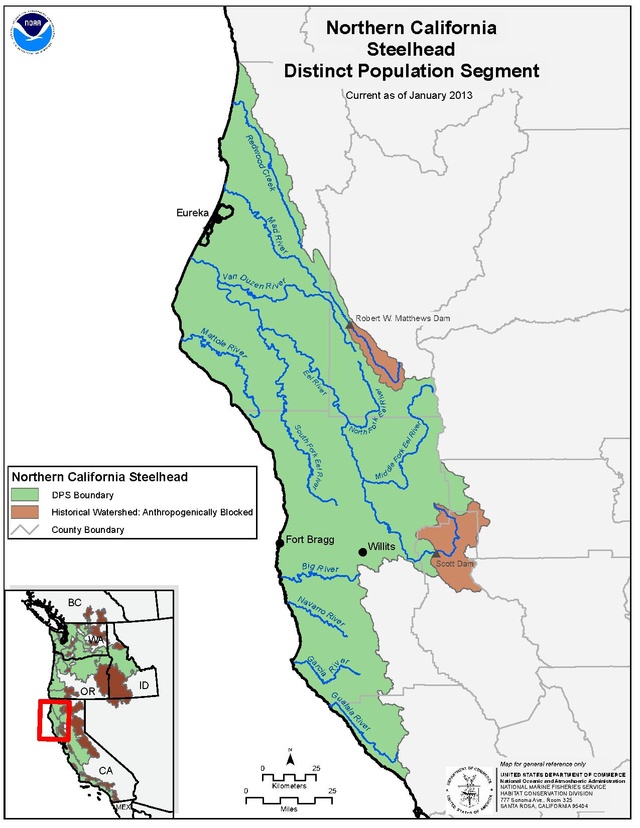
Management Units and Population Segments for the MCR Steelhead.
Robert J. Behnke monograph
🌍 Ecological Role
Steelhead trout play an important role in their ecosystem! 🌍They help keep the environment balanced by being both predators and prey. When steelhead trout are present in rivers and lakes, they help control insect populations by eating them. They also provide food for larger animals, such as bears and eagles, that rely on them for nutrition. Additionally, their migrations help spread nutrients through the ecosystem, supporting plant and animal life. By living healthy lives, steelhead trout contribute to the health of rivers and oceans! 🌿
Go deeper🎣 Fishing Techniques
Fishing for steelhead trout is fun and requires special techniques! 🎣Some people like to use a fishing rod with a reel, while others use fly fishing equipment, which mimics flies that trout like to eat. Anglers often fish in early morning or late afternoon when steelhead are more active. They sometimes use bait like worms or salmon eggs, and it’s important to practice catch-and-release to help these fish survive. Learning to fish responsibly means everyone can enjoy the excitement of catching steelhead trout for years to come! 🌄
Go deeper🎣 Conservation Status
Steelhead trout face challenges that put them at risk. Some populations are considered endangered or threatened due to habitat loss, pollution, and overfishing 🎣. Protecting their habitats, such as rivers and lakes, is very important for their survival. Many organizations and local communities are working hard to help conserve these fish by cleaning rivers and raising awareness. You can also help by taking care of the environment and informing others. When we all work together, we can help steelhead trout thrive! 💚
Go deeper🏞️ Cultural Significance
Steelhead trout have a special place in the culture of the indigenous peoples of North America. 🏞️ They are often considered a source of food and are celebrated in stories, art, and traditions. Many communities have fishing festivals that honor these fish and their ecosystems. In addition, steelhead trout are popular among anglers (fishermen) and are sought after for sport fishing. They are also a symbol of resilience and strength because of the challenges they overcome during their migration! 🎉
Go deeper🧬 Biology And Physiology
Steelhead trout have a streamlined body that's designed to help them swim efficiently. Their scientific name is Oncorhynchus mykiss 🧬. An interesting fact about them is that they can have a variety of colors! When they are in the ocean, their backs are a deep blue-green, while in freshwater they become more colorful. They also have small black spots dotted on their bodies! Their fins help them move smoothly, and their strong tails give them a powerful push in water. Just like us, these fish have a heart, gills to breathe, and eyes to see their surroundings! 👀
Go deeper🐠 Diet And Feeding Habits
Steelhead trout are carnivorous, which means they eat meat! 🐠When they are young, they mostly eat tiny insects and tiny fish. As they grow, they may feast on larger fish, shrimp, and other sea creatures. In freshwater, they hunt for insects, worms, and even small salmon. Their sharp teeth help them catch and eat their prey. They are skilled hunters and use their speed and agility to catch food. Steelhead need a lot of energy for swimming upstream, so eating well is very important for them! 🍽️
Go deeper🌎 Habitat And Distribution
Steelhead trout are mostly found along the west coast of North America. They live in places like Alaska, California, and British Columbia 🇨🇦. They prefer cold rivers and streams with lots of rocks and clean water. These fish start their lives in freshwater rivers, but many swim out to the ocean when they grow up. This wide distribution helps them find food and travel to different places to spawn (lay eggs). During their adventures, they might even travel hundreds of miles! This amazing journey is a big part of their life cycle! 🌎
Go deeper🌱 Life Cycle And Reproduction
Steelhead trout have a unique life cycle that includes several stages 🌱. They start as tiny eggs, which are laid in gravel nests called "redds" in freshwater. After a few weeks, the eggs hatch into small fish called fry. As they grow bigger, they become fingerlings and then juveniles. Steelhead are unique because they can be either "anadromous," meaning they spend part of their life in the ocean and return to freshwater to spawn, or they may stay in freshwater their whole lives! These incredible fish return to the same river where they were born to lay their eggs, usually in spring or early summer.
Go deeper