All Articles

Steam Turbine

Steam Turbine Facts For Kids

A steam turbine is a machine that turns thermal energy from pressurized steam into mechanical energy, often used for generating electricity.

🎨 Reading age for 6-8
Background blob
Steam Turbine
Steam Turbine
Facts for Kids!
Image by Siemens Pressebild, http://www.siemens.com, licensed under Creative Commons Attribution-Share Alike 3.0

Do more with AI

Introduction

A steam turbine is a special machine that helps control energy from hot water steam 💨. This steam is created by boiling water using heat. When the steam pushes on the blades of the turbine, it makes a wheel spin, turning heat energy into movement! 🚀Steam turbines are found in power plants all over the world, helping to create electricity for homes, schools, and more. The invention of the steam turbine has made it easier for us to use energy efficiently. Without them, our modern lives would look very different! 🌍

Images of Steam Turbine

A 250 kW industrial steam turbine from 1910 (right) directly linked to a generator (left)

A 250 kW industrial steam turbine from 1910 (right) directly linked to a generator (left)

The first steam turbine-powered ship Turbinia: fastest in the world in 1894

The first steam turbine-powered ship Turbinia: fastest in the world in 1894

A steam turbine without its top coverImage by Siemens Pressebild, licensed under Creative Commons Attribution-Share Alike 3.0

A steam turbine without its top cover

Schematic diagram outlining the difference between an impulse and a 50% reaction turbineImage by Original: Emoscopes Vector: BMacZero, licensed under Creative Commons Attribution-Share Alike 3.0

Schematic diagram outlining the difference between an impulse and a 50% reaction turbine

Diagram of an AEG marine steam turbine circa 1905

Diagram of an AEG marine steam turbine circa 1905

A low-pressure steam turbine in a nuclear power plant. These turbines exhaust steam at a pressure below atmospheric.Image by Александр Ситенький (Alexander Seetenky), licensed under Creative Commons Attribution-Share Alike 3.0

A low-pressure steam turbine in a nuclear power plant. These turbines exhaust steam at a pressure below atmospheric.
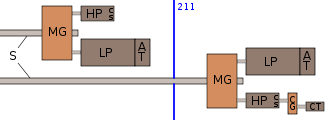
Starboard steam turbine machinery arrangement of Japanese Furutaka- and Aoba-class cruisersImage by Sceadugenga, licensed under Creative Commons Attribution 3.0

Starboard steam turbine machinery arrangement of Japanese Furutaka- and Aoba-class cruisers

A two-flow turbine rotor. The steam enters in the middle of the shaft, and exits at each end, balancing the axial force.

A two-flow turbine rotor. The steam enters in the middle of the shaft, and exits at each end, balancing the axial force.

A selection of impulse turbine bladesImage by Cblade, licensed under Creative Commons Attribution-Share Alike 3.0

A selection of impulse turbine blades

A 250 kW industrial steam turbine from 1910 (right) directly linked to a generator (left)

A 250 kW industrial steam turbine from 1910 (right) directly linked to a generator (left)

The first steam turbine-powered ship Turbinia: fastest in the world in 1894

The first steam turbine-powered ship Turbinia: fastest in the world in 1894

A steam turbine without its top coverImage by Siemens Pressebild, licensed under Creative Commons Attribution-Share Alike 3.0

A steam turbine without its top cover

Schematic diagram outlining the difference between an impulse and a 50% reaction turbineImage by Original: Emoscopes Vector: BMacZero, licensed under Creative Commons Attribution-Share Alike 3.0

Schematic diagram outlining the difference between an impulse and a 50% reaction turbine

Diagram of an AEG marine steam turbine circa 1905

Diagram of an AEG marine steam turbine circa 1905

A low-pressure steam turbine in a nuclear power plant. These turbines exhaust steam at a pressure below atmospheric.Image by Александр Ситенький (Alexander Seetenky), licensed under Creative Commons Attribution-Share Alike 3.0

A low-pressure steam turbine in a nuclear power plant. These turbines exhaust steam at a pressure below atmospheric.

Starboard steam turbine machinery arrangement of Japanese Furutaka- and Aoba-class cruisersImage by Sceadugenga, licensed under Creative Commons Attribution 3.0

Starboard steam turbine machinery arrangement of Japanese Furutaka- and Aoba-class cruisers

A two-flow turbine rotor. The steam enters in the middle of the shaft, and exits at each end, balancing the axial force.Image by Christine und David Schmitt from Vienna, Austria, Austria, licensed under Creative Commons Attribution 2.0

A two-flow turbine rotor. The steam enters in the middle of the shaft, and exits at each end, balancing the axial force.

A selection of impulse turbine bladesImage by Cblade, licensed under Creative Commons Attribution-Share Alike 3.0

A selection of impulse turbine blades

How Steam Turbines Work

Steam turbines work by using hot steam to turn blades attached to a wheel. 🌪️ When water is heated to become steam, it expands and becomes powerful! This steam flows through the turbine and pushes against the blades, causing the wheel to turn. This spinning creates mechanical energy that can be converted into electricity. The steam then cools down and turns back into water 💧, which can be reused! It’s like a magic cycle that helps us use energy from water safely and efficiently. 🌊

Types Of Steam Turbines

There are mainly two types of steam turbines: Impulse turbines and Reaction turbines. 🚀
- Impulse turbines: In these turbines, steam hits the blades quickly, causing them to spin. They work best for high-pressure steam.
- Reaction turbines: These turbines produce movement from the pressure difference created by steam flowing through the blades. They are great for low to medium pressures.
Each type has its own advantages and is used in different situations for producing energy! ⚡

History Of Steam Turbines

The first idea for a steam turbine dates back to 1629! A smart man named Giovanni Branca 🧔 invented a steam-based machine called the "steam engine." However, the modern steam turbine was invented later in 1884 by Sir Charles Parsons in England 🇬🇧. His design used steam to spin a wheel, generating electricity. People loved this invention! Since then, many engineers have worked on steam turbines, making them better and faster. Now, they play a huge role in how we create power today. ⚙️

Challenges And Limitations

While steam turbines are great, they do have some challenges. 🚧For example:
1. Maintenance: They need regular check-ups to keep working well.
2. Water Requirement: They need a lot of water to create steam, which can be a problem in dry areas. 💦
3. Cost: Building power plants with steam turbines can be expensive.
These issues mean we must carefully think about how to use steam turbines effectively in our energy systems. 🤔

Advantages Of Steam Turbines

Steam turbines have some cool benefits! 🌈Here are a few reasons why they are awesome:
1. Efficiency: They convert thermal energy into mechanical energy very well!
2. Reliable: Steam turbines can work for a long time without stopping! ⏳
3. Powerful: They can produce a lot of electricity!
4. Environmentally Friendly: When combined with clean energy sources, they can be good for our planet. 🌍
These advantages make steam turbines a top choice for generating power around the world!

Components Of A Steam Turbine

Steam turbines have important parts that help them work well. The main components include:
1. Rotor: A big spinning wheel with blades attached.
2. Stator: A stationary part that helps control the steam flow.
3. Nozzles: Tiny openings where steam enters the turbine.
4. Bearings: Smooth surfaces that allow the rotor to spin easily.
5. Condenser: A cooler that helps turn steam back into water. 🌡️
Each part plays a crucial role in making sure the turbine works properly, keeping the energy flowing! 🔄

Applications Of Steam Turbines

Steam turbines are super important in many areas of our lives! 🏭They are mostly used to generate electricity in power plants, like coal or nuclear plants. They help run large ships and submarines by turning steam energy into movement, too! 🚢Steam turbines are also used in factories for manufacturing and can even drive large pumps. Every time you turn on a light, there might be a steam turbine making it possible! 🌟

Steam Turbines In Modern Power Plants

Steam turbines are still super important in today's power plants. 🌍In fact, over 80% of the world's electricity comes from steam turbines! They are used alongside renewable energy like solar and wind to help create clean electricity. Modern technology has made them more efficient, allowing us to use less fuel. 🌞❄️ So, when you turn on your favorite gadget or light in your home, you might be using electricity powered by a steam turbine!

Environmental Impact Of Steam Turbines

Steam turbines can help reduce pollution if used wisely! 🌱When they generate electricity using renewable sources, like geothermal energy from the Earth's heat or the sun, they create cleaner energy. However, if they are powered by fossil fuels, like coal, they can produce harmful gases. 🌬️ It's important to find ways to use steam turbines that protect our environment and help fight climate change! By transitioning to greener energy sources, we can use steam turbines while taking care of our beautiful planet! 🌏

Steam Turbine Quiz

Q1
Question 1 of 10

Learn more about Steam Turbine

Ready to create?

Drop Files here
Make

To create a safe space for kid creators worldwide!

Create

Vibe Coding

Kids GPT

All Tools

Kibu

Resources

Worksheets

SafeTube

Blog

FAQ

Account

Pricing

Log-in

Sign-up

Data Deletion

Company

About

Community Guidelines

Privacy Policy

Terms of Service

2025, URSOR LIMITED. All rights reserved. DIY is in no way affiliated with Minecraft™, Mojang, Microsoft, Roblox™ or YouTube. LEGO® is a trademark of the LEGO® Group which does not sponsor, endorse or authorize this website or event. Made with love in San Francisco.