Sphenoid Bone Facts For Kids
The sphenoid bone is a unique, unpaired bone in the skull that plays critical roles in brain protection, eye socket formation, and overall skull structure.
Select reading age

Sphenoid Bone Facts For Kids
Videos & Quizzesincluded
About this topic
The sphenoid bone is a special bone in our heads! 🦴Unlike some bones, it doesn’t have a partner; it's unpaired. The sphenoid is shaped like a butterfly, with wings that spread out. It sits in the middle of the skull, which is the bony case around our brain, and helps hold everything together. This unique bone connects to many other bones in the skull and is important for protecting our brain. Did you know it is part of our face too? 🦸♂️ Overall, the sphenoid bone plays a big role in keeping our heads safe and strong!
Explore with ChatDinoKey Points
The sphenoid bone starts as tiny cartilage when we are babies.
Sometimes doctors need to perform surgeries on the sphenoid bone.
You can find the sphenoid bone right in the center of your skull!
The sphenoid bone has a special shape—it looks like a butterfly in flight!
The sphenoid bone is like a superhero for our head!
Like any other part of our body, the sphenoid bone can sometimes get hurt.
Throughout history, people have studied the sphenoid bone.
Doctors often use special machines to look at our sphenoid bone when they need to see if it’s healthy!
Did you know the sphenoid bone is found in many animals?
Here are some cool facts about the sphenoid bone!
Photos of Sphenoid Bone

Sphenoid Bone — photo 1

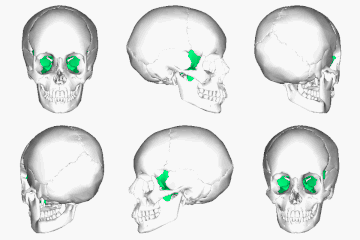
Seven bones articulate to form the orbit. The sphenoid bone is in red (directly in the middle of the orbital cavity)

Wedge-shaped sphenoid bone seen laterally
Sphenoid Bone — photo 4

Sphenoid Bone — photo 5
Sphenoid Bone — photo 6

Sphenoid Bone — photo 7

Sphenoid Bone — photo 8

Figure 4 : Sphenoid bone at birth, posterior aspect.
👶 Development And Growth
The sphenoid bone starts as tiny cartilage when we are babies. 👶As we grow, this cartilage slowly turns into bone, a process called ossification. This change begins before we're born and continues into childhood. By the time we are around 15 years old, the sphenoid bone is fully grown! ⏳Fun fact: our bones get stronger and thicker as we grow. The sphenoid helps shape our face and head, making it important during our development. So, next time you smile, thank your sphenoid bone for its growth journey! 😊
Go deeper🛠️ Sphenoid Bone Surgeries
Sometimes doctors need to perform surgeries on the sphenoid bone. 🛠️ This is usually to treat fractures or remove problems like tumors. Surgeons are specially trained and use tools to work carefully inside the head. It’s a complex process, and doctors make sure to do it safely. The surgeries can help fix injuries or prevent infection. After surgery, patients often need time to heal and may go through special care. 🏥It’s important to listen to doctors and take care of our heads, especially if surgery is needed!
Go deeper🗺️ Location And Articulations
You can find the sphenoid bone right in the center of your skull! 🗺️ It connects to many other bones, making it very important. It connects to the frontal bone at the front, the parietal bones on the sides, and the temporal bones near your ears. It even connects to the back bone called the occipital bone! These connections, called articulations, help give our heads their shape. With so many connections, when you look at the skull, you can see how the sphenoid bone holds everything together like a puzzle piece! 🧩
Go deeper🦋 Anatomy Of The Sphenoid Bone
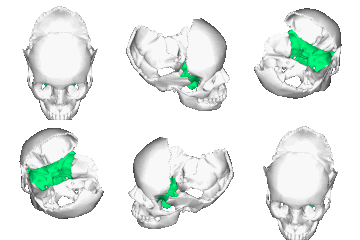
The sphenoid bone has a special shape—it looks like a butterfly in flight! 🦋It has several parts: the body, greater wings, and lesser wings. The body of the sphenoid is the tall, middle section, while the greater wings spread out like the big wings of a butterfly. The lesser wings are smaller and sit above the greater wings. Other important parts include the sella turcica, which holds the pituitary gland, a tiny but mighty gland that helps control important body functions. 🌟Overall, its unique shape helps protect important structures in our head!
Go deeper💪 Function Of The Sphenoid Bone
The sphenoid bone is like a superhero for our head! 💪Its main job is to support the skull and protect the brain. It also acts like a bridge, connecting many other bones together, which helps keep our head strong. The sphenoid bone has holes that let important things, like nerves and blood vessels, travel through it. This means it plays a role in helping our eyes see, our nose smell, and our mouth taste. The sphenoid bone is truly a superstar in our head, making sure everything works together smoothly! 🌈
Go deeper🩹 Common Injuries And Conditions
Like any other part of our body, the sphenoid bone can sometimes get hurt. 🩹Injuries often happen from falls or accidents. A fracture, which is a break in the bone, can happen if someone hits their head hard. This can be very serious! Other conditions affecting the sphenoid are tumors or infections. If you ever feel pain in your head that doesn’t go away, it’s important to see a doctor. 🩺They can help! Taking care of our head and being safe while playing can help protect our sphenoid bone from injuries! ⚽
Go deeper🏺 Cultural And Historical Significance
Throughout history, people have studied the sphenoid bone. Ancient Egyptians even knew about the skull's parts, including the sphenoid! 🏺They believed that the brain was unimportant, and during mummification, many times the brain was removed. Today, scientists continue to learn about its significance, including how it affects health and development. 📚The sphenoid bone reminds us of our connection to the past and how bones tell stories of health and science!
Go deeper🏥 Medical Imaging Of The Sphenoid Bone
Doctors often use special machines to look at our sphenoid bone when they need to see if it’s healthy! 🏥One common way is with X-rays, which can show if the bone is broken. Another method is a CT scan (Computerized Tomography), giving a more detailed look inside our head. 📸This helps doctors see fractures or other issues. These images are very important for diagnosing problems, so if you ever hear these terms, you’ll know they are learning about our bones, including the sphenoid! 📈
Go deeper🐶 Comparative Anatomy In Different Species
Did you know the sphenoid bone is found in many animals? 🐶Just like humans, many animals have a bone similar to it! For example, in cats, it helps protect their brain and holds their eyes in place, just like in humans. However, the shape may be different based on the animal. In birds, the sphenoid bone is part of their unique skull structure and helps with flying. 🦜Despite these differences, the sphenoid bone’s main job remains the same: to protect important parts of the head!
Go deeper😮 Interesting Facts About The Sphenoid Bone
Here are some cool facts about the sphenoid bone! 😮Did you know it is one of the most complicated bones in the human body? Its shape is unique and important for structure. The sella turcica part of the sphenoid is called "Turkish saddle" in English! 🏇It got this name because it looks like a saddle that horses wear. Also, the sphenoid bone can be seen in many animals, showing how different species have adapted! Lastly, a little butterfly in your head has such a big job; isn't that wonderful? 🦋
Go deeper