Space Tourism Facts For Kids
Space tourism is human space travel for recreational purposes, allowing people to experience the excitement of space firsthand.
Select reading age
Space Tourism Facts For Kids
Videos & Quizzesincluded
About this topic
Space tourism is an exciting and new way for people to travel to space for fun! 🪐It allows adventure-seekers to leave Earth and experience weightlessness, see stars up close, and even look at our beautiful planet from above! 🌍The first space tourists paid to go on missions with professional space agencies. Today, rich people can fly in special rockets and spaceplanes, which look like large airplanes. The goal is to make space travel as common as a trip to Disneyland! 🎠Wouldn't you love to float around in zero gravity?
Explore with ChatDinoKey Points
While space tourism is thrilling, it has some challenges!
There are different kinds of space tourism experiences!
The future of space tourism looks super bright!
The first space tourist was Dennis Tito, an American businessman, who flew to the International Space Station (ISS) in April 2001.
Going to space is a big adventure but it comes with a high price tag!
Being a space tourist is a once-in-a-lifetime experience!
Several companies are working hard to take people to space!
Safety is super important in space tourism!
Space tourism does have an effect on our planet's environment.
Technology plays a big role in making space tourism a reality!
Photos of Space Tourism

Space Tourism — photo 1

The first space tourist, Dennis Tito (left) aboard the ISS

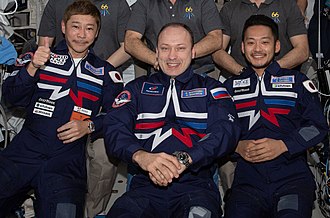
Space tourist Mark Shuttleworth

Artist conception of a Mars tourism poster, made by SpaceX
![Influence of a decade of contemporary rocket launch and re-entry heating emissions on stratospheric chemical composition[116]](https://upload.wikimedia.org/wikipedia/commons/thumb/a/a6/Modelled_influence_of_a_decade_of_contemporary_rocket_launch_and_re-entry_heating_emissions_on_stratospheric_chemical_composition.jpg/960px-Modelled_influence_of_a_decade_of_contemporary_rocket_launch_and_re-entry_heating_emissions_on_stratospheric_chemical_composition.jpg)
Influence of a decade of contemporary rocket launch and re-entry heating emissions on stratospheric chemical composition[116]
🚫 Challenges And Risks
While space tourism is thrilling, it has some challenges! 🚫One major challenge is safety; spacecraft can encounter strong forces during launch and landing. Another challenge is the high cost of space travel, which keeps many people from going. There are also concerns about overcrowding in space, which could make it hard for rockets and satellites to operate safely. 🌌Companies must work hard to solve these problems to make space tourism as fun and safe as possible while providing amazing experiences! 🛡️
Go deeper👩🔬 Types Of Space Tourism
There are different kinds of space tourism experiences! Some tourists visit the ISS, like Dennis Tito did, where they can stay for several days and do science experiments. 👩🔬 Others might fly briefly into space and come back, like what Blue Origin offers. 🌌You can also take a trip to the edge of space, where you can see the Earth curve! Another exciting option is to go for a vacation on a future space hotel, which we hope will be built soon! 🏨Who wouldn't want to sleep among the stars?
Go deeper🌟 Future Of Space Tourism
The future of space tourism looks super bright! 🌟Companies like SpaceX and Blue Origin are planning more flights in the coming years. They hope to create space hotels and even trips around the Moon! 🌓Scientists are also looking into space missions that could take tourists to Mars someday! As technology improves and costs go down, more and more people might get a chance to go to space. Perhaps one day, it will be as common as taking a plane to another state! 🛩️ Who knows what exciting adventures await us?
Go deeper🚀 History Of Space Tourism
The first space tourist was Dennis Tito, an American businessman, who flew to the International Space Station (ISS) in April 2001. 🚀He paid about $20 million for the trip! This was a historic moment because it showed that ordinary people could visit space. 🥳After that, other brave souls began to take trips. Companies like SpaceX and Blue Origin started dreaming bigger, hoping to make space travel available to more people. As space technology improved, dreams of space tourism became a reality, and soon more space tourists followed Dennis Tito into orbit! 🌌
Go deeper💰 Costs And Economic Impacts
Going to space is a big adventure but it comes with a high price tag! 💰A ticket to a suborbital flight with Blue Origin can cost around $250,000! The high costs now mean that only a few can afford it, but as space tourism grows, prices could drop. This could create new jobs on Earth, like tour guides or rocket engineers! 🌌Local economies near launch sites may see more businesses opening up as tourists come to experience space. The dream of space tourism might also inspire kids to become scientists or astronauts! 🚀
Go deeper🚀 Experiences Of Space Tourists
Being a space tourist is a once-in-a-lifetime experience! 🚀Tourists often train for several weeks to prepare. When they finally fly, they get to see Earth from space, float in zero gravity, and sometimes even do astronaut training exercises! 🌍Many report feeling a sense of awe seeing our planet from above and love-sharing their exciting stories. Some space tourists even participate in scientific experiments while they are there! Each journey brings unique memories and experiences that can't be found anywhere else on Earth. What an adventure! 🎠
Go deeper🚀 Key Companies In Space Tourism
Several companies are working hard to take people to space! Blue Origin, founded by Jeff Bezos, built the New Shepard rocket which can carry passengers. 🚀Then there’s SpaceX, started by Elon Musk, with its Crew Dragon spacecraft. 🌟Virgin Galactic, created by Sir Richard Branson, uses a special airplane called VSS Unity to take tourists about 50 miles into the sky! These companies want to make space travel fun, exciting, and safe for everyone! Soon, there may be many ways to reach the stars! 🌠
Go deeper🚦 Regulatory And Safety Considerations
Safety is super important in space tourism! 🚦Before anyone can fly, government agencies like the Federal Aviation Administration (FAA) in the USA check the rockets and spaceships to make sure they are safe. They have rules to protect passengers and keep them informed about potential risks, like what to do during a launch or landing. 🚀Companies also create strict safety guidelines for their staff to follow. They want to make sure that space travel is safe and enjoyable! Flying to space is thrilling, but safety comes first! 🛡️
Go deeper🌎 Environmental Impact Of Space Tourism
Space tourism does have an effect on our planet's environment. 🌎Rockets produce exhaust that can contribute to pollution. Companies are working to create cleaner technologies to reduce the impact on Earth's atmosphere. Some are even looking at using renewable energy sources! 🌬️ Furthermore, as more people consider space travel, it’s important to think about the protection of space itself, like orbiting debris that can harm satellites! Just like we care for nature on Earth, we need to ensure the space above is preserved for future generations to explore! 🌌
Go deeper🚀 Technological Innovations In Space Travel
Technology plays a big role in making space tourism a reality! 🚀Advancements in rocketry, like reusable rockets, allow companies to cut costs and increase flights. For instance, SpaceX’s Falcon 9 rocket can land back on Earth after delivering payloads to space! 🌍There are also cabins designed to keep tourists comfortable in microgravity and spacesuits that let them breathe! 📡Innovations in life support systems help keep passengers safe while they are in space. Every day, scientists and engineers are working hard to create even more exciting advancements! 👩🚀
Go deeper