Soil Facts For Kids
Soil, commonly referred to as earth, is a mixture of organic matter, minerals, gases, liquids, and organisms that together support the life of plants and soil organisms.
Select reading age
Soil Facts For Kids
Videos & Quizzesincluded
About this topic
Soil is like the “skin” of the Earth! 🌍It’s a mix of tiny rocks, pieces of plants, water, air, and living things like worms. Soil helps plants grow by giving them the nutrients they need. There are many kinds of soil found all over the world, such as sandy soil in deserts and clay soil in wetlands. Did you know that there are around 7.6 billion acres of soil on Earth? 🌱Soil is super important for farming and forests too! It’s a home for many animals and insects, making it a busy place full of life! 🐛
Explore with ChatDinoKey Points
There are three main types of soil!
Soil plays a big role in climate change!
Soil is formed through many processes over time!
Soil has different layers, called horizons!
Testing soil is like giving it a health check-up!
Taking care of our soil is super important!
Soil is made of four main parts: minerals, organic matter, water, and air!
Soil is super important for all living things!
Farming can have both good and bad effects on soil quality!
Photos of Soil

Soil measuring and surveying device

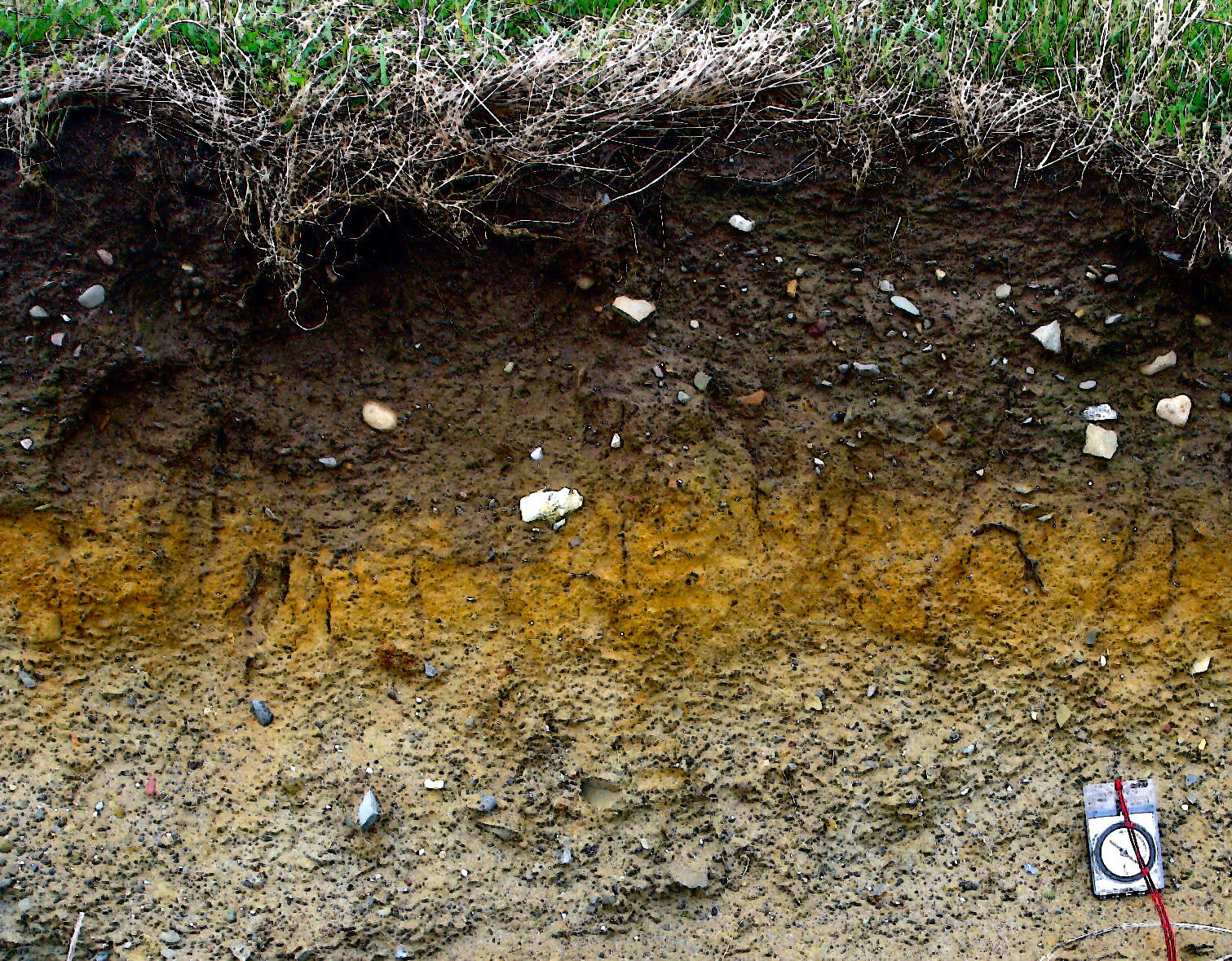
A, B, and C represent the soil profile, a notation firstly coined by Vasily Dokuchaev (1846–1903), the father of pedology. Here, A is the topsoil; B is a regolith; C is a saprolite (a less-weathered regolith); the bottom-most layer represents the bedrock.

A soil texture triangle plot is a visual representation of the proportions of sand, silt, and clay in a soil sample.


Erosion control
🏖️ Types Of Soil
There are three main types of soil! They are called sandy, clay, and loamy soil. 🏖️ Sandy soil feels gritty and drains water quickly, perfect for cacti. Clay soil feels sticky and holds water, which is great for rice paddies. 🌾Loamy soil is a mix of both, and it’s the best for most plants! 🌺Around 25% of the Earth’s surface is made up of soil. Each type plays a special role in gardening and farming, helping different plants thrive in their environments! 🌈
Go deeper🌬️ Soil And Climate Change
Soil plays a big role in climate change! 🌬️ It can trap carbon dioxide, a gas that warms the Earth. 🌱Healthy soil absorbs more carbon, helping reduce climate change. However, when soil gets damaged or eroded, it releases carbon back into the atmosphere. 🌩️ That's why it's super important to take care of our soil! By using soil conservation techniques, we can help keep our environment healthy and fight against climate change, making our planet a better place! 🌏
Go deeper🌳 Soil Formation Processes
Soil is formed through many processes over time! 🌳One way is through weathering, where rocks break down into smaller pieces caused by wind, water, or temperature changes. 🌨️ Another way is through the decay of plants and animals, turning into organic matter. Soil formation can take thousands of years! 🌱Different processes happen in different climates, like deserts or forests, creating unique soils everywhere! Did you know soil in places like Hawaii can form from volcanic ash? 🌋That makes it very special!
Go deeper🌌 Soil Layers And Horizons
Soil has different layers, called horizons! 🌌The top layer is called the O layer, full of organic matter like leaves and roots. Under that is the A layer, which is rich in minerals and nutrients. The B layer, called the subsoil, has minerals washed down from above, while the C layer has broken-down rocks. 🪨Lastly, there’s the bedrock layer, which is solid and gives soil its minerals. Each layer helps support different types of plants and animals! Did you know the thickest soil can be found in places like the Midwest USA? 🍂
Go deeper🧪 Soil Testing And Analysis
Testing soil is like giving it a health check-up! 🧪Scientists collect soil samples to see what nutrients are present and if it’s healthy. Soil testing tells farmers what to add to the soil to help plants grow better! 🌼Tests can show pH levels, which affect how well plants absorb nutrients. 🌿It’s important for farmers and gardeners to know what their soil needs! This way, they can make sure their plants are getting the best care possible. 🥦Testing soil helps ensure we have healthy food for the future! 🍽️
Go deeper🛠️ Soil Conservation Techniques
Taking care of our soil is super important! 🛠️ We can use soil conservation techniques like crop rotation, where farmers grow different plants each year. This helps keep the nutrients balanced. 🌽Composting is another technique, where old plant matter gets turned into nutrient-rich food for soil! 🌱Also, planting cover crops helps prevent soil erosion. These techniques protect soil from getting damaged and keep it healthy for many years to come! It’s like giving our soil a big hug! 🤗
Go deeper🌪️ Soil Composition And Properties
Soil is made of four main parts: minerals, organic matter, water, and air! 🌪️ Minerals are tiny bits of rocks. Organic matter comes from dead plants and animals, providing nutrients. Water in the soil helps plants grow, while air keeps soil healthy! 🌬️ Soil can be gritty like sand, smooth like clay, or just right like loamy soil. Each type has different colors and textures. For example, black soil is very fertile, while red soil is rich in iron! This variety helps different plants and animals thrive in their homes! 🦋
Go deeper🌍 Importance Of Soil In Ecosystems
Soil is super important for all living things! 🌍It provides nutrients that plants need to grow healthy. 🌽Without plants, animals and humans wouldn’t have food. Soil also helps keep water clean by filtering it, which is essential for all life! 💧Many insects, worms, and tiny creatures live in the soil, turning it into a rich source of nutrients. 🌼When soil is healthy, ecosystems thrive, helping keep our air and water fresh! It’s like a hidden treasure chest beneath our feet! 🐢
Go deeper🌿 Impact Of Agriculture On Soil Quality
Farming can have both good and bad effects on soil quality! 🌿When farmers use healthy methods, like organic farming, soil can stay rich and full of life! However, using too many chemicals can harm soil and make it weak. 🚜Over-farming can also cause soil erosion, washing away valuable nutrients. 🌊It’s important for farmers to find ways to grow crops while protecting the soil. Healthy soil means more food and a better environment for everyone! 🍏
Go deeper