Social Structure Facts For Kids
Social structure is the organized pattern of relationships and roles that shape how individuals interact and cooperate within a society.
Select reading age
Social Structure Facts For Kids
Videos & Quizzesincluded
About this topic
Social structure is like a big puzzle that helps us understand how people live and work together in groups. 🧩It includes everything from families and schools to communities and countries. Each piece of the puzzle shows how people are connected and how they behave with one another. For example, in a family, parents take care of children, and in schools, teachers help students learn. This structure helps us make sense of our world and can change depending on where we live and how society grows! 🌍
Explore with ChatDinoKey Points
A social hierarchy is like a ladder, showing how people are ranked in society.
Social institutions are the organized ways people work together to meet their needs.
Social structures can look very different!
There are several important parts of social structure!
Social structure is a way to understand how different parts of a society work together.
Social networks show how people are connected in different ways, like friends and family.
Let’s look at some different societies to understand social structures!
Culture is all the special ways people live, act, and celebrate.
Social structures change over time, just like people grow up!
Technology changes how we connect with each other!
🪜 Social Hierarchies
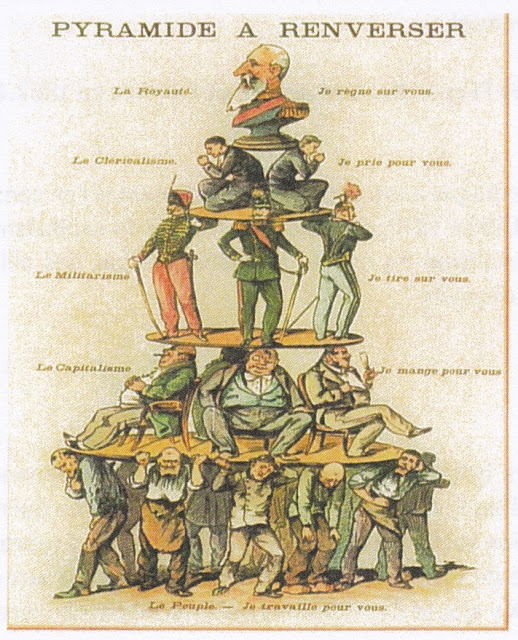
A social hierarchy is like a ladder, showing how people are ranked in society. 🪜Some people may have more money, power, or respect than others. For example, in a school, teachers may be seen at the top because they help educate students, while students learn from them. 👩🏫 In a community, certain leaders are chosen to help make decisions. Hierarchies can help organize society, but they can also lead to unfairness if some people get treated better than others! ⚖️
Go deeper🎓 Social Institutions
Social institutions are the organized ways people work together to meet their needs. They include important groups like schools, religions, and governments. 🎓For example, schools help kids learn, religions connect people through beliefs, and governments create laws for safety. These institutions provide important support and shape our habits. 🚦Each institution has its own rules, showing how people can work together while respecting each other’s roles!
Go deeper🏠 Types Of Social Structures
Social structures can look very different! Some societies are based on families, where parents make the decisions and children follow. 🏠Others might be based on communities where everyone works together, like in a small town. 🌆Some larger societies might have a government that organizes everything, like countries or cities. 🏛️ Then there are social classes, which group people based on wealth or jobs. Each type of structure shows how people connect and support one another!
Go deeper👪 Components Of Social Structure
There are several important parts of social structure! First, there are groups like families, friends, and teams. 👪Next, we have institutions like schools, churches, and banks that help people connect. Then, we have roles, which are the jobs or responsibilities people have, like being a teacher, doctor, or parent. Finally, there are norms, the rules we follow, like saying “please” and “thank you.” All these pieces come together to make our societies work! 🏛️
Go deeper🗺️ Definition Of Social Structure
Social structure is a way to understand how different parts of a society work together. It’s like a map showing how families, friends, and other groups interact. 🗺️ The map helps us see who fits where and how they influence each other. For example, in a community, there may be leaders, workers, and students, each with their own roles. Social structures can also include rules and traditions that tell us how to behave in different situations. 📚
Go deeper🌐 Social Networks And Relationships
Social networks show how people are connected in different ways, like friends and family. 🌐We have close relationships, like our best friends, and wider networks with people we might only see sometimes, like classmates. 👩🤝👨 These networks help us share ideas, support each other, and understand our world better. They are like a giant web that weaves everyone together. The stronger our connections, the happier and more supported we feel! 😊
Go deeper🌎 Case Studies Of Different Societies
Let’s look at some different societies to understand social structures! In the United States, a diverse nation, families can be large or small, and people from all cultures live side by side. 🌎In Japan, respect for elders is a strong tradition, influencing how families are structured. 👴Meanwhile, in some Indigenous groups like the Native Americans, leaders are often chosen for their wisdom and knowledge. 🪶Each society has its own unique social structure, showing us how beautifully different the world is!
Go deeper🎉 Role Of Culture In Social Structure
Culture is all the special ways people live, act, and celebrate. 🎉It plays a big role in social structure because it shapes how people relate to each other. For example, in some cultures, respect for elders is very important, so families may take care of grandparents. 👵In other cultures, sharing food with friends is a way to show love. 🍽️ These cultural traditions are part of the social structure, helping to connect people and create community!
Go deeper🕰️ Changes In Social Structure Over Time
Social structures change over time, just like people grow up! 🕰️ For example, many families used to be very large, with lots of children. Today, we may see smaller families or single-parent homes. 👨👩👧 Changes can happen because of new ideas or technology, like how people work or communicate. Some societies have become more equal, allowing everyone to contribute. 🍀Learning about these changes helps us understand history and our world today!
Go deeper📱 Impact Of Technology On Social Structure
Technology changes how we connect with each other! 📱With the internet and smartphones, we can talk to friends far away easily. Technology can help organize communities through social media, connecting people with shared interests. 🌐However, it can also change the way we interact in person. For example, people might spend more time on screens and less time outside playing together. 🌳Technology can help or hurt social structures, depending on how we use it!
Go deeper