Smooth Snake Facts For Kids
The smooth snake (Coronella austriaca) is a gentle, non-venomous snake from the Colubridae family, known for its smooth scales and shy nature.
Select reading age

Smooth Snake Facts For Kids
Videos & Quizzesincluded
About this topic
The smooth snake 🐍 is a fascinating species of non-venomous snake found mainly in Europe. Its scientific name is *Coronella austriaca*. They are known for their smooth, shiny scales which help them blend in with their surroundings. Smooth snakes are usually brown or grey, making it easier for them to hide in the grass and bushes. They are not aggressive and will often avoid confrontation. Smooth snakes play a vital role in their ecosystem as they help control the population of small animals like lizards and rodents! 🦎
Explore with ChatDinoKey Points
Smooth snakes belong to the Colubridae family, which includes many other snakes like the grass snake and the corn snake.
Did you know that smooth snakes can be identified by their unique patterns?
The smooth snake is currently listed as "Least Concern" on the IUCN Red List, which means they are not at immediate risk of extinction.
In some cultures, snakes symbolize transformation and healing.
Smooth snakes are carnivores, which means they eat meat!
You can find smooth snakes in several countries across Europe, including the United Kingdom, France, and Germany.
Smooth snakes are non-venomous and pose no threat to humans.
Smooth snakes are slender and can grow to about 60 to 75 centimeters long!
Smooth snakes typically mate during springtime.
Smooth snakes are known for being quite shy and gentle.
Photos of Smooth Snake

Eating a grass snake
 Image by Koskoci at Hungarian Wikipedia, licensed under Creative Commons Attribution-Share Alike 3.0
Smooth Snake — photo 2

Smooth Snake — photo 3

Smooth Snake — photo 4

Smooth Snake — photo 5
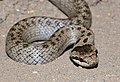
Detail of a Smooth Snake , Coronella austriaca . This is a young specimen (probably second life year) with an estimated length of 25 cm and a body diameter of about 10-12 mm.

Smooth Snake — photo 7
🐍 Related Species
Smooth snakes belong to the *Colubridae* family, which includes many other snakes like the grass snake and the corn snake. 🐍The grass snake, also non-venomous, is usually found near water and is known for its striking green color. Both species are important for the ecosystem, helping to control the populations of small creatures! 🌿
Go deeper🌈 Interesting Facts
Did you know that smooth snakes can be identified by their unique patterns? 🌈Each snake can have a different mix of colors and markings, making them special! Also, they are excellent climbers and can often be found resting on tree branches. An interesting behavior is that when threatened, they may play dead! This helps them avoid predators. 🦅
Go deeper🌱 Conservation Status
The smooth snake is currently listed as "Least Concern" on the IUCN Red List, which means they are not at immediate risk of extinction. 🌱However, their habitats can be threatened by human activities like farming and urban development. Protecting their homes is important to ensure they continue to thrive in the wild. Awareness and conservation efforts help maintain healthy populations of smooth snakes! 🐍
Go deeper🐍 Cultural Significance
In some cultures, snakes symbolize transformation and healing. 🐍In Ancient Greece, the smooth snake was admired for its beauty and grace. Folklore often portrays snakes as wise creatures. In many stories, they represent wisdom and hidden knowledge. Learning about smooth snakes can teach us the importance of respecting all creatures in our environment! 🌍
Go deeper🐭 Diet And Feeding Habits
Smooth snakes are carnivores, which means they eat meat! 🐭Their favorite meals include lizards, small mammals, and sometimes even other snakes. These snakes are constrictors, which means they wrap around their prey to hold it tight before swallowing it whole. They hunt mostly in the morning and late afternoon when it’s cooler. Smooth snakes use their sharp eyesight and incredible sense of smell to find food. 🐾
Go deeper🌍 Habitat And Distribution
You can find smooth snakes in several countries across Europe, including the United Kingdom, France, and Germany. 🌍They prefer open habitats like heathlands, grasslands, and scrub forests. Smooth snakes like places where they can hide, such as bushes and under rocks. They enjoy warm, dry weather and often sunbathe on sunny days to warm up. Smooth snakes are skilled climbers and can sometimes be found in trees too! 🌳
Go deeper👦 Interactions With Humans
Smooth snakes are non-venomous and pose no threat to humans. 👦👧 Sometimes, people might find them in their gardens or parks. It’s important to remember that these snakes help control pests! However, they often get mistaken for other dangerous snakes and are sometimes harmed out of fear. Teaching people about smooth snakes and their role in nature can help encourage a better understanding and protect them! 🌳
Go deeper🌟 Physical Characteristics
Smooth snakes are slender and can grow to about 60 to 75 centimeters long! 🌟These snakes have smooth, glossy scales that give them their name. Their coloration helps them camouflage; they usually have a brown or grey body with darker spots. Their heads are small compared to their bodies, and they have round eyes. Smooth snakes also have sharp tongues that they use to "taste" the air, which helps them find food and sense their surroundings! It’s like they have a built-in radar system! 🕵️♂️
Go deeper🌸 Reproduction And Lifespan
Smooth snakes typically mate during springtime. 🌸The female can lay between 5 to 20 eggs in the summer. These eggs hatch after about 6 to 8 weeks, and baby smooth snakes are about 20 centimeters long when they are born! 🎉On average, smooth snakes can live for about 10 to 15 years in the wild, but they can live longer in captivity with proper care!
Go deeper🐢 Behavior And Activity Patterns
Smooth snakes are known for being quite shy and gentle. 🐢They are mostly active during spring and summer, staying hidden in their habitats. They like to bask in the sun to keep warm, and when it gets too hot, they will retreat to cooler areas like bushes or burrows. At night, they usually sleep in safe spots, protecting themselves from predators! You might not see them often, as they prefer to stay hidden when they feel scared.
Go deeper