Silurian Facts For Kids
The Silurian period is a significant time in Earth's geological history, known for the evolution of early life forms and the diversification of marine ecosystems, lasting from about 443 to 419 million years ago.
Select reading age

Silurian Facts For Kids
Videos & Quizzesincluded
About this topic
The Silurian Period is a fascinating time in Earth's history that lasted from about 443 to 419 million years ago! 🌍During this time, our planet had oceans teeming with life, while land was just starting to change. The name "Silurian" comes from a group of ancient people living in what is now Wales. This period is important because it saw the first plants and animals moving onto land, which made Earth look very different! 🌱🐟 Fossils from the Silurian have been found all around the world!
Explore with ChatDinoKey Points
The Silurian Period left behind a treasure trove of fossils!
During the Silurian, life began to boom!
The oceans were lively with many ecosystems during the Silurian Period!
One major event during the Silurian was the rise of jawed fish, which changed how animals could eat and fight!
Silurian stratigraphy studies the layers of rock from this time.
The climate in the Silurian Period was generally warm 🌞 with high levels of carbon dioxide in the atmosphere.
The Silurian was a significant time for evolution, especially for fish!
On land, life was just starting to grow!
The Silurian Period followed the Ordovician and came before the Devonian.
Photos of Silurian

Fossils of the late Silurian sea bed, England

Diorama of a Silurian seafloor
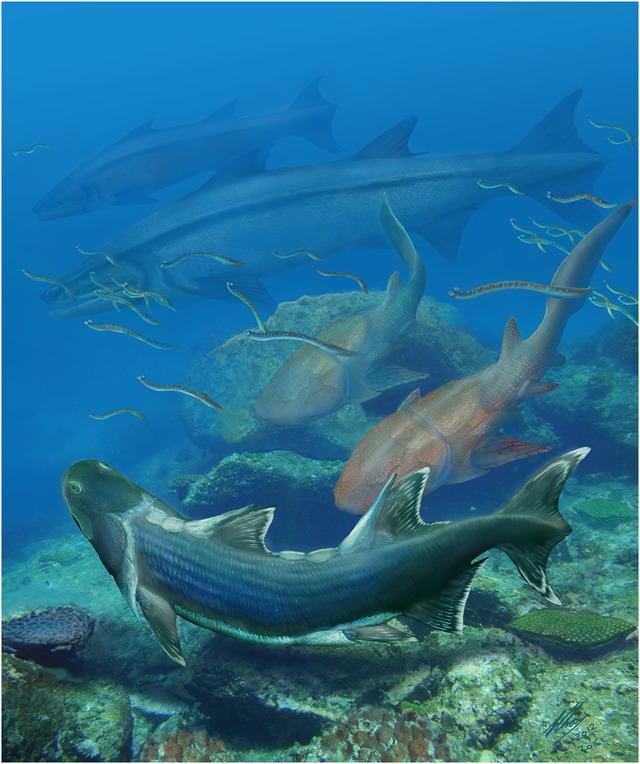
Life restoration of sarcopterygian Sparalepis tingi and other fauna from the Silurian of Yunnan

Silurian — photo 4

Silurian — photo 5

Silurian — photo 6

Silurian — photo 7

🦴 Fossil Record
The Silurian Period left behind a treasure trove of fossils! 🦴Many fossils come from places like the USA, Europe, and Australia. Fossils of fish, corals, and trilobites help scientists learn more about life during this time. Fossils also show that early plants were just starting to appear on land. 🏞️ Finding these fossils helps us understand how life developed and changed over millions of years!
Go deeper🐠 Major Life Forms
During the Silurian, life began to boom! 🐠There were many kinds of fish, such as the armored placoderms and jawless fish like lampreys! Sea creatures like trilobites, which looked a bit like tiny armored bugs, were common too. 🦠Also, fungi and early land plants started emerging! Notably, the first vascular plants, which had simple structures to transport water and nutrients, were introduced to land.
Go deeper🌊 Marine Ecosystems
The oceans were lively with many ecosystems during the Silurian Period! 🌊Coral reefs flourished, providing homes for lots of sea creatures. Fish swam alongside strange animals like sea scorpions, also known as eurypterids. 🦞The underwater world was colorful and diverse, offering a variety of food sources. Algae and small marine plants provided energy for many sea animals. Ocean ecosystems in the Silurian set the stage for even more complex underwater life in the future!
Go deeper🐟 Significant Events
One major event during the Silurian was the rise of jawed fish, which changed how animals could eat and fight! 🐟Another significant event was the first signs of terrestrial life forms, setting the stage for future plant and animal evolution. 🌿Many living organisms formed precious connections in their ecosystems, showcasing a new balance of life that would shape the Earth’s future biodiversity!
Go deeper🪨 Silurian Stratigraphy
Silurian stratigraphy studies the layers of rock from this time. 🪨Rocks from the Silurian Period can be found all over the world. They hold important clues about the Earth’s history and ancient environments. Each layer of rock from this period tells a story of how life evolved and changed. 🌎By examining these layers, scientists can learn more about the Earth's past and understand how it has transformed over millions of years!
Go deeper🌞 Climate And Environment
The climate in the Silurian Period was generally warm 🌞 with high levels of carbon dioxide in the atmosphere. This warmth led to rising sea levels, creating many shallow seas. 🌊There weren’t any ice caps, making it perfect for marine life. Plants like mosses began to grow on land, helping to change the environment even more! 🌿These early plants and the warm seas created many habitats for animals.
Go deeper🎣 Evolutionary Milestones
The Silurian was a significant time for evolution, especially for fish! 🎣The ancestors of modern fish started developing jaws, which helped them eat better! This important change allowed for more diverse fish species. Also, plants started to adapt to life on land, developing roots and leaves that helped them grow taller. 🌱Animals began to explore land as well, leading to the rise of many types of life forms!
Go deeper🌍 Terrestrial Developments
On land, life was just starting to grow! 🌍The first true land plants appeared, helping to change the Earth’s surface. These plants were very different from modern ones; they were low-growing and helped keep the soil from washing away. 🪴The land was mainly barren but began to take on a green hue. The formation of soil meant more plants could grow over time, leading to bigger changes in later periods!
Go deeper🌊 Geological Characteristics
The Silurian Period followed the Ordovician and came before the Devonian. 🌊During this period, sea levels were high, so much of the Earth was covered by warm waters. The continents were not in their current positions. For example, parts of Europe and North America were closer together. 🗺️ Large reefs formed from coral, and there were huge underwater mountains called mountains! The Earth was like a giant ocean playground for fish and other sea creatures!
Go deeper