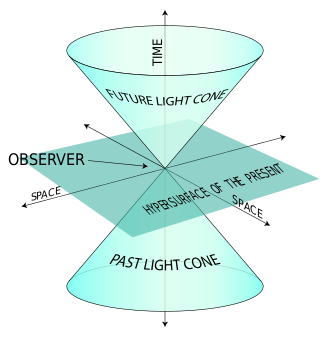
Time is the continuous progression of existence that occurs in an apparently irreversible succession from the past, through the present, and into the future.
Set reading age
View for Kids
Easy to read and understand
View for Students
Clear, detailed explanations
View for Scholars
Deep dives and big ideas
Time is like a river that flows constantly! 🌊It helps us understand when things happen. Every day, we wake up, go to school, and have fun. Time helps us organize our lives. We often think of time in seconds, minutes, and hours. For example, an hour has 60 minutes! ⏳Everything around us changes with time, from the seasons of the year to how we grow older. Time can feel fast when we’re having fun and slow when we’re bored! Understanding time helps us plan our day and remember special moments like birthdays! 🎉
In physics, time is not just about clocks! ⏱️ It’s seen as a part of the universe. Scientists say time is connected to space, forming what we call space-time. 🌌Albert Einstein, a famous scientist, helped explain this idea in the early 1900s. He showed that time can change depending on how fast you are moving! For example, astronauts on a fast spaceship age slower compared to people on Earth! 🚀Isn’t that amazing? Scientists study time to understand the universe, from the Big Bang to black holes!
Time is special because it has three parts: the past, present, and future! ⏰The past is everything that has already happened, like last year’s birthday party. The present is what’s happening right now, like eating lunch. The future is what will happen later, like going to the zoo this weekend! 📅Time is measured in units like seconds, minutes, and hours, but in science, we often use days or years! Did you know that one year on Earth is around 365 days long? 🌍Time is what keeps everything moving along!
Technology has changed how we measure and use time! 🌐Today, we have smartwatches that tell time, count steps, and even track our heartbeats! ⌚Computers can calculate time zones around the world so we can call friends in different countries. 🌍The Internet allows us to enjoy live events regardless of where we are! 📺Technology helps organize our schedules with reminders and alarms. As tech gets smarter, we can learn more about the world! Longevity research tries to understand how to live longer, and guess what? Time factors into everything!
Time travel is an exciting topic in stories and science! 🚀People often wonder if we can travel to the past or future. In theory, traveling through space might allow time travel! For example, Einstein’s theory suggests if you move really fast, like near the speed of light, you could experience time differently! ⏳In books and movies, time travel shows characters visiting dinosaurs or meeting future friends! 🦖🕶️ While it’s not possible yet, scientists are curious to see how time and space connect. Who knows, maybe one day we could go back in time!
People have been measuring time for thousands of years! ⏳Ancient Egyptians created sundials 🕰️ using the sun's shadows to tell time. Later, in the 14th century, the first mechanical clocks were invented in Europe. 🎉The famous Big Ben clock in London, England, was built in 1859 and is still used today! In 1960, the atomic clock was invented—this super-accurate clock uses atoms to keep time! ⌛The way we measure time has changed a lot, but it helps us stay organized and know when to celebrate holidays and events!
Philosophers study big questions about life, including time! ⏳Some wonder if time is real or just something we created to understand our world. Famous thinkers like Aristotle believed time is a measure of change, while others, like Immanuel Kant, argued that it’s part of how we experience life! 🌍Different ideas challenge us to think about how we live our lives and how we connect with the past, present, and future. Philosophical views encourage us to ask questions like, “If time could stop, what would happen?” 🤔
Different cultures have unique views on time. In some cultures, being late is okay, while in others, it is very important to be on time! ⏰For example, in Japan, punctuality is valued, and people usually arrive exactly on time. 🇯🇵 In contrast, some Latin American cultures see time more fluidly, where being a few minutes late is common! 🎊Different cultures also have special calendars. The Chinese Zodiac, for instance, has 12 animal signs, each representing a year! 🐉Learning how different cultures view time helps us understand each other better!
Did you know that our brains can trick us about time? 🧠Sometimes, time seems to fly when we’re excited, like during a fun game! 🎮But when we’re bored, it can feel like time stops! This happens because our brain processes experiences differently. Younger kids often feel time moves slow because they’re learning so much and having new experiences. 📚As we grow older, we can feel time speeding up. Scientists study how emotions, situations, and activities affect our perception of time and why it feels different for everyone! 🕰️
Calendars help us keep track of days, months, and years! 📅The most common calendar is the Gregorian calendar, used worldwide, which has 12 months. January has 31 days, and February usually has 28 days! 🗓️ But did you know the ancient Mayans had a special calendar too? Their Long Count calendar counts a different way, getting to thousands of years! 🗓️ Different cultures have unique ways to mark time, using lunar cycles or seasons. Understanding different calendar systems helps us celebrate holidays and remember important dates from history! 🌍


DIY is a creative community where kids draw, build, explore ideas, and share.
No credit card required