Short-eared Owl Facts For Kids
The Short-eared Owl is a medium-sized bird of prey known for its distinctive appearance and excellent hunting skills, often found in grasslands and open areas worldwide.
Select reading age

Short-eared Owl Facts For Kids
Videos & Quizzesincluded
About this topic
The Short-eared Owl is a special bird that loves open fields and grasslands! 🌾It belongs to a family called Strigidae, which includes all owls. You can find these owls in many places around the world! They have a distinctive look with their round faces and short ear tufts. Their scientific name is Asio flammeus and they are most active during dawn and dusk, making them a bit of a night owl and also a day owl! 🦉Can you imagine flying like an owl in the evening sky?
Explore with ChatDinoKey Points
Did you know?
The Short-eared Owl isn’t currently endangered, but they are facing some challenges.
Breeding season for Short-eared Owls usually starts in late winter to early spring.
Owls have fascinated people for centuries.
Short-eared Owls love to hang out in open areas like fields, wetlands, and grasslands.
The Short-eared Owl is about the size of a house cat, measuring around 12-16 inches (30-40 cm) in length.
Short-eared Owls are great hunters!
Short-eared Owls are social birds and often hunt in groups, especially during migration.
Compared to other owls, like the Great Horned Owl, the Short-eared Owl is smaller and has a different habitat.
Photos of Short-eared Owl


Short Eared Owl in its habitat. Notice how it chooses short shady trees to roost under, in a grassland/ desert habitat.

Egg, Collection Museum Wiesbaden

Juvenile short-eared owl in Germany

Lesser black-backed gull chasing a short-eared owl

Short-eared Owl — photo 6

Short-eared Owl — photo 7
Short-eared Owl — photo 8

Short-eared Owl — photo 9
🍂 Interesting Facts
Did you know? The Short-eared Owl is known for its excellent camouflage! 🍂When they sit still in tall grass, it can be difficult to spot them. They can also fly silently, which helps them sneak up on their prey! Moreover, unlike many other owls, they often hunt during the day! ☀️ Owls can turn their heads almost completely around, up to 270 degrees. This helps them see all around without moving their bodies!
Go deeper🚨 Conservation Status
The Short-eared Owl isn’t currently endangered, but they are facing some challenges. 🚨Loss of habitat due to farming and development can make it hard for them to find places to nest or hunt. Conservation groups are working to protect their grassland homes. 🌳Safe areas help keep their populations healthy! If you see an owl, remember they are special and need protection. Every little action helps!
Go deeper🐣 Breeding And Nesting
Breeding season for Short-eared Owls usually starts in late winter to early spring. 🐣The female lays about 4-10 eggs, which are white and round. She sits on them for about 27-30 days to keep them warm. When the baby owls hatch, they are fluffy and covered in down feathers! Parents feed their chicks insects and small animals until they learn to hunt for themselves. 🦉After about 8-10 weeks, these young owls are ready to fly and explore the world!
Go deeper🏺 Cultural Significance
Owls have fascinated people for centuries. 🏺In many cultures, the owl is seen as a symbol of wisdom, often associated with the Greek goddess Athena. The Short-eared Owl, with its unique appearance and behavior, has also inspired stories and art. 📚Hopefully, you can find books and legends about owls in your local library! Their mysterious nature makes them an exciting creature in folklore and popular culture!
Remember, owls are amazing, and the Short-eared Owl is just one of many cool species out there!
Go deeperRemember, owls are amazing, and the Short-eared Owl is just one of many cool species out there!
🌍 Habitat And Distribution
Short-eared Owls love to hang out in open areas like fields, wetlands, and grasslands. 🌍They can be found all around the world except Australia and parts of the polar regions. In North America, they live in places like Canada and the northern United States during the summer. 🗺️ When winter comes, many of them fly south to find warmer places! By knowing where they like to live, we can help protect their homes and habitats.
Go deeper🐱 Physical Characteristics
The Short-eared Owl is about the size of a house cat, measuring around 12-16 inches (30-40 cm) in length. 🐱Their wings are long and can stretch up to 3.3 feet (1 meter) wide! They have beautiful golden-brown feathers with white spots, helping them blend in with the grasses. The most special part? Their big, yellow eyes! 👀These help them see very well in low light. Males and females look quite similar, but females are usually a bit larger. Isn’t that neat?
Go deeper🦉 Diet And Hunting Behavior
Short-eared Owls are great hunters! 🦉✨ They mainly eat small animals like voles, mice, and sometimes even small birds. Their favorite snack is the cute little vole! They hunt at dusk and dawn, flying quietly and searching for movements. When they spot something tasty, they swoop down to catch it with their sharp talons. 🦅They can hear the tiniest sounds, even under the snow, making them excellent at finding food, even when it’s hard to see!
Go deeper🌌 Behavior And Social Structure
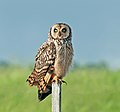
Short-eared Owls are social birds and often hunt in groups, especially during migration. 🌌They can be found sitting together on fence posts or trees, watching their surroundings for food. They communicate through hoots and whistles. The males call out to attract females, make their territory known, and communicate with each other. 🗣️ It’s like they have their own owl language! They are not very territorial and often roost in large groups, especially during winter.
Go deeper🦉 Comparison With Other Owl Species
Compared to other owls, like the Great Horned Owl, the Short-eared Owl is smaller and has a different habitat. 🦉Great Horned Owls prefer forests and are known for their horn-like tufts. In contrast, Short-eared Owls seek open grasslands and have short ear tufts that are less noticeable. They both have incredible hearing but differ in their hunting times and preferred foods. 🌾Each owl is unique with its own special traits!
Go deeper