Shanxi Facts For Kids
Shanxi is a province in North China known for its rich history, stunning landscapes, ancient architecture, and diverse economy.
Select reading age

Shanxi Facts For Kids
Videos & Quizzesincluded
About this topic
Shanxi is a province in North China with a rich history and beautiful landscapes! 🌄It covers an area of about 156,000 square kilometers. The capital city is Taiyuan, where many people live and work. Shanxi means "West of the Shan Mountains," and it is surrounded by mountains and rivers. The Yellow River flows nearby, making it important for agriculture. In fact, in 2020, Shanxi had a population of around 37 million people! 🚶♂️🚶♀️ This province is famous for its coal mines and ancient temples, showcasing the blend of nature and culture.
Explore with ChatDinoKey Points
Shanxi has delicious food that you won’t forget!
Shanxi has an amazing history that goes back thousands of years!
Shanxi has many exciting places to visit!
Shanxi is known for its diverse geography!
Shanxi celebrates many traditional festivals!
Shanxi's economy is thriving!
Getting around Shanxi is fun and easy!
Shanxi is home to many notable individuals!
Shanxi values education!
Photos of Shanxi


The Hanging Temple, also Hanging Monastery or Xuankong Temple is a temple built into a cliff (75-metre (246 ft) above the ground) near Mount Heng in Hunyuan County, Datong City, Shanxi Province, China.

Shanxi — photo 3


Buddhist votive stele. From China, Shanxi Province. Northern Wei dynasty, c. 520 CE. Victoria and Albert Museum

Pagoda of Fogong Temple built in 1056

Yan Xishan, warlord of Shanxi during the Republic of China.
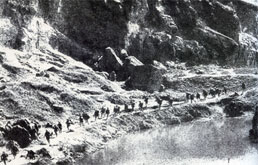
Chinese troops marching to defend the mountain pass at Xinkou.

🍜 Cuisine Of Shanxi
Shanxi has delicious food that you won’t forget! 🍜The province is famous for its unique noodles, especially "Dao Xiao Mian," which are hand-cut and very tasty! Another popular dish is "Jin Jiao," a flavorful flatbread. Shanxi is also known for its vinegar, which is one of China's top-quality types! 🍚They use it to add a tangy taste to many dishes. Don't forget to try "Tao Si," a yummy sweet pastry filled with red bean paste. Food is an essential part of Shanxi's culture, bringing people together at every meal! 🍽️
Go deeper📜 History And Culture
Shanxi has an amazing history that goes back thousands of years! 📜The province was home to the ancient Jin State during the Zhou Dynasty (around 1046–256 BCE). This area has many historical sites, like ancient temples and the Yungang Grottoes, which contain stunning stone carvings. 🌄Shanxi is also known for its unique folk customs and traditional crafts, like paper-cutting and shadow puppetry. The people of Shanxi speak Mandarin and have their own dialect called Jin. They celebrate their rich culture with many songs, dances, and traditional clothing! 🎶👗
Go deeper🏯 Tourist Attractions
Shanxi has many exciting places to visit! 🏯One famous site is the Pingyao Ancient City, a UNESCO World Heritage site that shows what life was like during the Ming and Qing dynasties. Another amazing attraction is the Yungang Grottoes, which feature stunning Buddhist sculptures carved into cliffs. 🗿The Hanging Temple, built 1,500 years ago, clings to a cliff and is another must-see. Visitors can also explore the Fen River and enjoy beautiful landscapes in the Wutai Mountain area, known for its stunning views and temples! Each spot has its own story to tell. 🌄
Go deeper🌍 Geography And Climate
Shanxi is known for its diverse geography! 🌍It has mountains in the south, like the Taihang and Lüliang ranges, and the flatlands in the north. The province enjoys a temperate climate, with hot summers and cold winters. ❄️🌞 In summer, temperatures can reach 30°C (86°F), while in winter, they might dip to -10°C (14°F)! The region receives about 600-700 millimeters of rain annually. Because of its high altitude, Shanxi has beautiful natural scenery, including forests, rivers, and ancient caves. This makes it a great place for exploring nature's wonders! 🍃🏞️
Go deeper🎉 Traditional Festivals
Shanxi celebrates many traditional festivals! 🎉One popular festival is the Chinese New Year, where families gather to enjoy delicious food and fireworks. 🎇People also celebrate the Lantern Festival, lighting colorful lanterns and solving riddles for fun! Another festival is the Dragon Boat Festival, which features boat races on rivers and delicious sticky rice dumplings called zongzi. 🐉These festivals help keep Shanxi's rich culture alive, bringing friends and families together to honor traditions and share joy! 🥳Each celebration is filled with music, dance, and laughter!
Go deeper💰 Economy And Industries
Shanxi's economy is thriving! 💰One of the main industries is coal mining, as the province has large coal reserves. In fact, Shanxi produces about one-third of China's coal! This makes it a key player in energy production. Besides coal, Shanxi is also known for agriculture, growing crops like wheat and corn. 🌽🧑🌾 Additionally, the province manufactures cement, machinery, and textiles. In recent years, Shanxi has focused on developing green energy sources and tourism to help diversify its economy. The province aims for sustainability while embracing its industrial roots! 🌱
Go deeper🚍 Transportation In Shanxi
Getting around Shanxi is fun and easy! 🚍The province has a good transportation system, which includes buses and trains. The Taiyuan Railway Station connects Shanxi to other big cities in China, making traveling a breeze! 🚆Many people use buses to explore local areas, and taxis are available in cities for quick trips. Shanxi also has highways that make road trips simple. For those who love the great outdoors, biking or walking along the rivers and mountains can be an exciting way to see the beautiful environment! 🚲🌳
Go deeper🌟 Notable People From Shanxi
Shanxi is home to many notable individuals! 🌟One famous figure is Yan Zhenqing, an ancient calligrapher born in 709 AD, known for his beautiful handwriting! Another is the revolutionary leader, Liu Shaoqi, who played a significant role in China's history. 🕊️ In modern times, celebrities like Zhang Ziyi, a talented actress from Pingyao, gained fame for her roles in popular films. These inspiring people have shaped Shanxi’s identity and contributed to art, politics, and culture, making the province proud of its rich heritage and accomplishments! 🎭
Go deeper📚 Education And Research Institutions
Shanxi values education! 📚The province has many schools and universities. One of its most famous universities is Shanxi University, which was founded in 1902 and has a strong focus on research. Many students come here to study science, arts, and technology! 🎓Shanxi also supports education for younger children, offering various programs for school-age kids. Educational museums and libraries are found throughout the province, encouraging kids to explore and learn new things. 🎈Community and school events promote creativity and curiosity, helping students grow academically and socially!
Go deeper