All Articles

Science

Science Facts For Kids

Science is a systematic discipline that builds and organizes knowledge in a way that allows us to test hypotheses and understand the universe around us.

🎨 Reading age for 6-8
Background blob
Science
Science
Facts for Kids!

Do more with AI

Introduction

Science is like a big adventure 🎒! It helps us learn about the world around us. Scientists ask questions and use experiments to find answers. For example, why does it rain? ☔They gather information to understand everything from tiny atoms to huge galaxies! 🌌With science, we can explore plants, animals, and even our own bodies. Did you know there are over 7 billion people in the world? 🌍Science helps us study how they live and interact! By observing nature and asking questions, we can learn fascinating facts to help us understand our universe better!

Images of Science

Plato's Academy mosaic, made between 100 BCE and 79 CE, shows many Greek philosophers and scholars.

Plato's Academy mosaic, made between 100 BCE and 79 CE, shows many Greek philosophers and scholars.

The first page of Vienna Dioscurides depicts a peacock, made in the 6th century.

The first page of Vienna Dioscurides depicts a peacock, made in the 6th century.

Drawing of the heliocentric model as proposed by the Copernicus's De revolutionibus orbium coelestiumalt=Drawing of planets' orbit around the Sun

Drawing of the heliocentric model as proposed by the Copernicus's De revolutionibus orbium coelestiumalt=Drawing of planets' orbit around the Sun

Title page of the 1687 first edition of Philosophiæ Naturalis Principia Mathematica by Isaac Newton

Title page of the 1687 first edition of Philosophiæ Naturalis Principia Mathematica by Isaac Newton

The first diagram of an evolutionary tree made by Charles Darwin in 1837

The first diagram of an evolutionary tree made by Charles Darwin in 1837

A computer graph of the ozone hole made in 1987 using data from a space telescope
A computer graph of the ozone hole made in 1987 using data from a space telescope

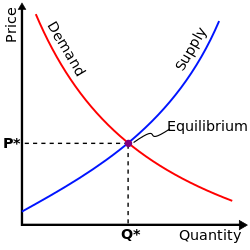
Supply and demand curve in economics, crossing over at the optimal equilibriumImage by SilverStar at English Wikipedia, licensed under Creative Commons Attribution 2.5

Supply and demand curve in economics, crossing over at the optimal equilibrium

A diagram variant of scientific method represented as an ongoing processImage by Efbrazil, licensed under Creative Commons Attribution-Share Alike 4.0

A diagram variant of scientific method represented as an ongoing process

Cover of the first issue of Nature, 4 November 1869

Cover of the first issue of Nature, 4 November 1869

The Plimpton 322 tablet by the Babylonians records Pythagorean triples, written c. 1800 BCE

The Plimpton 322 tablet by the Babylonians records Pythagorean triples, written c. 1800 BCE

Plato's Academy mosaic, made between 100 BCE and 79 CE, shows many Greek philosophers and scholars.

Plato's Academy mosaic, made between 100 BCE and 79 CE, shows many Greek philosophers and scholars.

The first page of Vienna Dioscurides depicts a peacock, made in the 6th century.

The first page of Vienna Dioscurides depicts a peacock, made in the 6th century.

Drawing of the heliocentric model as proposed by the Copernicus's De revolutionibus orbium coelestiumalt=Drawing of planets' orbit around the Sun

Drawing of the heliocentric model as proposed by the Copernicus's De revolutionibus orbium coelestiumalt=Drawing of planets' orbit around the Sun

Title page of the 1687 first edition of Philosophiæ Naturalis Principia Mathematica by Isaac Newton

Title page of the 1687 first edition of Philosophiæ Naturalis Principia Mathematica by Isaac Newton

The first diagram of an evolutionary tree made by Charles Darwin in 1837

The first diagram of an evolutionary tree made by Charles Darwin in 1837

A computer graph of the ozone hole made in 1987 using data from a space telescope

A computer graph of the ozone hole made in 1987 using data from a space telescope

Supply and demand curve in economics, crossing over at the optimal equilibriumImage by SilverStar at English Wikipedia, licensed under Creative Commons Attribution 2.5

Supply and demand curve in economics, crossing over at the optimal equilibrium

A diagram variant of scientific method represented as an ongoing processImage by Efbrazil, licensed under Creative Commons Attribution-Share Alike 4.0

A diagram variant of scientific method represented as an ongoing process

Cover of the first issue of Nature, 4 November 1869

Cover of the first issue of Nature, 4 November 1869

Ethics In Science

Ethics in science means doing the right thing! 👫Scientists must respect living beings and follow the rules in their experiments. For example, researchers must not harm animals or people when conducting tests. 🐾They also need to share their work honestly and not claim someone else’s ideas as their own! If scientists do not follow ethical guidelines, it can lead to problems or false information being spread. So, ethics is very important in ensuring that science benefits everyone without causing harm! 💖

Branches Of Science

Science has exciting branches that study different areas! 🌳The main branches are Biology (living things like animals and plants 🐶🌼), Chemistry (the study of substances and how they change 🧪), and Physics (the science of energy and motion ⚡). Earth Science looks at our planet 🤔, while Astronomy explores stars and planets far away! 🌠Each branch has unique jobs: biologists might study how bees make honey, while chemists create new medicines! By dividing into these branches, science helps us understand our world in deeper ways!

The Scientific Method

The Scientific Method is a step-by-step way to answer questions 🔍. First, a scientist asks a question. For example, "What makes plants grow?" 🌱 Next, they make a guess called a hypothesis. Then, they do an experiment to see if their guess is right! 🌡️ They collect data, which is information about what they observed. After that, they analyze the data to conclude whether their hypothesis was correct. Finally, they share their findings with others! This process helps everyone learn more about how things work. It's like being a detective in science! 🕵️‍♂️

How Science Impacts Society

Science affects our daily lives in many ways! 🎉It helps us with medicine, allowing doctors to find cures for diseases, like the flu vaccination! 💉Technology, such as smartphones and computers, relies on scientific discoveries in physics and engineering. ⚙️ Agriculture uses science to grow better food, ensuring we have plenty to eat. 🍎Even the rules we have for recycling come from scientific studies on protecting our Earth! 🌍So next time you enjoy a video game or eat a delicious apple, remember that science is making all of this possible! 🌈

History Of Scientific Discovery

The history of science is filled with amazing discoveries! 📜Long ago, ancient Greeks like Aristotle asked questions about the nature of the world. Later, in the 1500s, Nicolaus Copernicus discovered that the Earth orbits the Sun! ☀️ In the 1600s, Galileo Galilei used a telescope to study stars and wrote down his findings. Fast forward to the 1800s, when Michael Faraday invented the electric motor! ⚙️ Each discovery built upon the last, making science richer. Today, we still learn from these brilliant minds, who helped shape our understanding of the universe! 🌌

The Future Of Scientific Endeavors

The future of science is exciting! 🎉Scientists will keep exploring amazing things like space travel, human health, and climate change. 🌌They may find out more about the universe and whether aliens exist! 👽They’ll also work on solving big problems, so we can live healthier lives and protect our planet. 🌳New technology will help us research and share knowledge faster than ever. 🌟The future of scientific endeavors is bright, and everyone can be a part of it! Who knows? Maybe you will discover something incredible one day! 🌈

Science And Technology Relationship

Science and technology are like best friends! 👫Science provides knowledge and discoveries, while technology uses that knowledge to create new tools and inventions. For example, scientists discovered electricity ⚡, which led to technologies like light bulbs 💡 and computers. Technology also helps scientists research better! 🚀Supercomputers analyze data faster, allowing them to study things like weather patterns. 🌪️ Together, they improve our lives, making everything from transportation to communication easier. When we learn science, we can create amazing technologies that change the world for the better! 🌍

Current Trends In Scientific Research

Science is always changing, with new research happening every day! 🔬Right now, scientists are exploring cool topics like climate change 🌡️, artificial intelligence (AI) 🤖, and space exploration! 🌌Climate scientists study how toprotect our planet from warming. AI researchers create smart machines to help us solve problems! 🌟Meanwhile, space scientists send rockets to Mars to learn more about life on other planets! 🌍✨ These current trends showcase how science helps us understand our world better and plan for a bright future!

Experimental Design And Data Analysis

Designing experiments helps scientists test their ideas! 🧪They plan carefully by choosing what to change (the independent variable) and what to measure (the dependent variable). For example, if they want to know how sunlight affects plant growth 🌞, they compare plants with sunlight and those without it. After the experiment, scientists analyze the data they collect. 📊They look for patterns or trends to see if their hypothesis was correct. Sometimes, they find unexpected results, which can lead to new questions! This way, experiments allow scientists to learn more and refine their ideas! 🔍

Famous Scientists And Their Contributions

Some scientists changed our world forever! 🌟Albert Einstein is famous for his theory of relativity, which helps us understand how gravity works! 📏Marie Curie discovered radioactivity, improving medical treatments. 🏥Isaac Newton figured out the laws of motion, explaining how things move! 🪀These amazing people spent their lives exploring science, and their contributions helped create the technology and knowledge we use today! So when you wonder about the stars or how cars move, remember these fantastic minds and how they shaped our science-filled world! 🌍

Science Quiz

Q1
Question 1 of 10

Learn more about Science

Ready to create?

Make

To create a safe space for kid creators worldwide!

Create

Vibe Coding

Kids GPT

All Tools

Kibu

Resources

Worksheets

SafeTube

Blog

FAQ

Account

Pricing

Log-in

Sign-up

Data Deletion

Company

About

Community Guidelines

Privacy Policy

Terms of Service

2025, URSOR LIMITED. All rights reserved. DIY is in no way affiliated with Minecraft™, Mojang, Microsoft, Roblox™ or YouTube. LEGO® is a trademark of the LEGO® Group which does not sponsor, endorse or authorize this website or event. Made with love in San Francisco.