All Articles

Sargon Of Akkad

Sargon Of Akkad Facts For Kids

Sargon of Akkad was an ancient Mesopotamian ruler who founded the Akkadian Empire, recognized as one of the first empires in history, known for military conquests and administrative innovations.
🎨 Reading age for 6-8
Background blob
Sargon Of Akkad
Facts for Kids!
Image by ALFGRN, licensed under Creative Commons Attribution-Share Alike 2.0

Do more with AI

Introduction

Sargon of Akkad was an ancient king who lived around 2300 BCE! 🌟He is famous for being one of the first rulers to create an empire. His kingdom, Akkad, was located in Mesopotamia, which is now part of modern-day Iraq. Sargon united the people of Akkad and Sumer, bringing them together under his rule. He is known for his clever strategies and strong leadership. Sargon aimed to bring peace and prosperity to his empire, where people could trade, farm, and live happy lives.

Images of Sargon Of Akkad

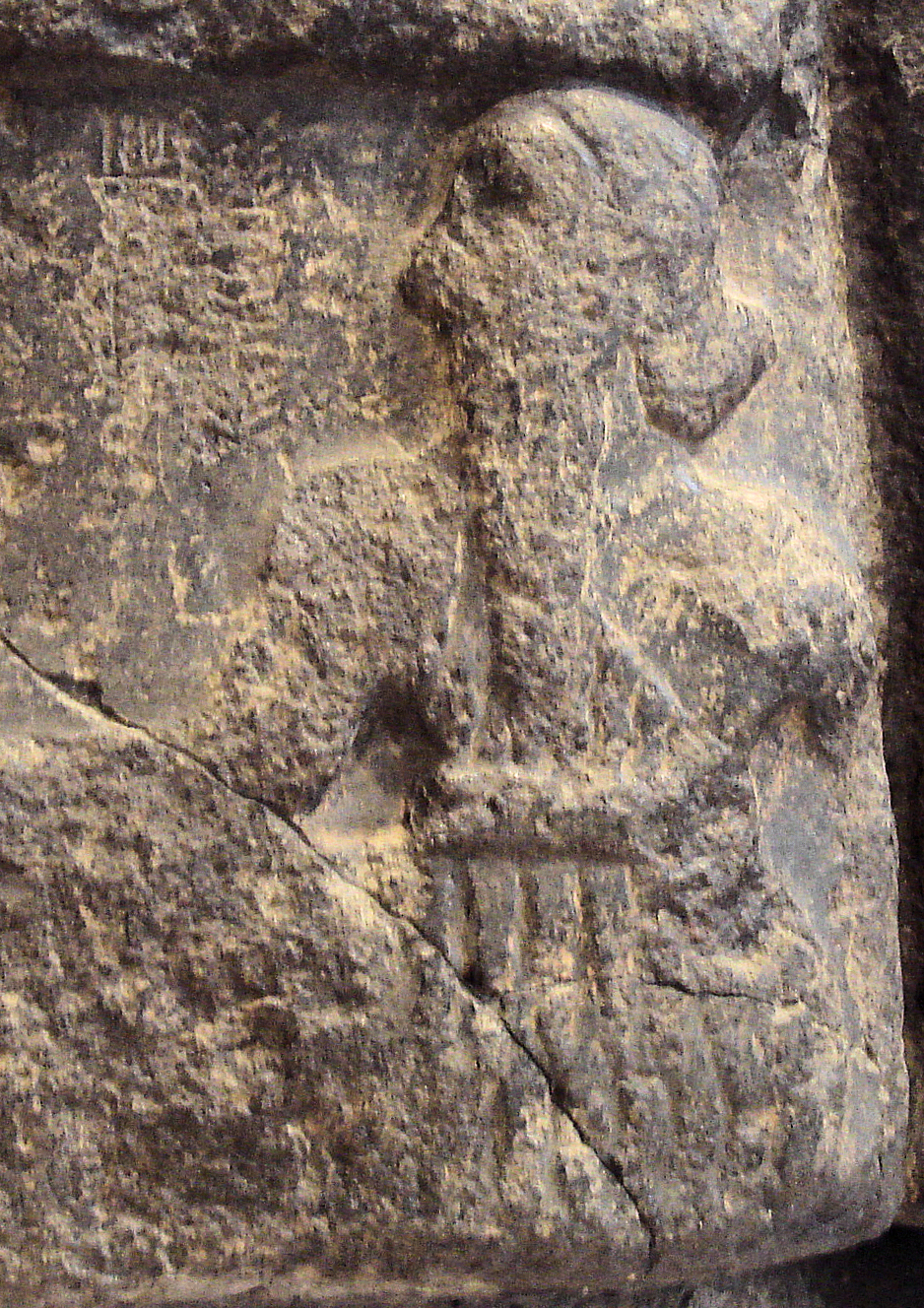
"King Sargon" (𒊬𒊒𒄀 𒈗 Šar-ru-gi lugal) on the Victory stele of Sargon[9][10][11]

"King Sargon" (𒊬𒊒𒄀 𒈗 Šar-ru-gi lugal) on the Victory stele of Sargon[9][10][11]

Map of the approximate extent of the Akkadian Empire during the reign of Sargon's grandson, Naram-Sin of AkkadImage by Middle_East_topographic_map-blank.svg : Sémhur ( talk ) derivative work: Zunkir ( talk ), licensed under Creative Commons Attribution-Share Alike 3.0

Map of the approximate extent of the Akkadian Empire during the reign of Sargon's grandson, Naram-Sin of Akkad

Photos of Sargon Of AkkadImage by ALFGRN, licensed under Creative Commons Attribution-Share Alike 2.0
Photos of Sargon Of AkkadImage by Photograph: ALFGRN Transcription: पाटलिपुत्र ( talk ), after [2], licensed under Creative Commons Attribution-Share Alike 2.0
Prisoners escorted by a soldier, on a victory stele of Sargon of Akkad, c. 2300 BC.[38] Probably from the end of Sargon's reign.[39] The hairstyle of the prisoners (curly hair on top and short hair on the sides) is characteristic of Sumerians, as also seen on the Standard of Ur.[40] Louvre Museum.Image by ALFGRN, licensed under Creative Commons Attribution-Share Alike 2.0

Prisoners escorted by a soldier, on a victory stele of Sargon of Akkad, c. 2300 BC.[38] Probably from the end of Sargon's reign.[39] The hairstyle of the prisoners (curly hair on top and short hair on the sides) is characteristic of Sumerians, as also seen on the Standard of Ur.[40] Louvre Museum.

Cylinder seal of the scribe Kalki, showing Prince Ubil-Eshtar, probable brother of Sargon, with dignitaries (an archer in front, two dignitaries, and the scribe holding a tablet following the Prince). Inscription: "Ūbil-Aštar, brother of the king: KAL-KI the scribe, (is) his servant."[11][51]

Cylinder seal of the scribe Kalki, showing Prince Ubil-Eshtar, probable brother of Sargon, with dignitaries (an archer in front, two dignitaries, and the scribe holding a tablet following the Prince). Inscription: "Ūbil-Aštar, brother of the king: KAL-KI the scribe, (is) his servant."[11][51]

Akkadian official in the retinue of Sargon of Akkad, holding an axeImage by ALFGRN, licensed under Creative Commons Attribution-Share Alike 2.0

Akkadian official in the retinue of Sargon of Akkad, holding an axe

Prisoner in a cage, probably King Lugalzagesi of Uruk, being hit on the head with a mace by Sargon of Akkad.[58] Akkadian Empire victory stele circa 2300 BC. Louvre Museum.Image by ALFGRN, licensed under Creative Commons Attribution-Share Alike 2.0

Prisoner in a cage, probably King Lugalzagesi of Uruk, being hit on the head with a mace by Sargon of Akkad.[58] Akkadian Empire victory stele circa 2300 BC. Louvre Museum.

Story of the birth of Sargon, early 2nd millennium BC[13]Image by 0x010C, licensed under Creative Commons Attribution-Share Alike 4.0

Story of the birth of Sargon, early 2nd millennium BC[13]

"King Sargon" (𒊬𒊒𒄀 𒈗 Šar-ru-gi lugal) on the Victory stele of Sargon[9][10][11]Image by Photograph: ALFGRN Black and white photograph: Jean-Vincent Scheil (1858-1940), licensed under Creative Commons Attribution-Share Alike 2.0

"King Sargon" (𒊬𒊒𒄀 𒈗 Šar-ru-gi lugal) on the Victory stele of Sargon[9][10][11]

Map of the approximate extent of the Akkadian Empire during the reign of Sargon's grandson, Naram-Sin of AkkadImage by Middle_East_topographic_map-blank.svg : Sémhur ( talk ) derivative work: Zunkir ( talk ), licensed under Creative Commons Attribution-Share Alike 3.0

Map of the approximate extent of the Akkadian Empire during the reign of Sargon's grandson, Naram-Sin of Akkad

Photos of Sargon Of AkkadImage by ALFGRN, licensed under Creative Commons Attribution-Share Alike 2.0
Photos of Sargon Of AkkadImage by Photograph: ALFGRN Transcription: पाटलिपुत्र ( talk ), after [2], licensed under Creative Commons Attribution-Share Alike 2.0
Prisoners escorted by a soldier, on a victory stele of Sargon of Akkad, c. 2300 BC.[38] Probably from the end of Sargon's reign.[39] The hairstyle of the prisoners (curly hair on top and short hair on the sides) is characteristic of Sumerians, as also seen on the Standard of Ur.[40] Louvre Museum.Image by ALFGRN, licensed under Creative Commons Attribution-Share Alike 2.0

Prisoners escorted by a soldier, on a victory stele of Sargon of Akkad, c. 2300 BC.[38] Probably from the end of Sargon's reign.[39] The hairstyle of the prisoners (curly hair on top and short hair on the sides) is characteristic of Sumerians, as also seen on the Standard of Ur.[40] Louvre Museum.

Cylinder seal of the scribe Kalki, showing Prince Ubil-Eshtar, probable brother of Sargon, with dignitaries (an archer in front, two dignitaries, and the scribe holding a tablet following the Prince). Inscription: "Ūbil-Aštar, brother of the king: KAL-KI the scribe, (is) his servant."[11][51]

Cylinder seal of the scribe Kalki, showing Prince Ubil-Eshtar, probable brother of Sargon, with dignitaries (an archer in front, two dignitaries, and the scribe holding a tablet following the Prince). Inscription: "Ūbil-Aštar, brother of the king: KAL-KI the scribe, (is) his servant."[11][51]

Akkadian official in the retinue of Sargon of Akkad, holding an axeImage by ALFGRN, licensed under Creative Commons Attribution-Share Alike 2.0

Akkadian official in the retinue of Sargon of Akkad, holding an axe

Prisoner in a cage, probably King Lugalzagesi of Uruk, being hit on the head with a mace by Sargon of Akkad.[58] Akkadian Empire victory stele circa 2300 BC. Louvre Museum.Image by ALFGRN, licensed under Creative Commons Attribution-Share Alike 2.0

Prisoner in a cage, probably King Lugalzagesi of Uruk, being hit on the head with a mace by Sargon of Akkad.[58] Akkadian Empire victory stele circa 2300 BC. Louvre Museum.

Story of the birth of Sargon, early 2nd millennium BC[13]Image by 0x010C, licensed under Creative Commons Attribution-Share Alike 4.0

Story of the birth of Sargon, early 2nd millennium BC[13]

Rise To Power

Sargon's rise to power began when he was a cupbearer for the king of Kish. 🏰One day, Sargon decided he wanted to be a king himself! He gathered followers and led a successful coup against the king, taking over Kish around 2340 BCE. After that, Sargon embarked on military campaigns to expand his territory. He won battles against cities like Ur and Lagash. He became known for his bravery and intelligence in warfare. Before long, Sargon was the ruler of a vast empire stretching across Mesopotamia!

Historical Context

During Sargon’s time, there were many city-states in Mesopotamia. These were small areas ruled by kings or leaders, like Ur, Uruk, and Lagash. 🌆Each city-state fought for land and resources. Sargon saw the need for a larger kingdom to help everyone get along. Around 2334 BCE, he began to conquer nearby city-states. By doing this, Sargon not only took control but also spread the Akkadian language and culture. His accomplishments made people believe in a powerful, united region!

Military Campaigns

Sargon's military campaigns were very successful and helped him expand his empire. ⚔️ He led his armies to conquer many city-states. One famous battle was against the city-state of Lagash, where Sargon’s innovative tactics won the day! His soldiers used chariots, making them faster and stronger in battle. Sargon also trained his troops well, which was crucial for success. His conquests helped him secure resources like water and fertile land, strengthening the Akkadian Empire even more!

The Akkadian Empire

Sargon founded the Akkadian Empire, and it became one of the world's first empires! 🌍It lasted from about 2334 to 2154 BCE. The capital city was Akkad, though its exact location is unknown today. The empire included the regions of Sumer and Akkad, which brought together many different cultures and languages. Under Sargon's rule, the empire grew rich through trade and agriculture. Farmers grew crops like barley, wheat, and dates. Merchants exchanged goods like textiles and pottery.

Legacy And Influence

Sargon’s legacy is significant! 🌟He is often called the “father of kings” because his ideas about rule influenced many leaders after him. His system of a centralized government became a model for future empires, including the Babylonians and Assyrians. Sargon’s accomplishments displayed how empires could bring various cultures together. Historians study his life and achievements to understand the beginnings of empires and civilization. Because of his legacy, Sargon is remembered as one of history's greatest rulers!

Cultural Contributions

Sargon of Akkad was not just a mighty warrior, he was also a cultural leader! 🎨He brought art and writing to new heights. Sargon established Akkadian as the primary language, which began to replace Sumerian. This made communication easier across the empire! He also encouraged artisans to create beautiful sculptures, pottery, and jewelry. Additionally, he built magnificent temples and palaces, showing the power of his rule. Sargon’s cultural contributions helped shape the world, leaving a lasting influence on future civilizations.

Sargon In Modern Media

Modern media often references Sargon of Akkad in books, films, and games! 📚🎮 Many stories highlight his brave leadership and the adventures of his empire. Various documentaries explore ancient Mesopotamia and Sargon’s impact on history. He also appears in video games where players can create empires, mimicking Sargon's strategies! People continue to be fascinated by his achievements and the rise of the Akkadian Empire, making Sargon a timeless character in stories about courage and leadership.

Archaeological Discoveries

Archaeological discoveries have revealed much about Sargon and the Akkadian Empire! 🏺Excavations in Iraq have uncovered artifacts like clay tablets with inscriptions about the empire's rules and Sargon's conquests. Some famous finds include the Sargon Stele, which tells tales of his victories and reign. Researchers have also discovered ancient city ruins that show how people lived during Sargon's time. These discoveries help us learn more about ancient civilizations, making Sargon an important figure in our understanding of history!

Sargon Of Akkad Quiz

Q1
Question 1 of 10

Learn more about Sargon Of Akkad

Ready to create?

Make

To create a safe space for kid creators worldwide!

Create

Vibe Coding

Kids GPT

All Tools

Kibu

Learn

Worksheets

Courses

Skills

Resources

SafeTube

Blog

FAQ

Pricing

Account

Log-in

Sign-up

Data Deletion

Company

About

Community Guidelines

Privacy Policy

Terms of Service

2025, URSOR LIMITED. All rights reserved. DIY is in no way affiliated with Minecraft™, Mojang, Microsoft, Roblox™ or YouTube. LEGO® is a trademark of the LEGO® Group which does not sponsor, endorse or authorize this website or event. Made with love in San Francisco.