Sahel Facts For Kids
The Sahel is a unique transitional region in Africa, located between the Sahara Desert and the more fertile savannas to the south, known for its cultural diversity and diverse landscapes.
Select reading age

Sahel Facts For Kids
Videos & Quizzesincluded
About this topic
The Sahel is a fascinating region in Africa! 🌍It stretches across the continent from the Atlantic Ocean in the west to the Red Sea in the east. This area is about 5,400 kilometers (3,400 miles) long and is like a transition zone between the Sahara Desert to the north and the grassy plains of West Africa to the south. Countries that include the Sahel are Mali, Niger, Chad, and Mauritania. The name "Sahel" means "shore" in Arabic. People living here rely on the land for farming, herding animals, and trade. Isn’t that cool? 🌾🐄
Explore with ChatDinoKey Points
The economy of the Sahel relies on agriculture and livestock!
Conservation is essential for the Sahel's future!
The Sahel is a unique place with varied landscapes!
The climate in the Sahel is mostly dry, which means it gets little rainfall.
Climate change is having a big effect on the Sahel!
You might think the Sahel is just dry, but it has amazing biodiversity!
The Sahel has a rich culture shaped by its history, geography, and people!
Countries in the Sahel are learning to work together!
The Sahel has a rich history, full of important events!
The Sahel faces many challenges!
Photos of Sahel

Sahel — photo 1

Geographical map of the Sahel

The lush green of the Sahelian acacia savanna during the rainy summer season in Mali. Note the large baobab amongst the acacia.

Herders with livestock and azawakh dogs in the Sahel

Ennedi Plateau is located at the border of the Sahara and the Sahel

10 year average precipitation during the summer rainy season (May - September) in the Sahel and adjacent regions
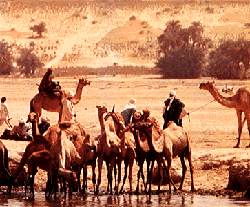
Camels at a watering hole in the semi-arid Sahel in Chad

Sahel region of Mali

Fulani herders in Mali
🚜 Economic Activities
The economy of the Sahel relies on agriculture and livestock! 🚜Many people are farmers and grow crops like millet, sorghum, and corn. Livestock such as sheep, goats, and cattle are also essential, as they provide milk and meat for families. Some folks even fish in rivers! 🌊Trade is vital too—people sell products they grow or make at local markets. The region has resources like gold and uranium, which can be mined. Even though the economy faces challenges, each person plays a role in helping their family and community thrive! 🌟
Go deeper🌳 Conservation Efforts
Conservation is essential for the Sahel's future! 🌳Organizations and local communities are working to protect the environment. This includes planting trees to restore forests and supporting wildlife habitats. Some communities practice sustainable farming techniques, using resources wisely and protecting the soil. People are also raising awareness about the importance of biodiversity and preserving their unique culture. By working together, they aim to create a green, healthy Sahel for future generations. 🌼It’s exciting to know that every small effort can make a big difference!
Go deeper🏜️ Geography Of The Sahel
The Sahel is a unique place with varied landscapes! 🏜️ Its geography includes semi-arid plains, savannas, and some parts have beautiful acacia trees. The region is mostly flat but has some hills, like the Aïr Mountains in Niger. The Niger River flows through parts of the Sahel and is very important for water supply and fishing. Most of the Sahel is located between latitudes 10°N and 20°N. Climate zones change across the region, and various ecosystems thrive here. Isn’t it fun to learn where all these places are? 📍
Go deeper☀️ Climate Characteristics
The climate in the Sahel is mostly dry, which means it gets little rainfall. ☀️ The region has a short rainy season and a long dry season. Usually, rain falls between June and September. The temperatures can be very hot during the day, reaching up to 40°C (104°F) in summer! 🌡️ However, it can be cooler at night. In the dry season, strong winds called Harmattan blow dust from the Sahara. The limited rain makes farming a challenge, but people have found ways to grow crops that can survive in this tough climate! 🌾
Go deeper🌡️ Impact Of Climate Change
Climate change is having a big effect on the Sahel! 🌡️ The temperatures are rising, and there’s less rainfall, which can cause droughts. This impact makes it challenging for farmers to grow food and for animals to find water. Additionally, with fewer resources, families might have to move to find better living conditions. 🌾People in the Sahel are working hard to adapt, learning new farming techniques to save water and grow drought-resistant crops. These efforts will help the community stay strong and sustainable in the face of climate challenges. 🌈
Go deeper🦒 Biodiversity In The Sahel
You might think the Sahel is just dry, but it has amazing biodiversity! 🦒In the Sahel, there are many different plants and animals. Some common animals include gazelles, ostriches, and even elephants! 🐘The acacia tree is very important and adapted to grow in dry conditions. People often plant millet and sorghum, which are hardy crops that can grow here. The wildlife here plays a crucial role in the ecosystem, helping plants grow and maintaining balance. Isn’t it exciting to learn about the different species that call this place home? 🌱
Go deeper🎉 Cultural Practices And Lifestyle
The Sahel has a rich culture shaped by its history, geography, and people! 🎉Many ethnic groups live here, including the Tuareg, Fulani, and Songhai. They have their unique customs, music, and art. People in the Sahel often live in traditional homes made of mud or straw. Families gather to share meals, including tasty dishes like couscous. They celebrate colorful festivals filled with dancing and music! 🎶Education is important too, with schools helping kids learn and grow. The people of the Sahel work hard to preserve their culture while adapting to modern changes.
Go deeper🌟 Regional Cooperation And Politics
Countries in the Sahel are learning to work together! 🇲🇱🇹🇩 Many nations, including Mali, Niger, and Burkina Faso, share similar challenges. By cooperating, they can tackle issues like security, education, and climate change. They form groups, like the G5 Sahel, to address regional problems collectively. This teamwork helps promote peace and stability in the area. It’s important that neighboring countries support each other for a brighter future! 🌟Understanding how nations can unite makes the Sahel a fascinating region to study!
Go deeper🌍 Historical Context And Development
The Sahel has a rich history, full of important events! 🌍Ancient kingdoms, like the Mali Empire, thrived here because of trade and agriculture. This empire was famous for its wealth in gold, and cities like Timbuktu became centerpoints of learning. Over the years, cultures mixed, and languages evolved. In the 20th century, many countries gained independence from colonial powers. Now, nations in the Sahel work together to improve education and health care, facing modern challenges while remembering their storied past. History makes the Sahel so special! 📚
Go deeper😞 Challenges Confronting The Sahel Region
The Sahel faces many challenges! 😞One significant issue is climate change, making it even drier and hotter. This affects farming and water supply, making it hard for people to grow enough food. Deforestation, when trees are cut down, also threatens biodiversity and affects the environment. Political conflicts can create instability, making it hard for families to live peacefully. The Sahel's unique culture and way of life are at risk. People are working hard to solve these problems, so the Sahel can remain a vibrant place! 💪
Go deeper