Russian Revolution Facts For Kids
The Russian Revolution was a series of events in 1917 that dismantled the Tsarist autocracy and led to the rise of the Soviet Union.

Do more with AI
Introduction
The Russian Revolution happened in 1917 🌍. It was a huge change in Russia, where the people wanted more say in how their country was run. The revolution led to the end of the Tsar (a king-like ruler) and started the rise of communism, which is when the government controls many aspects of life 🏛️. There were two main revolutions: the February Revolution and the October Revolution. The February Revolution started on February 23, and the October Revolution happened later that year on October 25. These events shaped Russia and the world in many important ways! 🌟
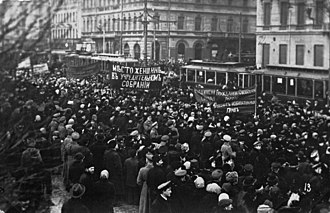
Images of Russian Revolution


Soldiers blocking Narva Gate on Bloody Sunday


Provisional Government's volunteer soldiers secure Petrograd's Palace Square with the Austin Armoured Car, summer 1917.

The Petrograd Soviet Assembly meeting in 1917

Russian troops in trenches awaiting a German attack
International Reactions
The Russian Revolution surprised the world 🌎. Many countries were worried about the rise of communism. Some leaders feared that it would inspire similar revolutions in their own nations. In response, countries like the United States and Britain formed alliances to help fight against the Bolshevik government during the Russian Civil War (1917-1922). Some nations, however, admired the revolution and wanted to learn from it. These reactions showed the world was closely watching Russia during this time of great change and uncertainty! 👀
Key Figures And Leaders
Several important people were part of the Russian Revolution 🕵️. One major leader was Vladimir Lenin, who wanted to create a government for the working class. Another key figure was Leon Trotsky, who helped organize the revolution. Tsar Nicholas II was the ruler who lost power during these events. He was forced to leave the throne in 1917. Then there was the White Army, which fought against Lenin's Red Army. Each person and group played a role that significantly changed Russia's future and its government! 🌈
The Role Of World War I
World War I played a big role in the Russian Revolution 🌍. Russia had joined the war in 1914, and it was suffering heavy losses and massive hunger. Soldiers were unhappy, and many wanted to return home. The war also put extra stress on the economy, increasing food shortages. By 1917, people were protesting against the government for better living conditions. Many Russians blamed their leaders for the problems they faced during the war. This turmoil created the perfect environment for the revolution, as people wanted change and promised hope for a better future! ⚔️
Impact On Russian Society
The Russian Revolution had a massive impact on society 🌻. It changed the way people lived and thought. Once the Bolsheviks were in power, they took land from wealthy landowners and gave it to farmers. They also changed the education system, making it free for everyone! New laws were introduced to help workers, and many people became involved in politics. However, some people were not happy with these changes, leading to a civil war. Despite the struggles, the revolution helped create a society that aimed to treat everyone as equal, which was a new idea for many! 🔄
Major Events Of The Revolution
Two big events marked the Russian Revolution 🌟. The first was the February Revolution, where people protested against the Tsar, leading to his abdication (stepping down). Then, in October, the Bolshevik Party, led by Lenin, took over the government in what was known as the October Revolution. This takeover was quick and involved seizing key buildings and arresting opponents. The Bolsheviks also promised "Peace, Land, and Bread" to win the support of the people. These events led to the establishment of a new government and huge changes in Russian society! 🏛️
Causes Of The Russian Revolution
The Russian people faced many problems leading to the revolution 😠. They were unhappy because they lived in poverty, while the rich Tsar and nobility had lots of wealth. There were food shortages and high prices, especially during World War I, which had been causing suffering in Russia. People wanted to have more rights and better working conditions. Many people were inspired by other revolutions around the world, like the ones in France and America. This desire for change made the people more determined to fight against the unfairness they saw in their country. ✊
Ideologies And Political Movements
Different ideas about how a country should be run were important during the Russian Revolution ⚡. One major ideology was communism, which aims for equality and abolishing private property. This idea became popular among workers and peasants who wanted better lives. The Bolshevik Party, led by Lenin, believed in this ideology and promised to share resources fairly among all citizens. Other groups, like the Mensheviks, also wanted change but believed in a more gradual approach. These different ideas created debates and struggles, as people tried to figure out the best way for Russia to move forward. 🌈
Legacy And Historical Significance
The legacy of the Russian Revolution is still felt today 🌟. It changed Russia from a monarchy to a communist state, which lasted for many years until the Soviet Union broke apart in 1991. The ideas of communism spread to other countries and influenced many political movements around the world. The revolution also showed people the power of uniting and fighting for change! Today, it reminds us that a group of people can work together to create a better future, and it inspires many to continue seeking justice in their own communities. 💪
Did you know?
🇷🇺 The Russian Revolution began in 1917 and resulted in the overthrow of the Tsarist autocracy.
✊ The February Revolution led to the abdication of Tsar Nicholas II and the establishment of a Provisional Government.
🪧 The October Revolution, also known as the Bolshevik Revolution, saw the Bolsheviks seize power from the Provisional Government.
📜 The Treaty of Brest-Litovsk was signed in 1918, ending Russia's involvement in World War I but ceding significant territory.
👥 The Civil War in Russia (1917-1922) pitted the Red Army (Bolsheviks) against the White Army (anti-Bolsheviks).
⚔️ The Red Army's victory solidified Bolshevik control and led to the establishment of the Soviet Union in 1922.
🌍 The ideals of the Russian Revolution inspired communist movements worldwide and influenced global politics for decades.
🗳️ The revolution led to radical changes in Russian society, including land redistribution and the nationalization of industry.
💀 The revolution resulted in significant loss of life, with millions dead due to war, famine, and political repression.
🔨 The Russian Revolution marked the beginning of the rise of communism as a major political force in the 20th century.
Russian Revolution Quiz
Learn more about Russian Revolution
