Rotifera Facts For Kids
Rotifers are tiny, fascinating creatures belonging to the phylum Rotifera, showcasing unique characteristics like spinning cilia and exceptional adaptability in diverse environments.
Select reading age
Rotifera Facts For Kids
Videos & Quizzesincluded
About this topic
Rotifera, also known as wheel animals, are tiny creatures that live in water! 🌊They're so small that you usually need a microscope to see them! These fascinating animals come in about 2,000 different kinds! They are found all over the world, from the hottest deserts to icy lakes. Some rotifers can even survive extreme weather conditions. They are important for the ecosystem because they help clean water by eating tiny particles! So, when you think of rotifers, imagine little swimmers making the world cleaner! 🌍
Explore with ChatDinoKey Points
In the ecosystem, rotifers play an important job!
There are about 2,000 different species of rotifers, showing how diverse they are!
Rotifers are gentle eaters!
Rotifers have some cool adaptations that help them survive!
You can find rotifers almost everywhere in the world!
Rotifers are unique because of their special features.
Rotifers can reproduce in two special ways!
Rotifers play a key role in aquatic ecosystems!
Rotifers are important for scientists!
Photos of Rotifera

Rotifera — photo 1

Anatomy of a bdelloid rotifer

Scanning electron micrographs showing morphological variation of bdelloid rotifers and their jaws.

Rotifera — photo 4

Colony of Rotifers (Sinantheria socialis, Family: Flosculariidae) On Egeria densa (North German Lake). Note heart-shaped corona of individuals. Picture taken through Leitz Binocular.

Rotifera — photo 6

Rotifera — photo 7

Rotifera — photo 8

🌿 Ecological Role
In the ecosystem, rotifers play an important job! They are like nature's garbage collectors, munching on waste and algae and keeping water cleaner for all living things. 🌿They also serve as food for bigger creatures like fish and aquatic insects! 🍽️ By being part of the food chain, rotifers help support many other animals and maintain a balanced ecosystem. Without them, ponds and lakes would become unhealthy, which shows how important these tiny animals are to our environment!
Go deeper🌈 Diversity Of Rotifera
There are about 2,000 different species of rotifers, showing how diverse they are! 🌈Some types include Bdelloidea, Monogononta, and Seisonidea. Each species has unique features and behaviors. For example, some are flat and some are round, while others can change color! 🌈Scientists study these differences to learn more about their evolution and survival strategies. The more we know about rotifers, the better we can understand our precious ecosystems!
Go deeper🥢 Feeding And Nutrition
Rotifers are gentle eaters! 🥢They mostly eat tiny algae, bacteria, and organic matter that floats around in the water. Their spinning wheels help them catch food, sucking it toward their mouths. Some rotifers even have special jaws for crunching up their meals! They help keep the water clean by eating the bad stuff, which helps other animals in the ecosystem. Think of them as tiny superheroes cleaning up their underwater homes! 🦸♂️
Go deeper💧 Adaptations Of Rotifera
Rotifers have some cool adaptations that help them survive! For example, they can go into a resting state called "cryptobiosis" when water becomes scarce. 💧In this state, they even stop moving and can survive extreme conditions like freezing or drying out. Some rotifers can also regenerate body parts if they get injured! 🔄These adaptations make rotifers incredibly resilient and show how nature has equipped them to live in diverse environments. They are little superheroes of the microscopic world! 🦸♀️
Go deeper🌍 Habitat And Distribution
You can find rotifers almost everywhere in the world! 🌍They live in freshwater (like ponds and lakes), saltwater (like oceans), and even damp soil. Some rotifers live in extreme places, like hot springs or icy glaciers. 🌡️ They are often found in pools of water that are just a few drops! Scientists have discovered rotifers in the Amazon Rainforest, snowy Antarctica, and even in your backyard! This wide variety shows just how tough these tiny creatures can be!
Go deeper🌀 Characteristics Of Rotifera
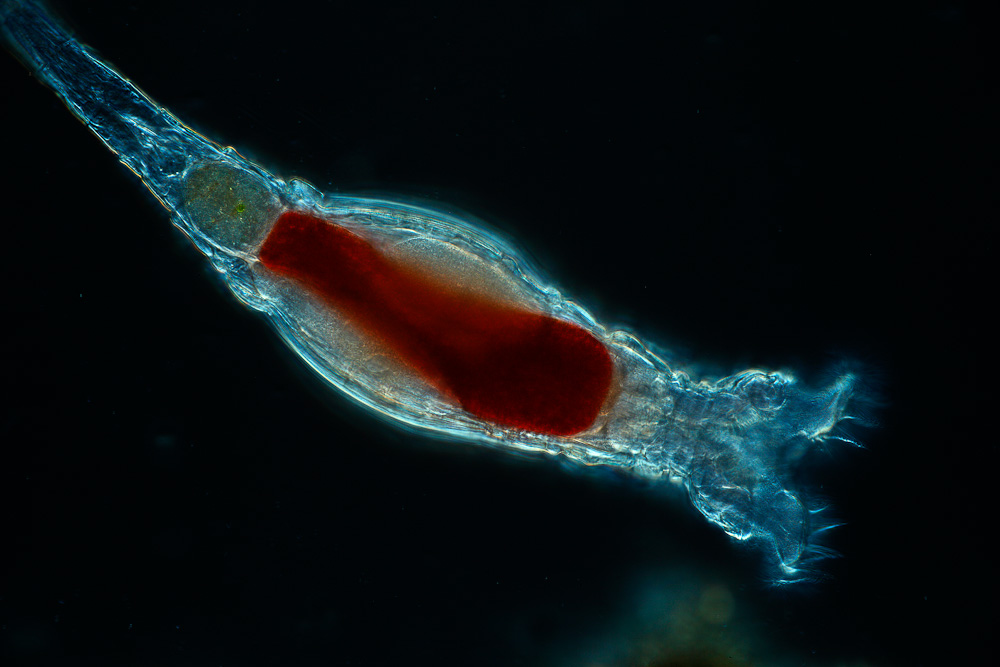
Rotifers are unique because of their special features. They have a "crown" of tiny hairs called cilia that look like a spinning wheel when they move. 🌀This helps them swim and gather food. Their bodies are soft and squishy with a tough outer layer that protects them. Rotifers come in different shapes and sizes, but most are only about 0.1 to 0.5 millimeters long! Some can even glow in the dark! 🌟They have two main body parts: the head and the body, which makes them different from other microscopic organisms!
Go deeper🥚 Reproduction And Life Cycle
Rotifers can reproduce in two special ways! Most of the time, they make new babies without needing a dad; this is called asexual reproduction. They create eggs that can develop into new rotifers! Sometimes, they do need a male, and they produce eggs that grow into tiny rotifers. 🥚🦠 The life cycle of a rotifer starts as an egg, which hatches into a larva and then becomes an adult. Some rotifers can even go into a resting state if the environment gets tough, waiting for better times!
Go deeper🐠 Rotifers In Aquatic Ecosystems
Rotifers play a key role in aquatic ecosystems! 🐠They are a source of food for larger animals like small fish and crustaceans. Their presence helps create healthy water bodies where other forms of life can thrive! They work like tiny cleaning machines, breaking down and recycling nutrients. This process helps plants grow, which in turn provides oxygen and food for other animals. Without rotifers, the balance of these underwater communities would be disrupted! 🌊
Go deeper🔬 Research And Scientific Importance
Rotifers are important for scientists! 🔬They help researchers study evolution, ecology, and even how life can survive extreme conditions. Some scientists experiment with rotifers to learn about genetics and how they can adapt to their surroundings. Their ability to withstand harsh environments makes them trendy subjects in studies related to space exploration! 🚀By exploring tiny creatures like rotifers, we can discover bigger secrets about life on Earth and beyond!
Go deeper