Roman Kingdom Facts For Kids

The Roman Kingdom, also known as the Roman Monarchy, was the earliest period of Roman history when Rome was ruled by kings from 753 BCE until it transitioned to a republic in 509 BCE.
Select reading age
Go deeper More articles
Roman Kingdom
Roman Kingdom Facts For Kids
Videos & Quizzesincluded

About this topic

The Roman Kingdom was an exciting and important time in ancient Rome! 🏛️ It lasted from about 753 BC to 509 BC. During this period, Rome was ruled by kings, and the city grew from a small village into a powerful city. Imagine a place where people built amazing structures and formed their own rules! The Roman Kingdom was located in what we now call Italy. The stories from this time, filled with adventure and bravery, still inspire us today. So, let’s hop in our time machine and explore the fascinating world of the Roman Kingdom! 🌍⏳
Explore with ChatDino

Key Points

Legend says that Rome was founded by twin brothers, Romulus and Remus, in 753 BC!
The ancient Romans had many gods and goddesses that they worshipped!
The Roman Kingdom had seven kings, and each made unique contributions to the city's development!
The Roman Kingdom came to an end around 509 BC.
When the Republic began, the Romans created a new government!
The Roman Kingdom had a simple government structure.
The military was super important in the Roman Kingdom!
In ancient Rome, society was divided into different classes!
The Roman Kingdom was known for its amazing cultural achievements!

Photos of Roman Kingdom

Roman Kingdom — photo 1

Roman Kingdom — photo 1

Shards of terracotta decorative plaques, 6th century BC (Roman Kingdom and Etruscan period), found in the Roman Forum, now in the Diocletian Baths Museum, RomeImage by Ursus, licensed under Creative Commons Attribution-Share Alike 3.0

Shards of terracotta decorative plaques, 6th century BC (Roman Kingdom and Etruscan period), found in the Roman Forum, now in the Diocletian Baths Museum, Rome

Roman Kingdom — photo 3

Roman Kingdom — photo 3

A map of Rome in 753 BC. Colours show topography, with green lowlands and brown highlands. The Latin names of hills are included in all caps.Image by Roma_Romolo_753aC_png.png : Cristiano64 derivative work: Richardprins ( talk ), licensed under GNU Free Documentation License

A map of Rome in 753 BC. Colours show topography, with green lowlands and brown highlands. The Latin names of hills are included in all caps.

Numa depicted on a 48 BC denariusImage by Classical Numismatic Group, licensed under Creative Commons Attribution-Share Alike 2.5

Numa depicted on a 48 BC denarius

Ancus Marcius depicted on a 57 BC denariusImage by Classical Numismatic Group, licensed under Creative Commons Attribution-Share Alike 2.5

Ancus Marcius depicted on a 57 BC denarius

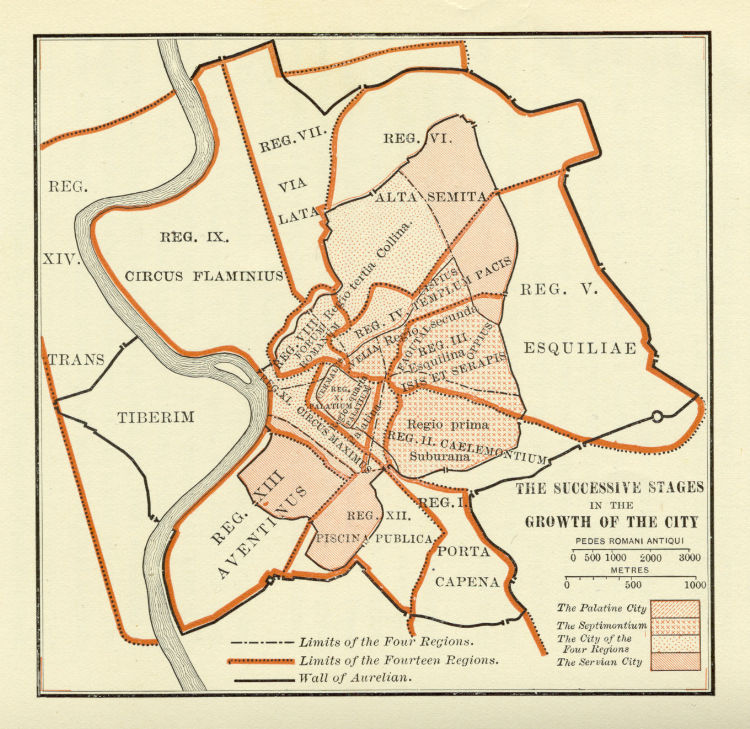
A map of the City of the Four Regions, roughly corresponding to the city limits during the later kingdom. The division is traditionally, though probably incorrectly, attributed to Servius Tullius. The seven hills of Rome are shown in green, with Latin names.

A map of the City of the Four Regions, roughly corresponding to the city limits during the later kingdom. The division is traditionally, though probably incorrectly, attributed to Servius Tullius. The seven hills of Rome are shown in green, with Latin names.

Map of Italy around 500 BC

Map of Italy around 500 BC

The Curia Julia, the senate house started by Julius Caesar in 44 BC and completed by Octavian in 29 BC, replacing the Curia Cornelia as the meeting place of the Senate.

The Curia Julia, the senate house started by Julius Caesar in 44 BC and completed by Octavian in 29 BC, replacing the Curia Cornelia as the meeting place of the Senate.

🐺 Founding Of Rome

Legend says that Rome was founded by twin brothers, Romulus and Remus, in 753 BC! 🐺They were said to be raised by a she-wolf after being abandoned as babies. Romulus became the first king of Rome after a fight with Remus. Rome started as a small settlement on a hill called Palatine Hill. King Romulus built the first walls around the city, creating a safe place for people. Over time, other communities joined, and Rome became larger. So, when you think of Rome, remember the story of Romulus and Remus and their incredible adventure! 👫✨
Go deeper

🏺 Religion And Mythology

The ancient Romans had many gods and goddesses that they worshipped! 🏺They believed these powerful beings could help them in their daily lives. For example, Jupiter was the king of the gods and was associated with the sky and thunder. 🌩️ Venus was the goddess of love and beauty. The Romans built temples to honor their gods and held festivals to celebrate them. They also created myths and stories about these deities. Mythology was a big part of Roman culture, keeping tradition alive and helping people understand the world around them. 📖✨
Go deeper

🏰 The Seven Kings Of Rome

The Roman Kingdom had seven kings, and each made unique contributions to the city's development! 🏰The kings were Romulus, Numa Pompilius, Ancus Marcius, Tarquin the Elder, Servius Tullius, and Tarquin the Proud. Each king ruled for many years. For example, Numa Pompilius is known for bringing peace and setting up religious traditions. Servius Tullius is famous for organizing the Roman people into different social classes. Finally, Tarquin the Proud was known as a tricky king who ruled unfairly. Can you imagine living under the rule of these powerful kings? 👑📜
Go deeper

😢 Downfall Of The Roman Kingdom

The Roman Kingdom came to an end around 509 BC. 😢One of the last kings, Tarquin the Proud, was very unpopular. People were unhappy with his cruel rule and wanted change. A brave nobleman named Lucius Junius Brutus led a rebellion against him. 🚩The people then decided they did not want a king anymore and chose to create a new system called the Republic. This was a huge change for Rome and marked the end of the kingdom. People no longer wanted a single ruler but preferred a government where they could have a say! ⚔️📜
Go deeper

🎉 Transition To The Roman Republic

When the Republic began, the Romans created a new government! 🎉Instead of one king, they elected leaders called consuls to make important decisions. They could only serve for one year to prevent any single person from gaining too much power! The Senate continued to play a major role, helping to guide these newly elected leaders. This transition allowed more people to participate in the government, making it fairer. People could express their opinions and contribute to the future of Rome. The establishment of the Republic shaped the events for generations to come! 🇮🇹🗳️
Go deeper

👨‍⚖️ Political Structure And Government

The Roman Kingdom had a simple government structure. The king held all the power and made the important decisions. 👨‍⚖️ He was advised by a council called the Senate, made up of noblemen. The king created laws and oversaw military actions, ensuring that everyone followed the rules. If someone didn't follow the king's orders, he could be punished! ⚔️ However, the kings also worked with the Senate to listen to the people’s concerns. So, while the king was in charge, there was still a way for the community to share ideas and worries about the city. 🏛️📣
Go deeper

💪 Military Organization And Expansion

The military was super important in the Roman Kingdom! 💪The Roman army helped protect the city and expand its territories. Soldiers were organized into groups called legions, which were made up of about 4,500 men. They marched, trained, and fought bravely to defend Rome. 🛡️ As the kingdom grew, they fought against other tribes to gain more land and resources. This military might allowed Romans to create new settlements and control more areas. Over time, the Roman military became one of the most powerful forces in the world! ⚔️🌍
Go deeper

🤵 Social Classes In The Roman Kingdom

In ancient Rome, society was divided into different classes! The two main groups were the Patricians and the Plebeians. 🤵The Patricians were the wealthy landowners who had political power. They helped make the laws in Rome. The Plebeians were everyday people, including farmers, craftsmen, and laborers. 👩‍🌾 Although they worked hard, they had fewer rights than the Patricians. As time passed, the Plebeians started to fight for more rights, wanting their voices heard too! This division would later play an important role in shaping Roman society and politics. ⚖️💬
Go deeper

🎨 Cultural Achievements And Contributions

The Roman Kingdom was known for its amazing cultural achievements! 🎨They built incredible structures, like temples, aqueducts, and roads, using stone and innovative engineering. The Romans also developed art, literature, and music, which reflected their beliefs and daily life. 🏺Famous stories like "The Aeneid" by Virgil became popular. The Romans introduced the concept of the calendar, including months like July and August! 🗓️ Their achievements laid the foundation for future civilizations and influenced art, law, and architecture for centuries to come. 🏛️✨
Go deeper

🧠 Take the Quiz about Roman Kingdom

Question 1 of 10

When did the Roman Kingdom last from?

Question 2 of 10

Who was said to have founded Rome?

Question 3 of 10

How many kings ruled over the Roman Kingdom?

Question 4 of 10

Who were the wealthy landowners in ancient Rome?

Question 5 of 10

What did the Romans do to honor their gods?

Question 6 of 10

What was the Roman army organized into?

Question 7 of 10

Who was known for bringing peace and religious traditions?

Question 8 of 10

What marked the end of the Roman Kingdom?

Question 9 of 10

Who led the rebellion against Tarquin the Proud?

Question 10 of 10

What replaced the king after the Roman Kingdom ended?

🔒

Your results

Answer all 10 questions to see how you did.

Kid-safe AI powered by AstroSafe

DIY.org

Kid-safe AI for discovery and learning. Ask anything, explore everything, learn with confidence.

Product

  • Pricing
  • App
  • All Apps

Resources

  • Blog
  • Kids Wikipedia
  • Worksheets
  • Activities for Kids
  • Build a Hacker Simulator
  • SafeTube

Company

  • About
  • Terms & Conditions
  • Privacy Policy
  • AstroSafe
TwitterInstagramYouTube

© 2026 DIY.org. All rights reserved. · Powered by AstroSafe