All Articles

Pythagoreanism

Pythagoreanism Facts For Kids

Pythagoreanism is a philosophical and religious belief system that began in the 6th century BC, founded by Pythagoras and focusing on the importance of numbers and harmony in the universe.

🎨 Reading age for 6-8
Background blob
Pythagoreanism
Pythagoreanism
Facts for Kids!

Do more with AI

Introduction

Pythagoreanism is a special set of beliefs started by a famous man named Pythagoras in the 6th century BC 🌟. Pythagoras lived in a place called Samos, which is an island in Greece. His teachings were mostly about mathematics, music, and the way we think about the world! The Pythagoreans, his followers, believed that numbers were very important and could explain many things in life. They believed in living a simple and healthy lifestyle, and even practiced ideas about friendship and community 💛. Explore more about Pythagoras and his amazing ideas in the sections below!

Images of Pythagoreanism

The Plimpton 322 tablet records Pythagorean triples from Babylonian times.[2]

The Plimpton 322 tablet records Pythagorean triples from Babylonian times.[2]

Animation demonstrating the smallest whole number Pythagorean triple, 3² + 4² = 5²Image by AmericanXplorer13 ( talk ), licensed under Creative Commons Attribution-Share Alike 3.0

Animation demonstrating the smallest whole number Pythagorean triple, 3² + 4² = 5²
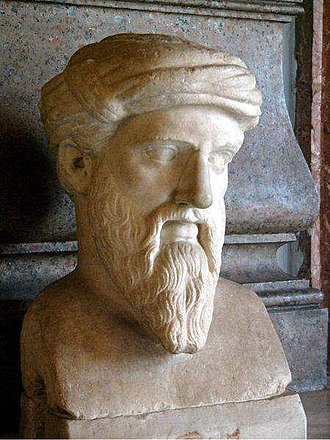
Bust of Pythagoras, Musei Capitolini, Rome.

Bust of Pythagoras, Musei Capitolini, Rome.

Pythagoreans celebrate sunrise, 1869 painting by Fyodor Bronnikov.

Pythagoreans celebrate sunrise, 1869 painting by Fyodor Bronnikov.

The Archytas curve

The Archytas curve

The first six triangular numbersImage by Melchoir, licensed under Creative Commons Attribution-Share Alike 3.0

The first six triangular numbers

Medieval woodcut by Franchino Gaffurio, depicting Pythagoras and Philolaus conducting musical investigations.

Medieval woodcut by Franchino Gaffurio, depicting Pythagoras and Philolaus conducting musical investigations.

According to a collection of ancient philosophical texts by Stobaeus in the 5th century AD, Philolaus believed there was a "Counter-Earth" (Antichthon) orbiting a "central fire" but not visible from Earth.[46][page needed]

According to a collection of ancient philosophical texts by Stobaeus in the 5th century AD, Philolaus believed there was a "Counter-Earth" (Antichthon) orbiting a "central fire" but not visible from Earth.[46][page needed]

Pythagoras and faba beans, French, 1512/1514.[citation needed] Pythagoreans refused to eat beans. Already in antique times there was much speculation about the reason for this custom.[59]

Pythagoras and faba beans, French, 1512/1514.[citation needed] Pythagoreans refused to eat beans. Already in antique times there was much speculation about the reason for this custom.[59]

The Plimpton 322 tablet records Pythagorean triples from Babylonian times.[2]

The Plimpton 322 tablet records Pythagorean triples from Babylonian times.[2]

Animation demonstrating the smallest whole number Pythagorean triple, 3² + 4² = 5²Image by AmericanXplorer13 ( talk ), licensed under Creative Commons Attribution-Share Alike 3.0

Animation demonstrating the smallest whole number Pythagorean triple, 3² + 4² = 5²

Bust of Pythagoras, Musei Capitolini, Rome.

Bust of Pythagoras, Musei Capitolini, Rome.

Pythagoreans celebrate sunrise, 1869 painting by Fyodor Bronnikov.

Pythagoreans celebrate sunrise, 1869 painting by Fyodor Bronnikov.

The Archytas curve

The Archytas curve

The first six triangular numbersImage by Melchoir, licensed under Creative Commons Attribution-Share Alike 3.0

The first six triangular numbers

Medieval woodcut by Franchino Gaffurio, depicting Pythagoras and Philolaus conducting musical investigations.

Medieval woodcut by Franchino Gaffurio, depicting Pythagoras and Philolaus conducting musical investigations.

According to a collection of ancient philosophical texts by Stobaeus in the 5th century AD, Philolaus believed there was a "Counter-Earth" (Antichthon) orbiting a "central fire" but not visible from Earth.[46][page needed]

According to a collection of ancient philosophical texts by Stobaeus in the 5th century AD, Philolaus believed there was a "Counter-Earth" (Antichthon) orbiting a "central fire" but not visible from Earth.[46][page needed]

Pythagoras and faba beans, French, 1512/1514.[citation needed] Pythagoreans refused to eat beans. Already in antique times there was much speculation about the reason for this custom.[59]

Pythagoras and faba beans, French, 1512/1514.[citation needed] Pythagoreans refused to eat beans. Already in antique times there was much speculation about the reason for this custom.[59]

The Concept Of Harmony

For the Pythagoreans, harmony wasn’t just about music 🎼; it was a balance in everything. They thought the universe was made up of harmonious relationships, much like a beautiful song! ✨They believed that when things are in harmony, they work better together. Imagine a choir where everyone sings in tune! To them, harmony could be found in nature, mathematics, and even human relationships. They aimed to find balance in their own lives too, believing it brought peace and happiness.

Core Beliefs And Principles

The core beliefs of Pythagoreanism focus on the importance of numbers and harmony 🥁. Pythagoreans believed that everything in life can be explained by numbers, from the stars in the sky to the music we hear 🎶. They thought that understanding the relationship between numbers could help us understand the universe better. They also believed in living a good life by being kind to others, which included sharing their knowledge with friends. This idea of friendship and community was super important to them!

Influence On Later Philosophies

Pythagoreanism didn’t just stop with Pythagoras! 📚His ideas influenced many others like Plato, who lived later and thought very deeply about life! Pythagorean concepts of numbers and harmony were important for later scientists and mathematicians, too. It even spread into early Christian thoughts and ideas! The way Pythagoras connected math, philosophy, and music helped to create a foundation for modern science and philosophy. Many people still learn about him today in school.

Pythagorean Community And Lifestyle

The Pythagorean community was like a big family! 🏠💚 They followed special rules about how to live a good life. They believed in vegetarianism, which meant they didn’t eat meat 🥕. They also practiced sharing everything, from food to knowledge. The Pythagoreans spent a lot of time studying math and music together, creating strong friendships. They enjoyed learning and growing together, believing it helped them become better people! They lived by these guiding principles, making their community special.

Metaphysics And The Nature Of Reality

The Pythagoreans had unique ideas about reality! 🌌They thought that everything is connected and that numbers are the very foundation of everything in the universe. Their philosophy believed that studying numbers helps one understand the world better. They even speculated that the Earth was a sphere and planets moved in a circular way! ⚪This shows how advanced their thinking was for their time. They also believed in the idea of the soul, thinking it could live on after the body fades away.

Historical Background Of Pythagoreanism

Pythagoreanism began around 570 BC when Pythagoras was born 📅. He was not just a mathematician; he was also a philosopher! After traveling to lands like Egypt and Babylon, he returned to Greece with many new ideas. Pythagoras started a school where his followers, called Pythagoreans, gathered to learn about numbers and nature. They believed in reincarnation, which means they thought that people’s souls could return as new life. The teachings spread throughout the ancient world 🌍, influencing many later thinkers like Plato!

Mathematics And Music In Pythagoreanism

Did you know Pythagoras discovered that numbers and music are linked? 🎵The Pythagoreans believed that different musical notes can be expressed using simple ratios, like 2:1 or 3:2. For example, doubling a string makes a note one octave higher! 🎻They thought that harmony in music helped create harmony in life, which made them happy. It was like a magical connection! They studied how numbers create music and how music helps our souls feel better. This cool connection is still important to musicians today!

Rituals And Practices In Pythagoreanism

Pythagoreans had special rituals and practices to keep their community strong 🌈. They often meditated, reflected on their values, and shared meals together. They also believed in reading and studying religious texts. They had rules about how to treat one another, like being kind and helping friends. 👫They avoided certain foods for spiritual reasons, too. Their ceremonies included music and dance to celebrate harmony and friendship 🎉. These practices helped them connect with their beliefs and each other deeply.

Pythagorean Theorems And Their Significance

One of the most famous ideas from Pythagoras is the Pythagorean Theorem! 📐This theorem helps us understand right-angled triangles. It says that if you take one side squared and add it to the other side squared, you get the square of the hypotenuse (the long side). This cool idea helps builders, architects, and even astronauts in space! 🚀It’s super valuable in real life and shows us how important Pythagoras’ work has been for thousands of years!

Criticism And Controversies Surrounding Pythagoreanism

Not everyone agreed with Pythagorean ideas. Some people criticized them for being too secretive 🤫 and thought their beliefs were strange. Others thought their number theories were complicated or not useful in daily life. Some believed their strict rules made it difficult for people to join their community. 🧐However, despite the disagreements, Pythagoreanism has remained important in history, showing us that even great ideas can have their critics. It’s okay to ask questions and explore different thoughts!

Pythagoreanism Quiz

Q1
Question 1 of 10

Learn more about Pythagoreanism

Ready to create?

Drop Files here
Make

To create a safe space for kid creators worldwide!

Create

Vibe Coding

Kids GPT

All Tools

Kibu

Resources

Worksheets

SafeTube

Blog

FAQ

Account

Pricing

Log-in

Sign-up

Data Deletion

Company

About

Community Guidelines

Privacy Policy

Terms of Service

2025, URSOR LIMITED. All rights reserved. DIY is in no way affiliated with Minecraft™, Mojang, Microsoft, Roblox™ or YouTube. LEGO® is a trademark of the LEGO® Group which does not sponsor, endorse or authorize this website or event. Made with love in San Francisco.