Plazas De Soberanía Facts For Kids
The plazas de soberanía are a series of Spanish overseas territories located along the North African coast, primarily near Morocco, serving as important cultural and strategic locations.
Select reading age
Plazas De Soberanía Facts For Kids
Videos & Quizzesincluded
About this topic
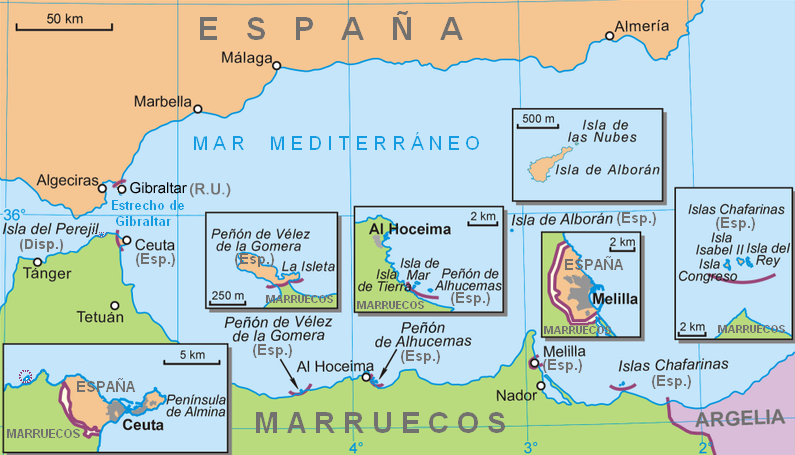
The plazas de soberanía are tiny Spanish territories near Morocco in Africa. 🗺️ They are like little islands where Spain has its own rules! These places include Ceuta, Melilla, and a few small islands. They are surrounded by the Mediterranean Sea and are important for trade and travel. The plazas help Spain keep connections with Africa, making them special. Imagine a country across the sea that has its own mini-lands far away. It's like having a home in two different places at once! Can you think of any other countries that have remote territories? 🌍
Explore with ChatDinoKey Points
The plazas de soberanía are a part of Spain, even though they are much closer to Africa!
The main plazas de soberanía are located in two cities: Ceuta and Melilla!
Spain keeps a military presence in the plazas de soberanía for protection.
The plazas de soberanía are a melting pot of cultures!
The plazas de soberanía face challenges today!
The plazas de soberanía are buzzing with economic activity!
A long time ago, the plazas de soberanía became part of Spain.
The plazas de soberanía are important for Spain's relationship with Africa.
Tourism is a big deal in the plazas de soberanía!
Unlike many territories in the world, the plazas de soberanía are small but strongholds of Spain.
Photos of Plazas De Soberanía

Aerial view of the Peñón de Alhucemas c. 1925

Map of Spanish Morocco in 1925

Peñón de Vélez de la Gomera, seen from the Moroccan coast, 2007
🏅 Legal Status
The plazas de soberanía are a part of Spain, even though they are much closer to Africa! 🇪🇸 They have their own local governments but follow Spain's laws. So, while they are in Africa, they are not part of Morocco. This makes them very unique as a legal territory. People living there have rights as Spanish citizens! 🏅Learning this helps us understand how countries can be connected even if they are far away. What do you think about having special rules for special places?
Go deeper🏙️ Key Locations
The main plazas de soberanía are located in two cities: Ceuta and Melilla! 🏙️ Both cities are on the coast of Morocco, making them super special. They include small islands like Isla Perejil and Isla de Alhucemas. Ceuta is located on the north coast of Africa, right by the Strait of Gibraltar! Meanwhile, Melilla is a bit further east. Each location has its unique sights, like beaches, old fortresses, and beautiful parks. 🏖️ Can you imagine living in a place surrounded by both ocean and land?
Go deeper⚔️ Military Presence
Spain keeps a military presence in the plazas de soberanía for protection. ⚔️ This is important because these territories are close to Morocco. The military helps keep peace and security in the area. Soldiers train and patrol, ensuring the safety of the towns. The presence also shows Spain's commitment to the territory. 🪖Besides protecting citizens, military forces are ready in case of any disputes. Understanding military roles teaches us about how nations protect what is important to them!
Go deeper🌍 Cultural Influence
The plazas de soberanía are a melting pot of cultures! 🌍People in Ceuta and Melilla speak Spanish but also mix languages like Arabic and Berber! This diversity creates a lively atmosphere with colorful festivals and delicious foods! 🎉The local music, dance, and art reflect this blend of traditions. There are vibrant markets with goods from both Spanish and Moroccan origins, highlighting the cultural exchange. ⚡Learning about other cultures helps us appreciate the world we live in. What's your favorite part of your own culture?
Go deeper🌟 Contemporary Issues
The plazas de soberanía face challenges today! 🌟Some people in Morocco believe these territories should belong to them. There are sometimes disagreements about borders and rights. Even though there are many cultures, people want to feel respected and heard. 🌞Learning about these issues helps us understand the importance of discussing differences peacefully. Countries must work together to find solutions. What do you think would help solve disagreements like these?
Go deeper💼 Economic Activities
The plazas de soberanía are buzzing with economic activity! 💼Since they are close to Africa, they have lots of trade. People buy and sell goods like fish, fruits, and textiles. Tourism is also important, as visitors come to explore the beautiful locations and learn about the cultures. 🚤Fishing is a big part of life there, too! Many locals work on boats or in markets. The economy also benefits from Spain's connection to these unique territories, which help with jobs and trade. What job would you want to have in Ceuta or Melilla?
Go deeper⏳ Historical Background
A long time ago, the plazas de soberanía became part of Spain. ⏳Ceuta was conquered by Spain in 1580, while Melilla was taken over in 1497. These towns have seen lots of history, including battles and wars! They were valuable for trade, helping Spain connect with countries in Africa. The tiny islands also played a part in important events, like during the time of the Roman Empire. Every stone in these territories has a story to tell! ☝️ Have any cool historical facts you've learned about your own town?
Go deeper🌐 Geopolitical Significance
The plazas de soberanía are important for Spain's relationship with Africa. 🌐These territories help Spain have a strong presence in both Europe and Africa. They act like a bridge, allowing Spain to trade with countries like Morocco. Because they are close to the coast of Africa, they also help in keeping the peace in the region. With many cultures mixing, it’s like a colorful tapestry of life! 🌈Understanding these territories also helps us learn about geography and why countries care about their neighbors.
Go deeper🌊 Tourism And Accessibility
Tourism is a big deal in the plazas de soberanía! 🌊Many people visit for the beautiful beaches, historic places, and tasty food! It’s easy to get to Ceuta and Melilla by boat or plane from Spain. Once visitors arrive, they can explore vibrant markets, enjoy local cuisine, and see historical sites! 🏰Accessibility makes it possible for families to enjoy vacations and discover new cultures. Just imagine enjoying a sunny day by the water! Have you ever been on a fun trip to a special place?
Go deeper🏰 Comparison With Other Territories
Unlike many territories in the world, the plazas de soberanía are small but strongholds of Spain. 🏰For example, places like Puerto Rico are much larger and have different rules. While Puerto Rico is in the Caribbean, Ceuta and Melilla are in Africa! They share similarities, like having their cultures mixed with their country, but they also face different challenges. Exploring these differences helps us learn how unique each location can be. 🌈What’s one thing you think makes your town unique compared to others?
Go deeper