Platyhelminthes is a phylum of simple, unsegmented, soft-bodied invertebrates often called flatworms, found in various habitats.
Set reading age
View for Kids
Easy to read and understand
View for Students
Clear, detailed explanations
View for Scholars
Deep dives and big ideas
Platyhelminthes, or flatworms, are fascinating creatures in the animal kingdom! 🐛They belong to a group of soft-bodied animals called invertebrates, meaning they don't have a backbone. Flatworms are usually very thin and can be found in many shapes and colors. Some live in water, while others live on land. There are over 25,000 types of flatworms, making them a diverse group! 🌊These unique creatures are known for their flat, ribbon-like bodies, which help them move easily through their habitats. Flatworms play important roles in nature, and they are incredibly interesting to learn about!
Flatworms play essential roles in our ecosystems! 🌿Some types, like planarians, help with cleaning and recycling organic waste in their habitats. They eat decomposing material and help keep their surroundings healthy. On the other hand, parasitic flatworms, like tapeworms, can impact the health of their hosts but also help scientists study diseases. 🦠Overall, flatworms contribute to food chains as both predators and prey, supporting wildlife populations and promoting balance in nature. Without them, ecosystems would be quite different!
Did you know flatworms can be super colorful and can even glow in the dark? 🌈Some can change color to blend into their surroundings! They are also known for their incredible ability to regenerate lost body parts; a flatworm can grow back its entire body! 🦸They have no blood cells or circulatory system but instead, rely on diffusion for oxygen! Lastly, the heaviest tapeworm ever recorded weighed 1,000 pounds! That's as heavy as a car! 🚗Flatworms are truly amazing creatures to learn about!
Platyhelminthes have a long evolutionary history! 🌌They are one of the oldest animal phyla, with origins dating back over 600 million years ago in ancient oceans. Fossils have been found that show their fascinating changes over time. 🦕Scientists believe flatworms share a common ancestor with other animals, like annelids (segmented worms) and mollusks (like snails!). Studying flatworms helps researchers understand how different animal groups have evolved and adapted to their environments!
Scientists study flatworms to learn more about biology, medicine, and evolution! 🤓Researchers often use planarians because they can regenerate and allow scientists to explore cell growth and healing. Additionally, some studies focus on tapeworms to understand how parasites work and how they affect their hosts. 🥼Ongoing research helps us discover new information that could lead to advancements in healthcare and medicine, making flatworms important contributors to science!
Flatworms have a simple body structure designed for their way of life! 🌍Most have a soft, flat body with a mouth on the underside. They don't have specialized organs like we do; instead, they have a gastrovascular cavity for digestion. This cavity helps break down food and distribute nutrients throughout their bodies. Flatworms also have a unique feature called cephalization, which means they have a head with sensory organs. 🤔Their skin is smooth and can absorb oxygen directly from the water, making it easier for them to breathe even without lungs!
Flatworms have some special features that make them unique! They usually measure between 1 millimeter to 1 meter long. 🐍Unlike many animals, flatworms do not have a heart or lungs; instead, they breathe through their skin! Flatworms also have bilateral symmetry, which means their body can be divided into two identical halves. They have a simple nervous system with a pair of eye spots that can detect light. These creatures can be colorful, too! Some species are bright red, green, or blue, helping them blend into their surroundings or stand out to other animals. 🎨
Flatworms have some interesting ways of reproducing! 🌱Many flatworms can reproduce both sexually and asexually. In sexual reproduction, male and female flatworms come together to exchange sperm, allowing them to produce eggs. A neat fact is that some flatworms can even change sex if they need to! 👩❤️👨 In asexual reproduction, some flatworms can regenerate. If a flatworm is cut in half, each half might grow into a new flatworm, which is pretty magical! This makes them one of the most remarkable animals with strong survival skills!
Flatworms can live in various habitats all around the world! 🌏Some thrive in freshwater bodies like ponds and rivers, while others prefer saltwater like oceans. There are even flatworms that live in moist, damp soil or underneath rocks in forests. 🏞️ They are adaptable creatures and can be found on every continent. Certain flatworms, like the planarian, are commonly found in tropical areas, while others, like tapeworms, live in the intestines of animals, showcasing their diverse lifestyles!
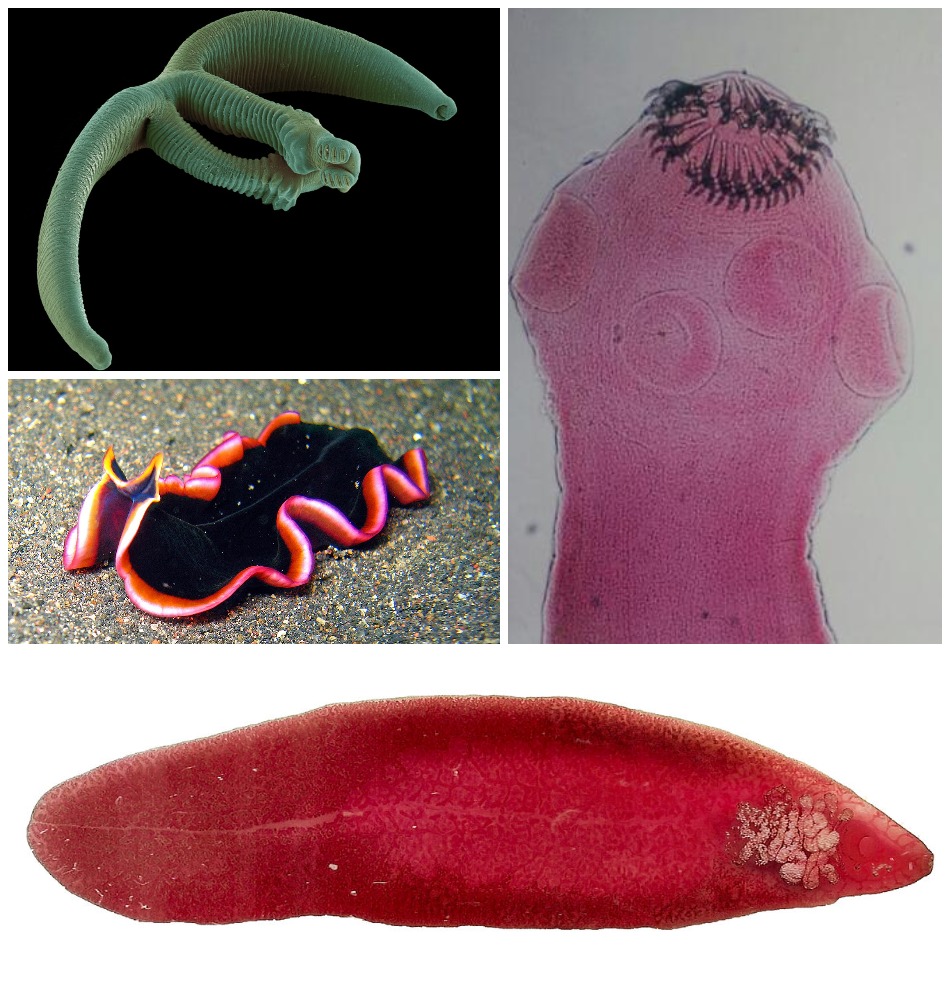
Platyhelminthes are divided into three main groups: Turbellaria, Cestoda, and Trematoda. 🌟Turbellarians are mostly free-living flatworms, like the common planarian found in ponds. Cestodes are the tapeworms that live inside other animals, including humans. 😲Lastly, trematodes, or flukes, are parasitic flatworms that can also live in a host's body. Each type has its own unique way of living, eating, and surviving in different environments. From swimming in water to hiding in hosts, flatworms show just how incredible nature can be!
While most flatworms are harmless, some can cause health problems for humans. 😷Tapeworms, for example, can infect people who eat undercooked meat or contaminated food. These parasites can grow in a person's intestines, taking nutrients from their meals. However, scientists study flatworms, as some have unique properties that may help with medicine. 🧪For example, the regenerative abilities of certain flatworms might inspire research in healing and recovery, leading to exciting discoveries for health!


DIY is a creative community where kids draw, build, explore ideas, and share.
No credit card required