Pilaster Facts For Kids
A pilaster is a vertical architectural element that serves as both a supportive section of wall and a decorative feature resembling a column, found in various styles of buildings.
Select reading age

Pilaster Facts For Kids
Videos & Quizzesincluded
About this topic
Pilasters are special features in buildings that look like columns but are part of the wall! 🏛️ They can be strong and help hold up a structure, or just look pretty. Pilasters are often found in older buildings, like ancient temples and churches. They can make a wall look fancy and show off a builder's skill. Pilasters are usually part of a rectangle shape called a "rectangular section." They help define different parts of a building and make it more interesting to see! 🌟
Explore with ChatDinoKey Points
There are different types of pilasters based on their design!
Pilasters have been around since ancient times, dating back to the Egyptians and Greeks!
There are many famous buildings with pilasters!
Though pilasters and columns look similar, they're quite different!
Pilasters can be made from different materials, making them strong and stylish!
Today, we still use pilasters in many new buildings!
Pilasters play a vital role in making buildings strong!
Pilasters can be found in many architectural styles!
Pilasters aren't just functional; they can be very decorative too!
Photos of Pilaster

Pilaster — photo 1

Pilaster — photo 2

Pilaster — photo 3
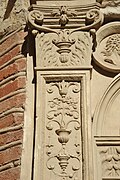
Pilaster — photo 4

Pilaster — photo 5


Italia, Lazio, provincia di Roma, Grottaferrata, abbazia territoriale di Santa Maria (abbazia di San Nilo), portale della torre esterna dell'ingresso, capitello corinzieggiante
🌳 Types Of Pilasters
There are different types of pilasters based on their design! 🌳The main types include:
1. Doric Pilaster: This is the simplest type. It has a plain top and is really strong!
2. Ionic Pilaster: This type has curly tops that look like ram's horns. 🐏
3. Corinthian Pilaster: This is the fanciest one, with lots of beautiful decorations like leaves and flowers. 🌼
4. Tuscan Pilaster: A simpler version of the Doric, but short and squat.
Each type adds a unique look to buildings! 🎨
Go deeper1. Doric Pilaster: This is the simplest type. It has a plain top and is really strong!
2. Ionic Pilaster: This type has curly tops that look like ram's horns. 🐏
3. Corinthian Pilaster: This is the fanciest one, with lots of beautiful decorations like leaves and flowers. 🌼
4. Tuscan Pilaster: A simpler version of the Doric, but short and squat.
Each type adds a unique look to buildings! 🎨
🏺 History Of Pilasters
Pilasters have been around since ancient times, dating back to the Egyptians and Greeks! 🏺The ancient Greeks used them in their temples, like the famous Parthenon in Athens. The Romans liked pilasters too, using them in their impressive buildings starting around 500 B.C. They even created styles like Corinthian and Doric to decorate them! Pilasters became popular during the Renaissance in Europe. Artists like Andrea Palladio made famous buildings, adding more decorative features. Today, we still use pilasters to connect old designs with new ones! 🏗️
Go deeper🏛️ Famous Buildings Featuring Pilasters
There are many famous buildings with pilasters! One of the most iconic is the White House in Washington, D.C. 🏛️ It has beautiful neoclassical pilasters on its exterior. Another example is the British Museum in London, where you can see grand pilasters outside and inside.
In Paris, the Panthéon has stunning Corinthian pilasters, too! 🏰Some are even found in places like Mount Vernon, George Washington's home. Pilasters help tell the story of each building and make them look amazing! 🌟
Go deeperIn Paris, the Panthéon has stunning Corinthian pilasters, too! 🏰Some are even found in places like Mount Vernon, George Washington's home. Pilasters help tell the story of each building and make them look amazing! 🌟
🏛️ Pilaster Vs. Column: Key Differences
Though pilasters and columns look similar, they're quite different! 🏛️ A column stands alone and supports weight by itself. It can be round or square but is usually not part of the wall. A pilaster, on the other hand, is attached to the wall. 🧱
Columns can be very tall and are often used in front of buildings, while pilasters are shorter and blend with the wall. Columns can be inside or outside buildings, whereas pilasters are mainly for decoration or support on flat surfaces. They each have their unique roles in making buildings beautiful! 🎨
Go deeperColumns can be very tall and are often used in front of buildings, while pilasters are shorter and blend with the wall. Columns can be inside or outside buildings, whereas pilasters are mainly for decoration or support on flat surfaces. They each have their unique roles in making buildings beautiful! 🎨
🧱 Materials Used In Pilaster Construction
Pilasters can be made from different materials, making them strong and stylish! 🧱
1. Stone: This is the most popular material for ancient pilasters. It’s heavy but strong, perfect for long-lasting buildings! 🪨
2. Brick: Made from clay and fire, bricks are lighter and used in many buildings.
3. Concrete: A mixture of cement, water, and gravel, concrete is very strong and can be shaped into many designs. 🏢
4. Wood: Some pilasters are made from wood, especially in houses. Wood adds warmth and can be decorated easily with paint or carvings! 🌳
Go deeper1. Stone: This is the most popular material for ancient pilasters. It’s heavy but strong, perfect for long-lasting buildings! 🪨
2. Brick: Made from clay and fire, bricks are lighter and used in many buildings.
3. Concrete: A mixture of cement, water, and gravel, concrete is very strong and can be shaped into many designs. 🏢
4. Wood: Some pilasters are made from wood, especially in houses. Wood adds warmth and can be decorated easily with paint or carvings! 🌳
🏢 Modern Uses Of Pilasters In Architecture
Today, we still use pilasters in many new buildings! 🏢Many architects appreciate how they can combine both style and strength. In modern homes, pilasters might be used in living rooms to break up space and make it feel more interesting.
They can also be found in shopping malls, schools, and even parks! 🎠Pilasters help connect the past with the present, allowing us to enjoy beautiful designs while keeping our buildings strong. Whether for decoration or support, pilasters are here to stay! 🌟
Go deeperThey can also be found in shopping malls, schools, and even parks! 🎠Pilasters help connect the past with the present, allowing us to enjoy beautiful designs while keeping our buildings strong. Whether for decoration or support, pilasters are here to stay! 🌟
💪 The Role Of Pilasters In Structural Design
Pilasters play a vital role in making buildings strong! 💪They act as support to help hold up walls, especially in tall buildings. By adding thickness to a wall, pilasters help distribute weight evenly.
This way, they can keep the building from falling down or cracking. Over time, builders have discovered that pilasters can be used to add style as well as strength. 🎨This combination is what makes them so important for architectural design!
Go deeperThis way, they can keep the building from falling down or cracking. Over time, builders have discovered that pilasters can be used to add style as well as strength. 🎨This combination is what makes them so important for architectural design!
🏛️ Pilasters In Different Architectural Styles
Pilasters can be found in many architectural styles! 🏛️ In classical architecture, they add grandeur. The Greeks used them in temples, while the Romans added their own designs. In the Gothic style, you might see them supporting arches.
During the Renaissance, pilasters became an essential feature in palaces. The Baroque style used them to emphasize power and drama. Modern architecture often uses simpler designs, but still features pilasters to create balance. Today, you'll find pilasters in everything from schools to museums! 🏫
Go deeperDuring the Renaissance, pilasters became an essential feature in palaces. The Baroque style used them to emphasize power and drama. Modern architecture often uses simpler designs, but still features pilasters to create balance. Today, you'll find pilasters in everything from schools to museums! 🏫
🌼 Decorative Elements Associated With Pilasters
Pilasters aren't just functional; they can be very decorative too! 🌼Builders like to add different designs on pilasters, like swirls, flowers, or even animals! Some have intricate carvings that tell stories or show leaves.
The tops of pilasters often have special designs called capitals. There are different styles, like plain for Doric, curly for Ionic, and detailed for Corinthian types. Pilasters also might be painted in bright colors or covered with beautiful tiles! 🎨All these decorations make buildings exciting to look at!
Go deeperThe tops of pilasters often have special designs called capitals. There are different styles, like plain for Doric, curly for Ionic, and detailed for Corinthian types. Pilasters also might be painted in bright colors or covered with beautiful tiles! 🎨All these decorations make buildings exciting to look at!