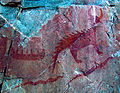
A pictogram is a graphical symbol that conveys meaning through its visual resemblance to a physical object.

Set reading age
View for Kids
Easy to read and understand
View for Students
Clear, detailed explanations
View for Scholars
Deep dives and big ideas
Pictograms are fun pictures that help us understand information quickly! 🌟They usually look like the things they represent. For example, a picture of a cupcake 🍰 can show it's a bakery or a birthday party. Pictograms are used everywhere: in signs, instructions, and even on road signs! 🚦They make it easier for people to get the message without using too many words. This is especially helpful for kids and people who speak different languages. So, next time you see a picture with a meaning, remember—it's a pictogram!
There are many types of pictograms used for different purposes! 🎨Some common types include:
1. Signs: Like a “no smoking” sign 🚫.
2. Maps: Which show locations like parks or bathrooms! 🗺️
3. Icons: These are small pictures on your computer! 💻
4. Charts: Pictograms can also represent data, like showing how many kids like ice cream! 🍦
5. Diagrammatic: Used to explain processes, like making a sandwich! 🥪
Each type makes it easier to understand info quickly and clearly!
Pictograms have been around for thousands of years! 📜The oldest known examples were found in ancient Egypt, where they used symbols to communicate on walls and in writing. 🌍Around 3000 BC, people started using these symbols to tell stories and share important information. As civilizations grew, like the ancient Chinese and Sumerians, they created their unique pictograms. In 1968, the International Organization for Standardization (ISO) made guidelines for pictograms we use today, making sure everyone understands them easily! 📏Pictograms have truly traveled through time!
Pictograms can be excellent tools for learning! 📚Teachers use them to help kids understand topics like math, science, and even reading! For example, a pictogram can show how many students like soccer compared to basketball in a simple chart. ⚽🏀 This makes data fun! In classrooms, pictograms help students remember rules, like washing their hands or raising a hand to speak. 👐Pictograms are not only engaging but help students grasp complex information easily, making learning more enjoyable!
Pictograms are super important in technology! 💻They help users navigate devices easily, like when you see an envelope icon for email! 📧In apps, pictograms display actions like sharing, saving, or deleting files. On websites, you'll find pictograms on buttons, making it easy to understand what to click. Also, they help people with disabilities by providing information visually. For example, a pictogram of a person in a wheelchair 🚶♂️ shows that a place is accessible. Technology wouldn't be as user-friendly without pictograms!
Some pictograms are very famous around the world! 🌍The "Wi-Fi" symbol shows that you're connected to the internet! 📶The recycling icon ♻️ reminds us to help the planet by recycling materials. Another favorite is the "play" symbol used on video players, which looks like a triangle ⏵. Then we have the "emergency exit" sign, which can save lives in buildings. 🔥These pictograms are recognized globally, making them essential tools for communication and safety!
Pictograms are evolving and becoming even cooler! 🌟With new technologies like augmented reality (AR), pictograms can come alive! Imagine seeing a pictogram in 3D! 🌈They are also being used in video games to help players navigate better. More devices, like smartwatches, are using pictograms for simple communication! 💬As the world becomes more connected, pictograms will play a critical role in global communication, helping everyone understand important information without confusion. The future looks bright for pictograms, and we can't wait to see what comes next! 🎉
In today’s world, pictograms are everywhere! 🌐We see them on mobile apps, websites, and product labels. For example, when you see a heart ❤️ in an app, it usually means "like" or "love." Pictograms help make communication faster, as many people prefer visuals over text. 📱They are especially helpful for those who may not read well or speak the same language. Social media platforms also use pictograms to convey messages quickly, making our digital life easier! People really like easy ways to express emotions with fun pictures!
Pictograms are important in different cultures! 🌏For example, in Asia, pictograms help travelers understand food menus without knowing the language. In the Olympics, pictograms show sports activities (like swimming 🏊♂️) to make it easier for fans from around the world. Imported goods often have pictograms on their packages to show handling directions or ingredients. Also, they inspire art and design in cultures around the world! 🎨Pictograms bridge language gaps and unite people with visual messages, showing how powerful pictures can be!
Pictograms are unique compared to other graphic symbols! 🤔For example, traffic signs are a type of pictogram, but they are stricter and follow specific designs for safety! 🚧Emojis are also graphic symbols, but they are more playful and can express feelings or actions, like laughing 😂. Icons (like those on your computer) are usually smaller and specific to functions. 🌟Pictograms are special because they represent whole ideas simply and clearly, making them perfect for communication in daily life!
To create a great pictogram, designers follow special rules! ✏️ First, the design should be simple and clear, so everyone understands it quickly. 🟢Second, the colors used should grab attention but not be too bright. Third, the pictogram should look like what it represents, like a picture of an airplane ✈️ for travel. Fourth, it should be easy to recognize at a distance. Finally, it should be consistent with other pictograms so users can recognize similarities. Following these guides makes pictograms effective and meaningful!