Picea Pungens Facts For Kids
Picea pungens, commonly known as the Blue Spruce or Colorado Spruce, is an evergreen tree native to the Rocky Mountains in North America, recognized for its stunning blue-gray needles and impressive height of up to 100 feet.
Select reading age

Picea Pungens Facts For Kids
Videos & Quizzesincluded
About this topic
Picea pungens, better known as the blue spruce 🌲, is a beautiful tree native to North America. This tree is especially found in Colorado, Arizona, Idaho, New Mexico, Utah, and Wyoming. It's famous for its stunning silver-blue needles that look like a sparkling winter wonderland! The blue spruce can grow up to 75 feet tall and can live for over 600 years! 🌟People love blue spruces for their beauty and are often used as Christmas trees 🎄 because of their lovely shape and soft branches. Let's explore this wonderful tree together!
Explore with ChatDinoKey Points
Blue spruces play an important part in their ecosystem 🌱.
Did you know that blue spruces can live for over 600 years?
Like other trees, blue spruces can face pests and diseases.
The blue spruce is currently not considered endangered, but caring for it is essential.
Growing a blue spruce can be a fun project!
While the blue spruce is primarily admired for its beauty, it has some exciting uses in medicine!
Blue spruces are not just beautiful; they hold cultural importance!
The blue spruce finds its home in the Rocky Mountains 🏔️, where it thrives at high altitudes, usually between 6,000 and 11,000 feet!
The blue spruce is known for its striking blue-grey needles that are about 1 inch long 🥇.
The blue spruce belongs to the Pinaceae family, which means it's related to other pines 🌲.
Photos of Picea Pungens

Picea Pungens — photo 1

Picea Pungens — photo 2

Seeds of blue spruce
![The branches and cones of Picea pungens, then called Picea parryana as illustrated by Charles Edward Faxon in The Silva of North America[18]](https://upload.wikimedia.org/wikipedia/commons/thumb/9/91/Picea_pungens_%28as_Picea_parryana%29_-_Charles_Edward_Faxon.png/960px-Picea_pungens_%28as_Picea_parryana%29_-_Charles_Edward_Faxon.png)
The branches and cones of Picea pungens, then called Picea parryana as illustrated by Charles Edward Faxon in The Silva of North America[18]

'Mission Blue' blue spruce new growth in spring

Foliage of the cultivar 'Globosa'
Picea Pungens — photo 7

Picea Pungens — photo 8

🌱 Ecological Role
Blue spruces play an important part in their ecosystem 🌱. They provide habitat and food for various animals, including squirrels, birds, and insects! 🐦Squirrels munch on the cones, while birds find shelter in its branches. The tree also helps keep the air clean by filtering pollutants! 🌍Its needles even contribute to soil health as they fall and decompose. Blue spruces help maintain the balance in their environment, making them vital to the health of forests and habitats where they grow.
Go deeper🎉 Interesting Facts
Did you know that blue spruces can live for over 600 years? 🎉That means some of them have seen a lot of history! And guess what? The blue color in its needles comes from a waxy coating that protects them from sun damage. This tree grows super slowly, only about 12 inches each year! 🌲Lastly, blue spruces are excellent at catching snow, adding to their beauty in winter! Remember, blu spruces are not just trees. They are living pieces of nature's art! So, the next time you see a blue spruce, you can tell your friends all about it!
Go deeper🌾 Pests And Diseases
Like other trees, blue spruces can face pests and diseases. 🌾One common pest is the spruce beetle, which can damage the tree's bark and help it become sick. Another threat is fungal diseases like the needle cast, which can turn the needles brown. 🌧️ Regularly checking your blue spruce can help keep it healthy! If you see any problems, you can talk to a tree expert for help. Proper care, like watering and giving it space from other plants, can protect blue spruces from pests and diseases!
Go deeper🌱 Conservation Status
The blue spruce is currently not considered endangered, but caring for it is essential. 🌱Forests can sometimes be threatened by wildfires, pests, and climate change. To protect these beautiful trees, people are planting more blue spruces in their gardens and parks! 🌍Conservation efforts help maintain forests' health, and community awareness can make a difference. Every small action counts! By learning about the blue spruce, kids like you can help spread the word and ensure its beauty lasts for many generations to come. 🌳
Go deeper🌱 Cultivation And Uses
Growing a blue spruce can be a fun project! 🌱These trees like well-drained soil and plenty of sunlight, making them perfect for backyards. People plant them for shade or as beautiful decorations. Their lovely shape and color make them a favorite for Christmas trees! 🎄Wood from blue spruces is also used to make furniture and musical instruments like guitars! They can be grown in gardens and parks, adding beauty and charm to any area. So, whether as a tree or lumber, the blue spruce is loved!
Go deeper🌿 Medicinal Properties
While the blue spruce is primarily admired for its beauty, it has some exciting uses in medicine! 🌿The sap from the blue spruce can be used to help heal wounds or soothe skin irritations. Some people even use the needles to make tea, which is full of Vitamin C! ☕️ Native American tribes have used blue spruce for different medicinal purposes, showing us that this tree's value goes beyond its landscape beauty. So, next time you see one, remember that it can help people too!
Go deeper🎆 Cultural Significance
Blue spruces are not just beautiful; they hold cultural importance! 🎆In Colorado, blue spruce is even the state tree! It represents the beauty and resilience of the Rocky Mountain region. These trees are often part of holiday traditions, lovely to see when dressed in holiday ornaments! 🌟Additionally, many people love taking pictures of blue spruces in the winter when snow covers their branches—a great way to remember beautiful moments. Their presence in stories and folklore makes them special for many communities.
Go deeper🏔️ Habitat And Distribution
The blue spruce finds its home in the Rocky Mountains 🏔️, where it thrives at high altitudes, usually between 6,000 and 11,000 feet! It loves cool weather and mostly grows in forests where it can access plenty of sunlight. Blue spruces are often found next to rivers and streams, where the soil is moist and rich. While their main home is in the western United States, they can also grow in parts of Canada. 🌎Because of their adaptability, blue spruces can survive in various conditions, making them special trees!
Go deeper🥇 Physical Characteristics
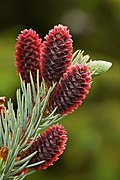
The blue spruce is known for its striking blue-grey needles that are about 1 inch long 🥇. These needles are sharp, making the tree feel prickly—hence, the name "pungens"! The bark is grayish-brown and becomes rougher as the tree ages. Blue spruces grow in a classic conical shape, perfect for decorating during the holiday season 🎁. Its cones are 3 to 4 inches long and have a light brown color. The tree decorates forests with its distinctive look! Overall, the blue spruce is not only pretty, but it also has unique features!
Go deeper🌲 Taxonomy And Classification
The blue spruce belongs to the Pinaceae family, which means it's related to other pines 🌲. Its scientific name, Picea pungens, tells us a lot about it! "Picea" means spruce in Latin, while "pungens" means sharp, referring to its pointy needles. Within the spruce group, Picea pungens is just one species. It has several varieties, such as the 'Glauca' variety, which is popular for its blue color. Blue spruces belong to the order Pinales. 🌳In short, the blue spruce is part of a big family of trees loved by many!
Go deeper