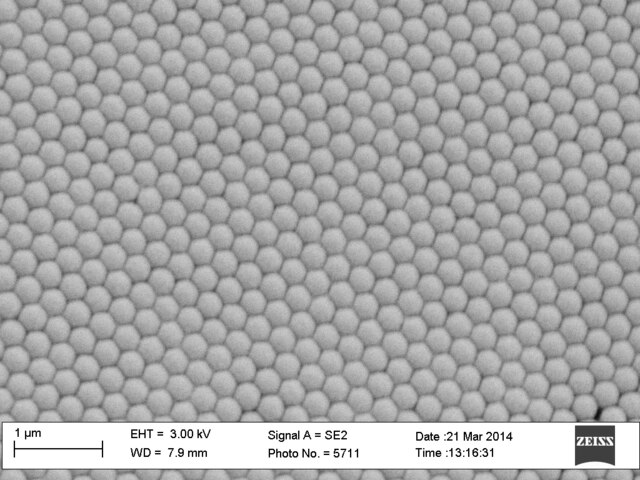
Photonic crystals are materials with a periodic structure that can manipulate and control light, impacting its propagation and leading to innovative applications in optics and telecommunications.

Set reading age
View for Kids
Easy to read and understand
View for Students
Clear, detailed explanations
View for Scholars
Deep dives and big ideas
Photonic crystals are special materials that can control light like a superhero! 🦸♂️ They look like colorful patterns and can be made from tiny structures that are smaller than a hair. These unique materials can change the colors of light that pass through them and are used in many amazing technologies, like lasers and solar panels! 🌈They were discovered in the 1980s, and since then, scientists have learned so much about their magical abilities. Imagine a world where light behaves in unexpected ways, and that's what photonic crystals make possible!
The optical properties of photonic crystals are about how they behave with light. 💡They can reflect, transmit, or change the colors of light that passes through them. This happens because the crystals have a “photonic bandgap,” which is like a filter that selectively lets certain wavelengths through! For example, some crystals reflect red light and let blue light pass. This ability to control light makes them special in creating energy-efficient devices. Scientists study these properties to make better lasers and colorful screens for your favorite devices like tablets! 📱✨
Photonic crystals are made of repeating patterns – kind of like a colorful Lego structure! 🧱They can be made from different materials such as glass or silicone, and they are arranged in a way that creates bands of light. One common design is the 3D cube structure, which can trap light in certain wavelengths. This means that only some colors can pass through, while others cannot! 🌈This special design helps scientists control how light moves, and it’s used to create cool gadgets. Creating these patterns takes creativity and science working together! 🎨🔬
Making photonic crystals requires high-tech tools and clever methods! 🛠️ One common technique is called “self-assembly,” where tiny particles come together on their own to create the crystal patterns. Another method is “lithography,” which carves out the patterns from materials using light. Scientists at top labs around the world, like MIT in the USA, are working to make the production faster and easier. Producing these structures is like baking a cake, where all the ingredients must be combined just right! 🍰This way, the photonic crystals can be used in exciting new ways!
The photonic bandgap theory explains how photonic crystals work. 🌈It means that certain wavelengths of light can’t travel through the crystal, similar to how a wall blocks a ball! This creates unique patterns of light. The theory is important because it helps scientists to design and understand how to use photonic crystals for energy and technology. By learning which wavelengths are blocked and which can pass through, discoveries can be made that help us improve our gadgets and even understand the universe better! 🌌
Photonic crystals are super useful in technology! 🌟They’re used in things like advanced lasers that help with surgeries, colorful LED lights, and even in making faster internet connections. One exciting application is in solar panels, where they help capture more sunlight to create energy! ☀️ They can also be used in sensors, which are tools that detect different things like temperature or light. Scientists and engineers are always discovering new ways to use photonic crystals, making our world brighter and smarter! 🔌🌍
The story of photonic crystals began in the 1980s when researchers, like Dr. Eli Yablonovitch and Dr. Sajeev John, started exploring how light interacts with tiny structures. 🌟In 1987, Yablonovitch created the first photonic crystal. This discovery opened the door to many more experiments and inventions! By the 1990s, scientists around the world, from places like the USA to Japan, began crafting these amazing materials. Since then, researchers have found new ways to use photonic crystals in medicine, communication, and energy. 🌍The journey of photonic crystals is still ongoing!
The future of photonic crystals looks super bright! 🌞Scientists are working on making them even smaller and more powerful to use in new technologies. For example, researchers are investigating how to use them to make better communication systems, allowing data to travel faster! 🚀Also, they’re exploring how to use them in quantum computers—machines promising to solve problems much quicker than today’s computers! Researchers believe that photonic crystals can help create even more energy-efficient devices, fighting climate change as we become greener. 🌍💚
Learning about photonic crystals can be fun! 📚There are some great resources for kids. Websites like NASA’s Space Place and educational YouTube channels explain light and materials in simple ways. You can also check out science kits that let you play with light and color. 🌈Books like "Light: Shadows, Mirrors, and Rainbows" by the National Geographic Kids are awesome for curious minds! 💡Visiting science museums with exhibits on light and materials can spark your imagination. So explore, have fun, and let the power of photonic crystals inspire you!


DIY is a creative community where kids draw, build, explore ideas, and share.
No credit card required