Pheromone Facts For Kids
Pheromones are secreted chemicals that trigger social responses among members of the same species, playing a crucial role in animal communication and behavior.
Select reading age
Pheromone Facts For Kids
Videos & Quizzesincluded
About this topic
Pheromones are special chemicals that animals and insects use to communicate with each other! 🐾Just like we use words to talk, these creatures use pheromones to send messages. They can tell others about food, danger, or even attract a mate! Pheromones are detected through smell, and they are super tiny and invisible. Most animals, insects, and even humans release them! Did you know that fire ants in North America use pheromones to warn others about danger? 🌍So next time you smell something in the air, remember, it might be a message from a friend!
Explore with ChatDinoKey Points
Humans also produce pheromones, but we don’t rely on them as much as animals do.
There are different types of pheromones, and they each have a special job!
Pheromones work like invisible signals!
Scientists study pheromones to learn more about animal behavior and communication.
Pheromones are very useful for keeping pests away!
Social insects like ants and bees are masters at using pheromones!
Pheromones are very important for animal communication!
Did you know pheromones play a key role in finding love?
There are some myths about pheromones that are not true!
The study of pheromones is an exciting area of research!
Photos of Pheromone

Aggregation of bug nymphs

Aggregation of the water springtail Podura aquatica
![Dogs communicate using pheromones and olfactory signals in urine.[20]](https://upload.wikimedia.org/wikipedia/commons/thumb/9/9f/Urinating_dog_%287768361246%29.jpg/960px-Urinating_dog_%287768361246%29.jpg)
Dogs communicate using pheromones and olfactory signals in urine.[20]

Male Danaus chrysippus showing the pheromone pouch and brush-like organ in Kerala, India
🧑🤝🧑 Human Pheromones
Humans also produce pheromones, but we don’t rely on them as much as animals do. 🧑🤝🧑 Scientists have found that human pheromones can affect attraction and mood! For example, a person’s scent can help make them more appealing to potential partners. 👩❤️👨 Some researchers believe we can recognize friends and family by their unique pheromones! However, our sense of smell is not as strong as many animals. But that doesn’t mean we shouldn't learn about them! They help us understand how we connect with others.
Go deeper🚪 Types Of Pheromones
There are different types of pheromones, and they each have a special job! 🚪Some of the main types include alarm pheromones, which warn others of danger, and food pheromones that lead friends to tasty snacks! 🥳There are also sex pheromones that help animals find mates. For example, female moths release these pheromones to attract male moths from miles away! 🦋Scientists have identified over 1,000 kinds of pheromones in the animal kingdom. That’s a whole lot of chemical messages!
Go deeper📡 Mechanisms Of Action
Pheromones work like invisible signals! 📡When an animal releases a pheromone into the air, other animals of the same species pick it up with their noses. 🤔This is done through special receptors that help them smell the pheromones. For example, some animals have a special organ called the “Jacobson’s organ” that detects these smells. 🐍After sniffing it, the receiver gets the message, leading them to act in a certain way, whether it’s to run from danger or to find a mate! It’s like sending a text message, but through the air!
Go deeper🔬 Pheromones In Research
Scientists study pheromones to learn more about animal behavior and communication. 🔬They look at how pheromones work, why different animals use them, and how they influence social structures. Researchers have studied everything from moths to elephants to find out how pheromones impact mating and foraging. 📊To explore this further, scientists conduct experiments in labs and the wild. Understanding pheromones can lead to better conservation strategies and innovative technology. So, scientists are working hard to unlock the mysteries hidden in these incredible chemical signals!
Go deeper🚫 Applications In Pest Control
Pheromones are very useful for keeping pests away! 🚫🪳 Scientists often use synthetic pheromones, or man-made versions, to trick insects like moths. 🌌When farmers want to protect their crops, they can use these pheromones to lure pests into traps, helping them control the population. This way, they don’t need strong chemicals that can harm the environment! 🌍By using nature’s own communication tools, people can keep plants safe while protecting our planet. Isn’t that a smart way to use pheromones?
Go deeper🐝 Pheromones In Social Insects
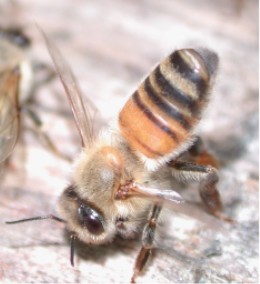
Social insects like ants and bees are masters at using pheromones! 🐝When an ant finds food, it leaves a pheromone trail for its friends to follow. 🐜This is how all the ants work together to collect food for their colony! Bees communicate with pheromones to signal danger or to share important information about nectar sources. 🐝They can even show their queen how healthy the hive is! Social insects depend on pheromones to keep their communities strong and organized. It’s like a teamwork superpower for these tiny helpers!
Go deeper🦜 Role In Animal Communication
Pheromones are very important for animal communication! 🦜Animals like ants, bees, and even dogs use pheromones to share information. Ants leave a trail of pheromones when they find food, so their friends can follow! 🐜When a bee finds flowers, it buzzes back and leaves a unique scent for others to find. 🐝This helps them work together and survive! Pheromones can also inform animals about their territory and keep away strangers. It’s like having a secret language only they understand!
Go deeper💕 Pheromones And Mating Behavior
Did you know pheromones play a key role in finding love? 💕Many animals use special mating pheromones to attract partners. For instance, female frogs announce their readiness to mate by releasing pheromones into the water! 🐸Male frogs can smell these signals and croak back to show they're interested. For some species, pheromones can affect physical attraction and even the likelihood of having babies! 🐣So next time you see animals pairing up, remember, they might have a little help from their amazing pheromones!
Go deeper🤔 Controversies And Misconceptions
There are some myths about pheromones that are not true! 🤔One common idea is that human pheromones are a strong way to make someone fall in love. While they can influence attraction, it’s not the only factor! 💔Relationships are based on feelings, personalities, and much more! Another myth is that all scents are pheromones. But that’s not quite right! Not every smell is a chemical message. It’s important to understand pheromones correctly to appreciate how animals and humans communicate!
Go deeper🎉 Future Directions In Pheromone Studies
The study of pheromones is an exciting area of research! 🎉Scientists are exploring how they can be used to solve challenges in agriculture, conservation, and medicine. 🐾For example, can we create better pest control methods or help endangered species reproduce? The possibilities are endless! Researchers are also investigating pheromones' roles in human interaction and health. As we learn more about these amazing chemicals, who knows what new discoveries will be made! The future of pheromone studies is full of excitement and potential! 🌟
Go deeper