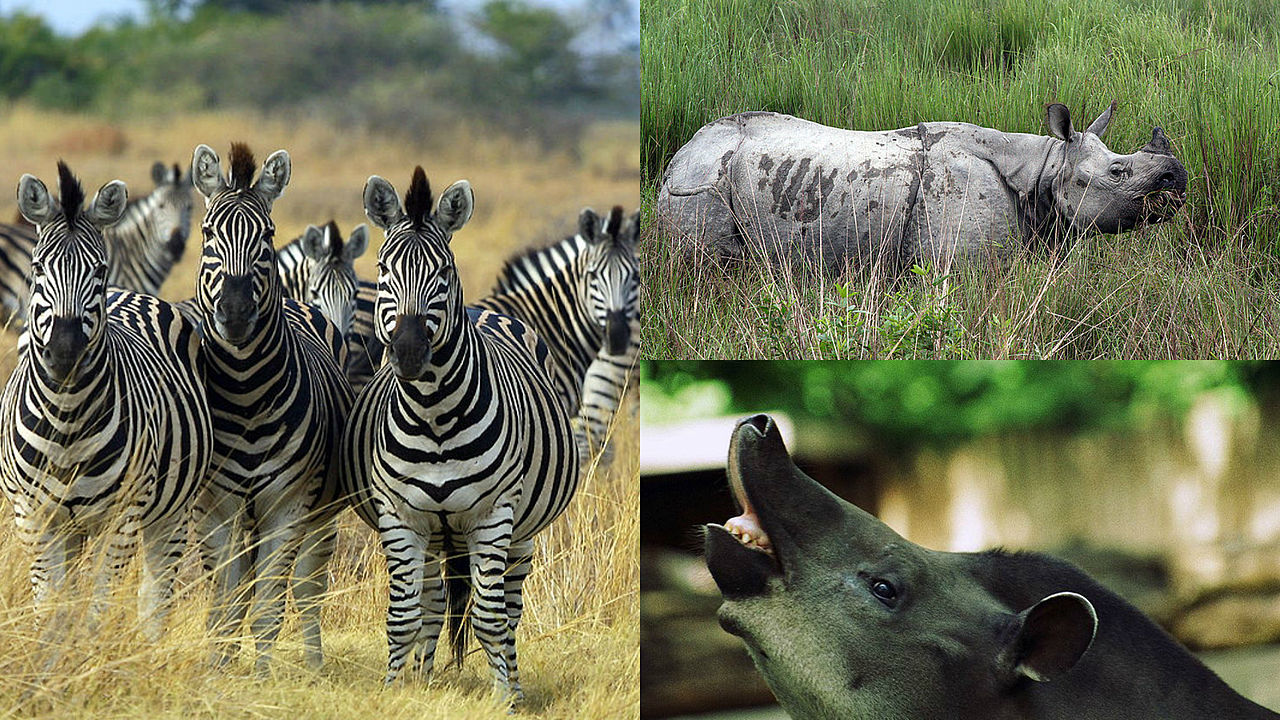
Perissodactyla is an order of mammals characterized by an odd number of toes, including horses, rhinos, and tapirs, primarily adapted to herbivorous diets.
Set reading age
View for Kids
Easy to read and understand
View for Students
Clear, detailed explanations
View for Scholars
Deep dives and big ideas
Perissodactyla, also known as odd-toed ungulates, are a fascinating group of mammals! 🐴These animals primarily have an odd number of toes on their feet. Some of the most well-known members are horses, zebras, rhinos, and tapirs. They belong to the order of mammals called ungulates, which means they are hoofed animals. Perissodactyls are unique because their middle toe is usually the largest, while the others are smaller or even absent! These creatures play important roles in ecosystems, helping to shape the environment around them. 🌍
Perissodactyls have some cool characteristics! They're known for their strong legs, which help them run fast! 🏃♂️ Horses can gallop at speeds up to 55 mph, while rhinos weigh over 1,000 pounds! 🦏Most of them have long necks and wild manes, especially horses and zebras, which can have beautiful stripes. Their teeth are also special—many have flat teeth for grinding plants, making them herbivores (plant-eaters). Some have thick skin like the rhino's as protection. Overall, perissodactyls are really interesting animals with unique traits that help them survive in the wild!
Many perissodactyls are facing challenges! 🌍Some species, like the Black Rhino and Javan Rhino, are critically endangered due to habitat loss and poaching. 🌿Conservation programs are in place to protect these animals and their homes. Zoos and wildlife reserves also play a crucial role in breeding programs. Knowing the conservation status of these animals helps us understand the importance of protecting them and their habitats for future generations! 🌳Organizations like the World Wildlife Fund are fighting to save these incredible creatures.
Reproduction in perissodactyls can be quite interesting! 🍼Most species have a single baby, called a calf or foal. The gestation period, which is how long a mother is pregnant, varies. Horse foals take about 11 months to develop, while rhinos might take up to 16 months! 🦏Mothers care for their young, teaching them how to find food and protect themselves. Young horses can stand and run within hours of being born, which is crucial for escaping predators! 🦁In some species, males compete for females, showcasing their strength and agility.
Most perissodactyls are herbivores, which means they eat plants! 🌿Horses and zebras munch on grasses, while rhinos enjoy leaves, fruits, and shrubs. Tapirs eat a mix of leaves, fruit, and aquatic plants! 🥭🥬 Some species, like the White Rhino, have special teeth that help them grind tough plants. They typically have a diet rich in fiber, which is important for their digestion. Did you know that horses can eat up to 20 pounds of hay a day? 🌾Their long necks and specialized teeth make it easy for them to reach and eat a variety of vegetation!
There are three main families of perissodactyls: equids (horses and zebras), rhinoceroses, and tapirs. 🐴🐗🐨 Equids are famous for their strong legs and speed. Rhinos are heavy and have thick skin, often found in Africa and Asia. Tapirs look like a mix of pigs and elephants, with a long snout, and live mainly in Central and South America. Did you know there are five species of rhinos? ✔️ They include the White Rhino, Black Rhino, Indian Rhino, Javan Rhino, and Sumatra Rhino, each having different habitats and sizes!
Perissodactyls live in a variety of habitats! 🌳Horses are often found on grasslands and prairies, while zebras enjoy the savannahs of Africa. Rhinos prefer dense forests or open grasslands, and tapirs thrive in tropical rainforests. 🌧️ Different species can be found on different continents. For example, the Indian rhino lives in India and Nepal, while the white rhino is mainly found in South Africa. Understanding where these animals live helps us learn more about their needs and how to protect their homes! 🏞️
Perissodactyls have a fascinating history! 🦕They evolved around 55 million years ago during a time called the Eocene. Fossils show they were once more diverse, with many different kinds roaming the Earth! Some ancient relatives looked very different from today’s horses or rhinos. For instance, the Hyracotherium, a small horse-like creature, was around the size of a dog! 🐕Over millions of years, perissodactyls adapted to their environments, leading to the species we see now. Scientists study fossils to learn more about their evolution and how they survived changes in the world!
Humans have a big impact on perissodactyls! 👥🏞️ In some places, people domesticated horses and zebras, using them for transportation and work. Sadly, habitat loss due to farming and urbanization has led to many perissodactyls losing their homes. 🏘️ Poaching, especially for rhino horns, is a serious threat. 🦏It's essential for us to protect these incredible animals by supporting conservation efforts and learning about their needs. Educating others about perissodactyls helps raise awareness and encourages people to take action to save these amazing creatures for the future! 💚


DIY is a creative community where kids draw, build, explore ideas, and share.
No credit card required